By Afrah Events Team, Wedding entertainment specialists · Published · Last updated · 7 min read
Dabka at a Miami wedding usually has two parts: a showcase by trained dancers and an open line where guests join. This guide explains the regional styles families ask for, what Miami venue floors need, when to schedule the dabka around dinner and how to bring Latin and American guests into the line.
On this page
Why dabka fills the floor at Miami weddings
Dabka, also spelled dabke, is the Levantine line dance in which dancers link arms or hands and stamp the floor in rhythm. At a Miami wedding it is often the moment when grandparents, parents, cousins and friends from every background end up on the same floor, following the leader at the front of the line.
Miami weddings tend to be large, lively and mixed, which suits dabka well. Arab guests know the steps, and Latin and American guests are usually ready to join once someone shows them how. A well-planned dabka turns that energy into the best twenty minutes of the night.
This guide covers the styles, the floors, the timing and the details that make a dabka work in Miami venues. For the entrance that comes first, see our guide to planning a zaffa in Miami.
Choosing the dabka style for your family
Dabka differs by country and region. Lebanese families often expect a polished showcase with dramatic stamps and jumps, followed by an open line. Palestinian families often dance the shamaliyya, a steady line that guests of all ages can join, and may ask for faster steps later. Syrian families may ask for the style of their region, and Jordanian families sometimes add the sahja, a clapping and chanting dance.
Many Miami weddings bring two of these traditions together, or join an Arab family with a Latin one. We often plan a set that moves from one style to another, so each side of the family recognises its own dance. If you are not sure of the name of your family's dabka, a video from a family wedding is the most useful thing you can send.
Our tradition guides explain Lebanese, Palestinian and Syrian dabka in more detail if you want to compare them.
Floors and space in Miami venues
Dabka needs a firm floor. Wooden or laid dance floors are ideal. Many Miami ballrooms have marble or polished stone floors, which work well for the stamp but can be slippery for fast steps in new shoes, so we keep the showcase within the dance floor area where the surface is predictable.
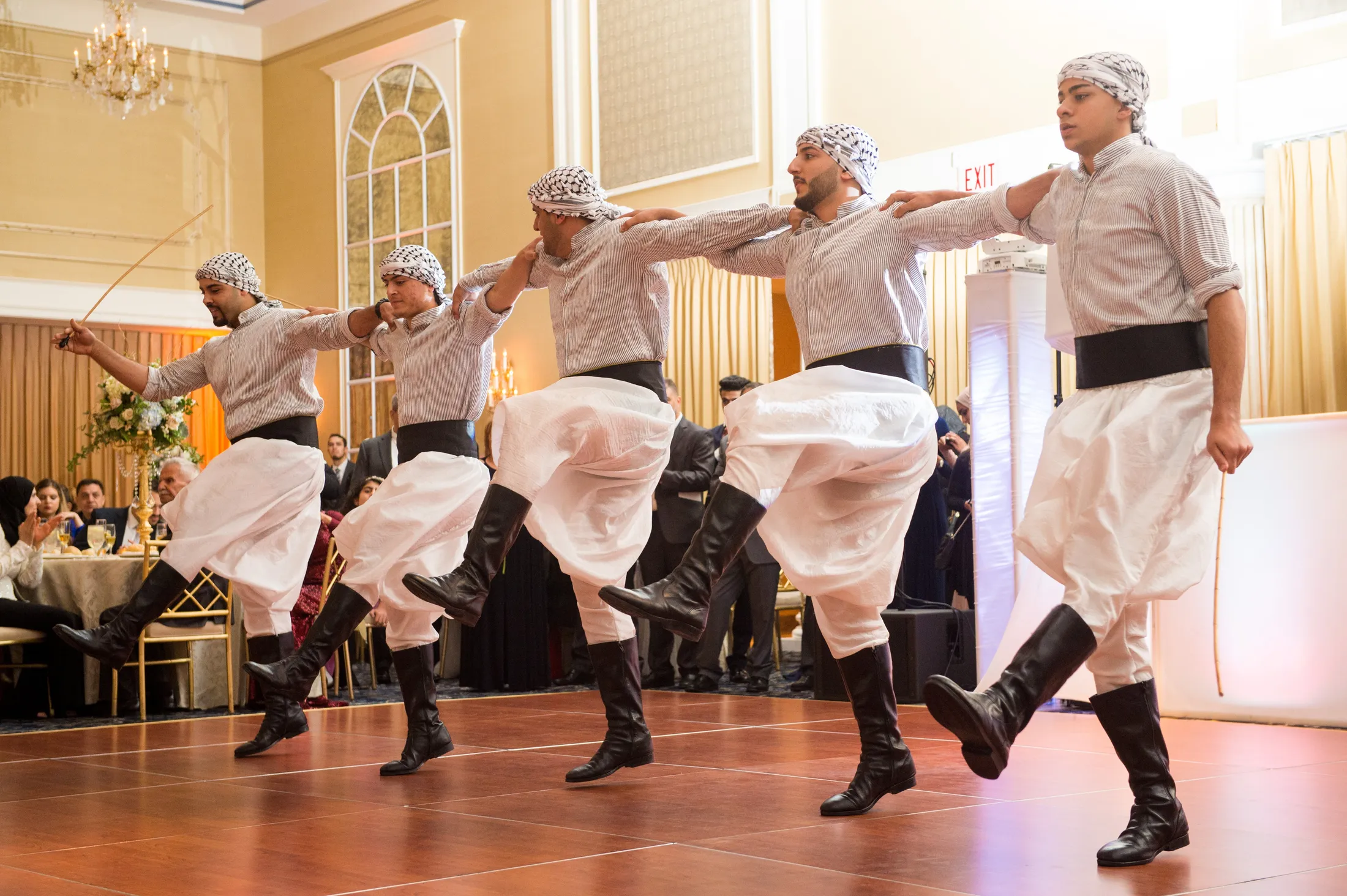
Carpet softens the stamp and slows fast footwork, and sand does not work at all. For beach weddings in Miami Beach or Key Biscayne, we move the dabka to a deck, terrace or the reception room.
Size matters too. A showcase for a large troupe needs more space than a small family line. Send us the dance floor size if you know it, and we will plan the number of dancers to fit.
The showcase and the open line
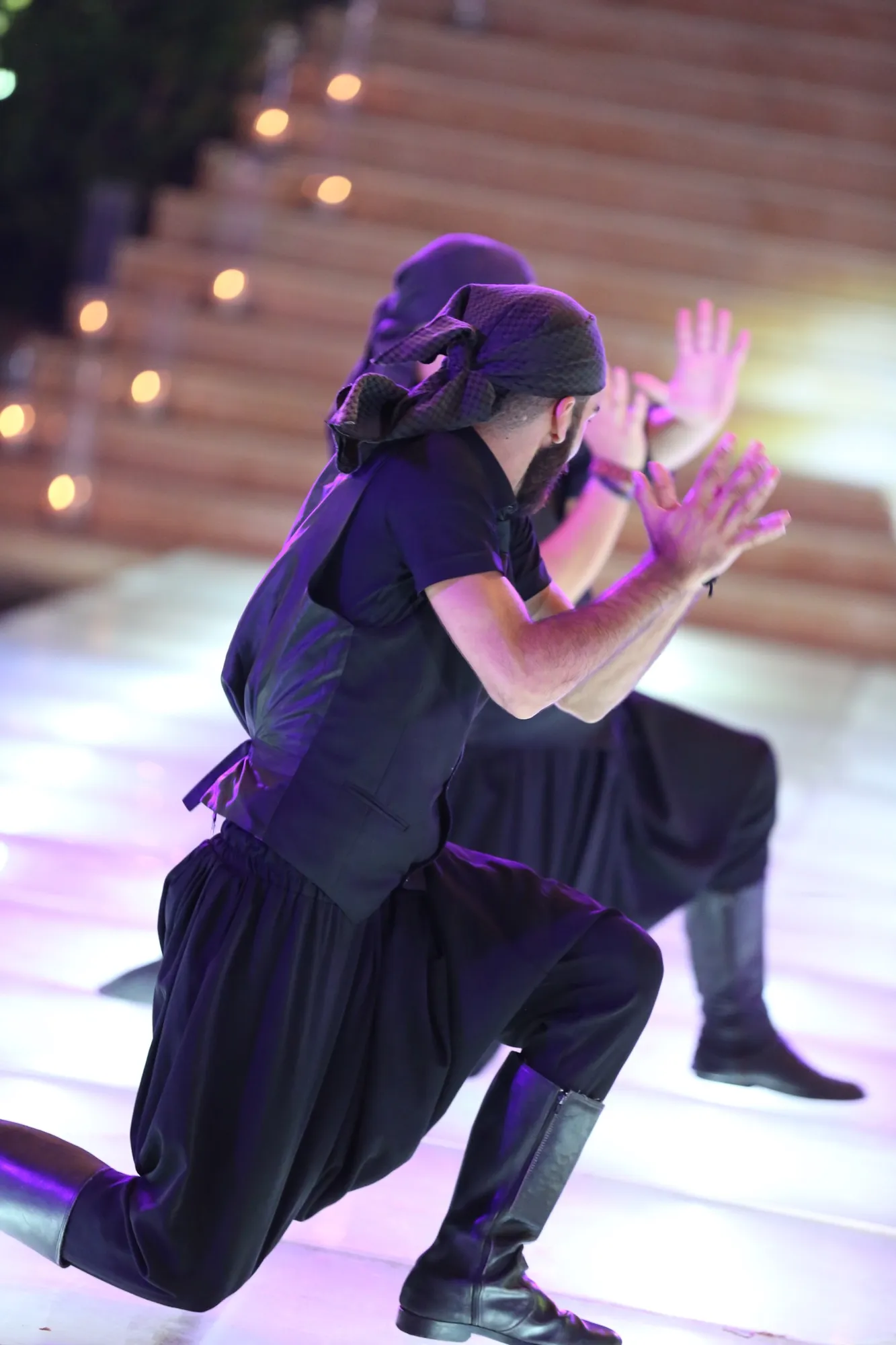
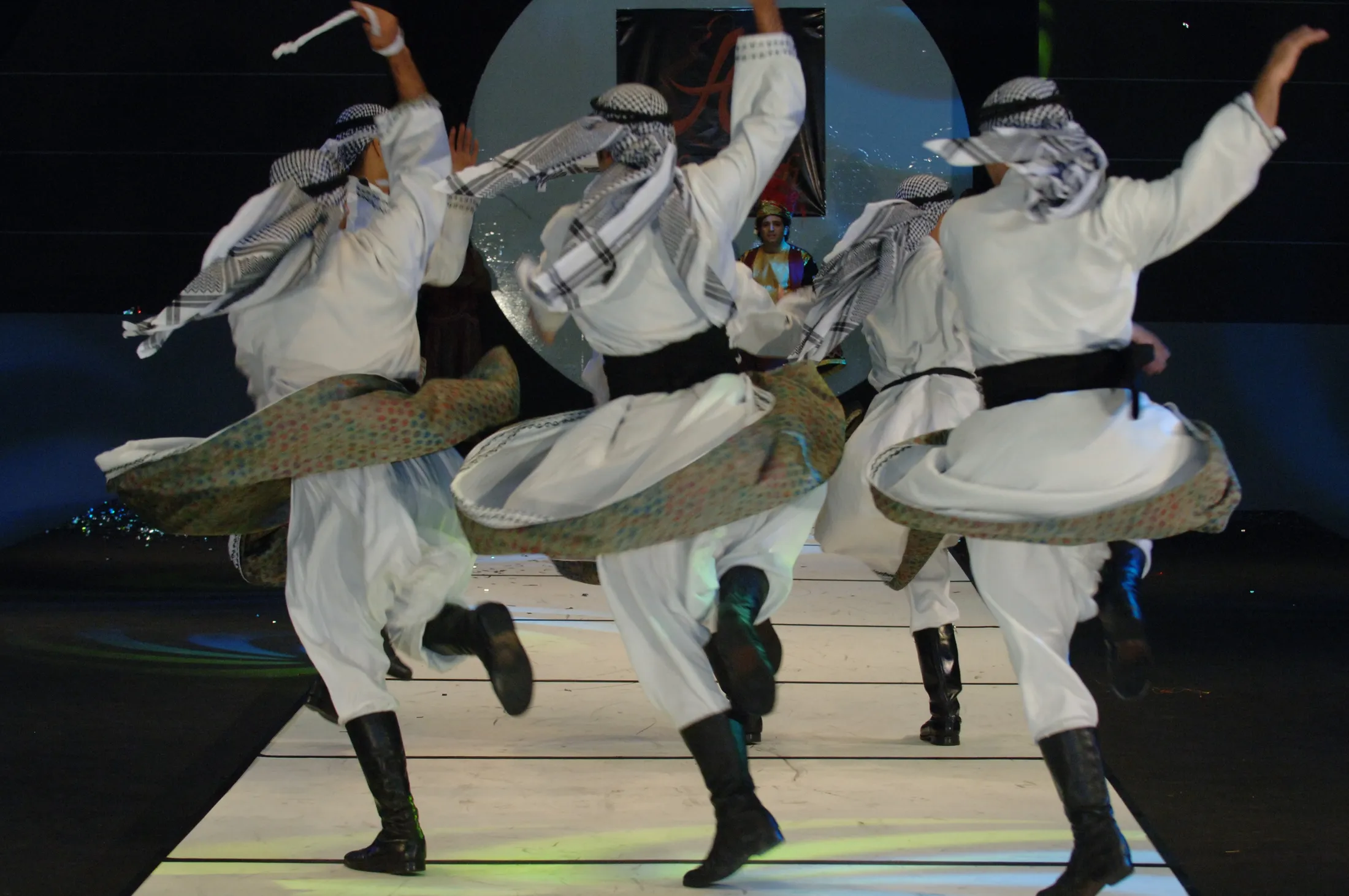
A dabka showcase usually lasts a few songs. Trained dancers enter in formation, perform steps that build in speed and complexity and finish with a fast unison stamp or a lift that brings the room to its feet. Costumes match the zaffa style your family chooses.
Then the leader, called the raas or lawweeh, opens the line to guests. Experienced dancers from the troupe spread through the line so every newcomer has someone next to them. The leader keeps the step simple at first, then adds variations as confidence grows. The open line can continue for as long as the floor stays full.
A short invitation from the MC in Arabic and English makes a big difference at Miami weddings, where many guests are unsure whether they are allowed to join.
When to schedule the dabka
Most Miami couples place the main dabka after dinner, when guests have eaten and the elders are ready to join. Some open the dance floor with a short dabka straight after the first dance, then return to a longer set later. A final dabka near the end of the night is a popular way to close.
Avoid the busiest catering moments. A dabka line that fills the floor while waiters are serving creates congestion. We agree the timing with your coordinator so the dabka has the room to itself.
Many Miami weddings also have a hora loca, the Latin party hour with costumes and props. Dabka and hora loca work well in the same night when they are spaced apart, each with its own clear moment.
Live drums, recorded songs and the DJ
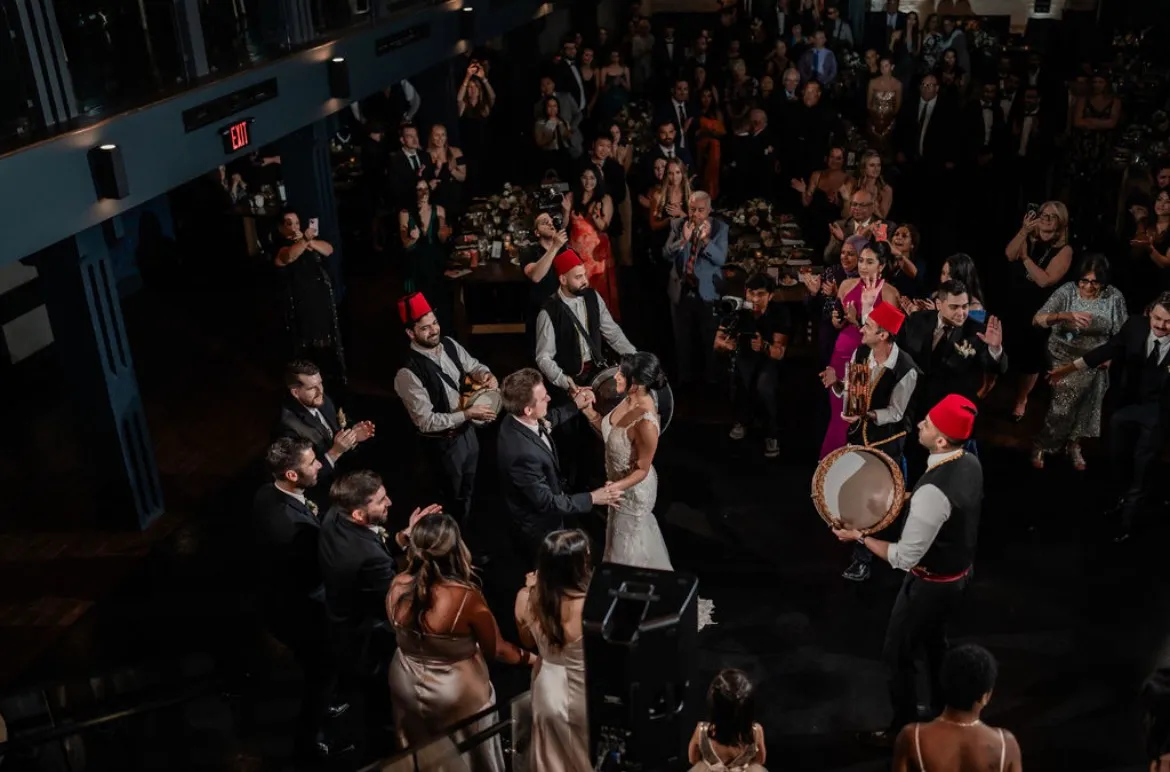
Most Miami weddings blend live tabl with recorded melody for the dabka. The drummer follows the dancers and the leader, adding accents and building energy, while the DJ plays the songs your family knows. Classics such as Ala Dal'ona and Ya Zarif al Tool are heard at weddings across the Levant, alongside newer dabka hits.
Send us a list of must-play songs and any to avoid. The DJ prepares the set around them, and the drummers rehearse the transitions so the line never stops while the music changes. Live reed pipes or a full band are confirmed per booking for families who want a traditional sound.
They did the most amazing job at my daughter’s wedding. Their performance was perfect. They were punctual and were very welcoming to our guests. They made the wedding extra special. I highly recommend them
Dabka at Miami henna nights and home celebrations
Dabka is not only for the wedding. Many Miami families hold a henna night, an engagement party or a welcome dinner for relatives arriving from abroad, and a compact group of dancers with a drummer turns any of them into a celebration. It also gives guests a chance to learn the steps before the wedding.
For celebrations at home, check homeowners association rules on music and guest numbers, and tell neighbours in advance. Condominium buildings may restrict drums in common areas. We plan the group and the volume to suit the space.
Costumes and the look of the troupe
Dabka dancers usually perform in traditional dress that reflects the style of the dance. Men often wear sirwal trousers, embroidered vests and sashes, sometimes with a keffiyeh or tarboush. Women may wear embroidered dresses inspired by Levantine village dress. For a modern wedding, some families prefer coordinated outfits in the wedding colours instead.
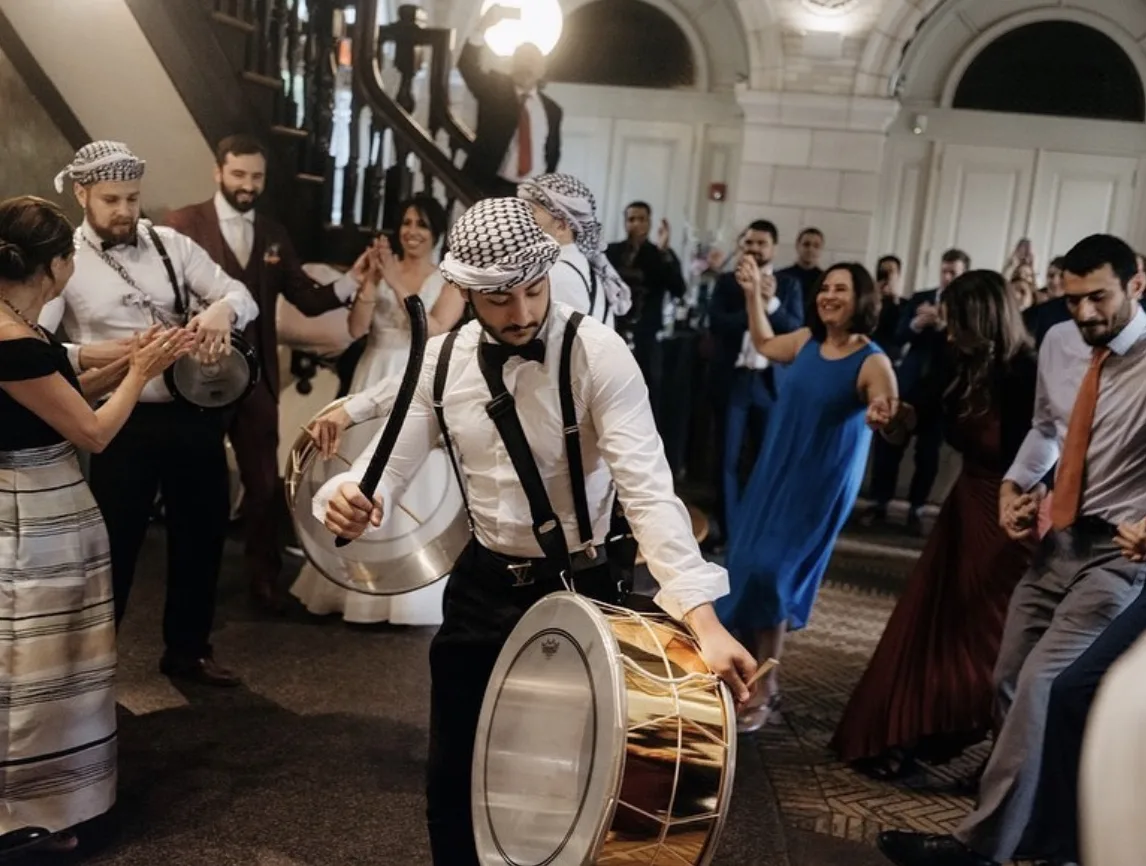
Tell us the look you want and whether the dabka troupe should match the zaffa performers. Many Miami weddings use the same troupe for both, so the costumes can carry from the entrance into the dabka. Photographs from family weddings are the best guide to the look your relatives will recognise.
Costume choices also affect photographs. Bright embroidery and coordinated colours stand out against neutral ballroom decor, which is one reason dabka moments are often among the most shared photographs of a Miami wedding.
A sample dabka set at a Miami wedding
A typical set starts with the MC inviting guests to make space on the floor. The drummer plays an opening rhythm and the troupe enters in a line, the leader at the front waving a handkerchief or prayer beads. The first song is usually steady, so guests can see the basic step before the pace rises.
After two or three songs of showcase, the leader breaks the line and invites guests in. Parents and grandparents often join first, followed by friends from every background. The drummer and DJ keep the rhythm going through several songs, and the leader adds faster steps when the line is confident.
The set closes with one last fast song, a group stamp and applause, then the DJ moves into the next part of the night. Some families repeat a shorter open line near the end of the reception, when the dance floor is at its fullest. Planning both moments in advance keeps the energy high without the dabka taking over the whole evening.
If your wedding mixes Arab and Latin families, the DJ can move from the final dabka song straight into a Latin set, which keeps the floor full as the music changes. We agree these transitions with you before the wedding.
What to send us for a Miami dabka quote
Send the date, the venue and room, the dance floor size if you know it, the guest count and the style your family dances. Tell us whether you want a showcase, an open line or both, and whether you also want a zaffa, because the drummers and many of the dancers perform both.
Pricing depends on guests, drummers, dancers, duration and travel, and starting ranges are available on request. Every proposal lists the confirmed dancers, drummers and inclusions. Afrah Events performs dabka across Miami-Dade, from Miami Beach and Brickell to Coral Gables and Doral, travel is included in the quote and we reply within 24 hours by email.
Continue planning with wedding entertainment packages, Miami venue logistics and Orlando resort planning.