By Eyad, Founder of Afrah Events · Published · Last updated · 7 min read
Cold sparks, low-lying fog and CO2 create very different wedding moments. Understanding their appearance is only the beginning: venue approval, operating requirements and precise coordination matter too. This guide explains what to ask before choosing an effect and how to connect the production plan with your entrance, dance or reception.
On this page
How are the three wedding effects different?
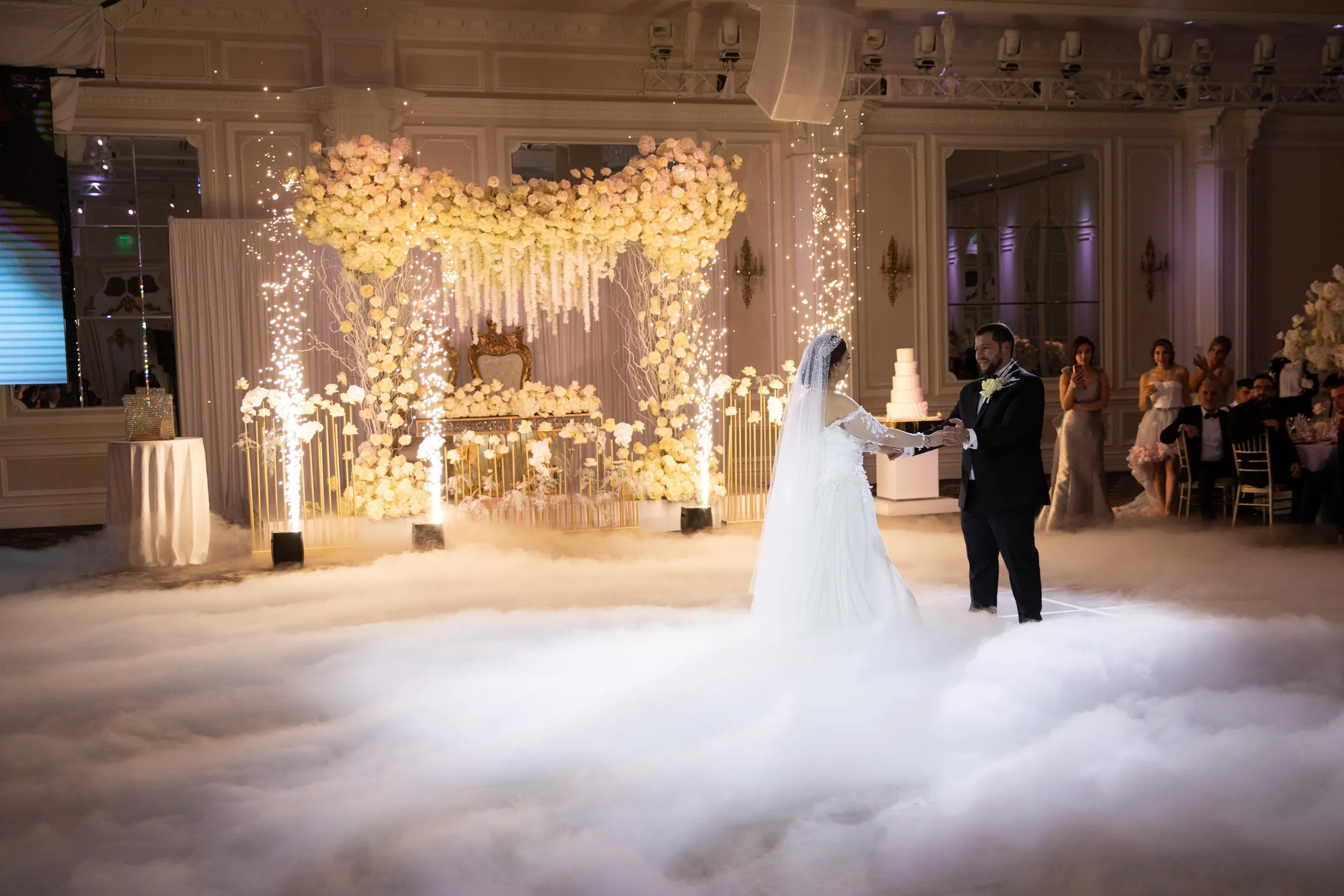
Cold spark effects create a fountain-like visual accent, dancing on the clouds describes a low-lying fog look, and CO2 effects create short bursts of visible plume. They are not interchangeable decorations. One emphasizes a musical cue, another changes the appearance of the floor, and another adds a sharp burst of energy. Begin by deciding what the moment needs before choosing the equipment that might support it.
Ask to see examples that resemble your venue and intended use, not only tightly edited highlights. Room size, ambient light, camera angle and operating conditions can change the appearance. Describe whether you are planning an entrance, a first dance or a party segment. A useful discussion connects the desired image with actual placement, timing and venue requirements rather than treating the effect name as a complete specification.
What should you understand about cold sparks?
Cold sparks are commonly requested for entrances, dance highlights or a musical finale because their vertical appearance can frame a moment. Placement should be planned around the couple, performers, guests and cameras. Ask how the proposed equipment will be operated and what separation or clearance its instructions require. A production team needs the room layout and movement plan before it can meaningfully discuss the requested effect.
The word cold is not a safety guarantee or a substitute for approval. All effects require venue approval, and local requirements or venue policies may affect whether a proposal can proceed. Ask who obtains any required permissions, what documentation is needed and who operates the equipment. Do not accept a general claim that an effect is allowed everywhere or assume a previous event establishes approval for yours.
How does dancing on the clouds affect a first dance?
Dancing on the clouds usually refers to a low-lying fog effect intended to create a cloudlike layer near the floor. Different systems produce that appearance, so ask what method is proposed rather than assuming one machine or material. The visual result depends on the room and operating conditions. Air movement, open doors and the dance-floor layout should be discussed before anyone promises a particular photographic appearance.
Plan the dance itself alongside the effect. Your photographer needs to understand the intended coverage, while the operator needs a cue and a defined performance area. Discuss visibility, floor conditions and applicable operating requirements with the venue and supplier. All effects require venue approval. Ask what happens if the conditions are unsuitable, so you still have a thoughtful first-dance plan without depending entirely on a visual layer.
When might CO2 suit the reception atmosphere?
CO2 effects are generally associated with short, energetic moments rather than a continuous romantic atmosphere. They may suit a dance-floor peak or a deliberately theatrical entrance, depending on the proposed system and venue. Consider whether guests would enjoy that style and whether it complements the music. An effect that looks exciting in a party clip may feel out of place during a restrained reception or intimate dinner.
Ask about the exact equipment, positioning, operation, ventilation requirements and guest separation required by the proposed system. Do not assume handheld and fixed installations have identical conditions of use. The venue must approve all effects, and the production team should address applicable requirements before the event. Clarify who can trigger the effect and how cues are controlled rather than treating it as an unrestricted guest participation accessory.
How should effects connect with music and photography?
Choose a specific cue rather than a general instruction to start sometime during the song. Identify the recording version, the moment in the track and the person authorized to call the cue. Rehearse the communication, even if the effect itself is not demonstrated. The DJ, operator, planner and photographer should understand the same sequence and know whether the couple will be moving or holding position.
Avoid stacking several effects simply because they are available. Multiple elements can compete visually, complicate timing and distract from the people being celebrated. Discuss what each camera angle will see and whether lighting supports the desired image. Build a version of the moment that still works if an effect is omitted. The emotional center should remain the entrance, dance or celebration rather than the production equipment surrounding it.
What belongs in the approval and booking process?
Provide the venue with an accurate description of the requested effect and ask for its approval process before treating the idea as confirmed. Establish who supplies technical information, who handles any required permissions and when a final decision must be made. Pricing factors may include equipment type, quantity, duration, staffing, venue access and production complexity. Compare scopes carefully, particularly where technical responsibilities or alternative arrangements are not clearly described.
When enquiring with Afrah, share the Florida venue location, intended moment and any venue guidance already received. Afrah is a service-area business. We review your location, performance brief and written scope together. Review the written scope, approval dependencies and relevant change or cancellation terms. If an effect cannot proceed, the agreement should guide the next discussion; do not assume an alternative, credit or particular outcome without reviewing the applicable terms.
Our favorite was definitely [the DJ and MC], [they] stuck to our playlists and meshed all our genres together effortlessly, guests raved about it.
Understand the effect before choosing the photograph
Cold sparks, low fog and CO2 create different visual results and require different equipment. Spark machines produce a controlled visual spray using a specific system; low fog is intended to remain near the floor; CO2 systems can produce a short plume. Those descriptions are not safety approvals. Equipment, consumables, room conditions and operator procedures matter. We recommend asking the supplier to identify the exact system and explain its requirements before discussing placement. A social media photograph rarely shows the clearances, staffing or restrictions behind the finished image.
Choose the moment first, then decide if an effect improves it. A first dance may benefit from a particular floor treatment, while a later dance segment may suit a brief visual accent. Neither choice is essential to the wedding. Ask for a version of the cue with music and lighting alone. If the venue declines an effect or the operator determines conditions are unsuitable, the celebration should continue without an awkward gap. Treat the effect as a conditional production element rather than the action that makes the moment meaningful.
Treat cold sparks as equipment requiring formal approval
The word cold does not mean that a spark system can be placed anywhere or operated without precautions. Ask the supplier about the specific machine, operating material, required distances and the qualifications of the person controlling it. The venue should review the proposal, and the relevant authority may require further approval or permitting. Do not substitute assurances such as indoor safe for a documented review. Ceiling height, overhead decor, guests, clothing and nearby equipment all belong in the assessment carried out by the responsible professionals.
Confirm exact machine positions on the floor plan after flowers, staging and the couple's route are known. The operator needs an unobstructed view and the ability to withhold the cue. Photographers should know the proposed timing without being expected to stand in a restricted area. Guests must not be invited into an operating zone for a better picture. Our team should receive the approved cue and understand the cancellation signal. If positioning changes during setup, obtain the appropriate review instead of assuming the original approval covers a different arrangement.
Ask separate questions about low fog and CO2
Dancing on the clouds usually describes a low fog appearance, but suppliers may achieve it with different systems. Ask what equipment and substances will be used and how the room's ventilation and air movement affect the result. Doors, fans and air conditioning can change how fog behaves. Discuss alarms, floor visibility and guest access with the venue and qualified operator. Never cover, disable or bypass detection equipment to make an effect possible. Check the couple's footwear and choreography against the approved setup without assuming a cloud effect guarantees an even visual layer.
CO2 equipment introduces its own handling and ventilation considerations, including secured cylinders where applicable. Ask who supplies, transports and operates the system and what restrictions apply in the proposed space. A short plume should not be directed at guests, faces or performers outside an approved operating plan. Do not hand equipment to the couple or guests as an improvised surprise. If anyone raises a concern about respiratory comfort, visibility or crowd proximity, refer it to the responsible professionals and choose a simpler lighting cue if those concerns cannot be resolved.
Document permissions and rehearse the cue without deployment
Request written venue approval for each proposed effect, not a general statement that special effects are allowed. Ask whether the venue requires insurance documentation, an approved vendor, authority review or specific setup information. The contract should identify equipment, operation and any conditions that would prevent use. Confirm how a refused or cancelled effect is handled financially under the agreement. Approval at a previous wedding does not establish permission for a different room, date or installation, even within the same property.
Review the cue with the coordinator, DJ, operator and photo team. Name the person who gives the standby instruction and the operator who makes the final deployment decision. Confirm the musical point, couple's position and alternative cue if the effect is withheld. A verbal rehearsal can establish timing without an unnecessary live discharge. Keep a practical pause before guests are invited onto the floor. We want every supplier to know that safety decisions take precedence over the photograph and that no one should pressure an operator to proceed.
Continue planning with wedding entertainment packages, Miami venue logistics and Orlando resort planning.