Arab Wedding Entertainment Florida
Arab wedding entertainment in Florida can combine a zaffe entrance, dabke, Arabic DJ and bilingual MC, live musicians and selected visual effects. The right plan starts with your family traditions and the venue’s layout. Afrah Events coordinates the musical handoffs, performance spaces and travel details, with scope and availability confirmed individually.
On this page
How should Arab wedding entertainment Florida families plan fit together?
Choose the moments that matter before choosing the longest list of services. If the zaffe is the centerpiece, protect its route and its place in the reception schedule. If live music is important, decide whether guests hear it during cocktail hour, the first dance or a featured set. Dabke can involve willing relatives after the entrance or later in the evening. Belly dancer appearances and other performers should suit the family’s preferences and have clear boundaries for interaction. A coherent sequence is more useful than several acts all expecting the same performance area.
How do Arabic entertainment Florida plans change by region?
Miami high-rise ballrooms require attention to loading and elevators; Orlando resorts can involve several rooms and a long equipment route. Gulf-front properties around Tampa or Naples need a weather alternative for outdoor moments, while the Keys add island travel considerations. These are venue types and areas, not claims of partnerships. Share the exact property instructions once you have them. Your guest mix also matters: families may want regional music alongside English or Latin selections. A bilingual MC can connect those moments without turning the evening into a series of announcements.
What can wedding lighting and visual effects add safely?
Lighting defines the room and keeps the couple visible during entrances, speeches and the first dance. Effects are separate choices requiring review of the actual equipment, operator and venue rules. Cold sparks, haze, low-lying fog, confetti and CO2 should never be assumed permitted, interchangeable or risk-free. Ask how alarms, clearances, ventilation and cleanup are addressed when relevant. If an effect cannot be approved, use a lighting cue and a planned musical finish instead. Confirm each requested element in writing rather than reading a package illustration as a guarantee.
How should travel, packages and cost factors be compared?
Compare proposals by scope: performers, equipment, coverage windows, room changes, preparation and travel. A DJ and MC package may cover a different part of the day from a live band or zaffe booking. Bundles can help coordinate services, but inclusions still need confirmation with Afrah. Atlantic hurricane season runs June through November, so outdoor plans should identify a backup location before the event. Send your date, city, guest estimate, venue type and priority traditions for a custom quote. No fixed prices or deposit percentages are published; booking terms are confirmed in the agreement.
How do we choose the right planning scope when our families have already made some arrangements?
Start with an honest list of what is booked, what is only discussed and what still needs a decision. A venue reservation does not necessarily settle catering, ceremony arrangements, entertainment or room access. We use those distinctions to discuss whether you need broader planning or help coordinating existing choices. Share contracts, family priorities and the person authorized to approve changes. For an Arab or multicultural wedding, identify which traditions are essential and which are optional before comparing proposals. Ask for a written division of responsibilities covering vendor communication, family updates, venue meetings and event supervision. Do not assume that every task belongs to the planner simply because it affects the wedding. A useful scope tells you who owns each decision, what information they need and which services remain separate bookings, including entertainment, florals and any specialist production.
What should our wedding planning proposal actually include?
Ask for deliverables that match your wedding rather than a general description of support. Discuss a planning schedule, vendor contact list, room layout, ceremony sequence, reception program and responsibilities during setup and removal. If you want help with venue selection, catering coordination, guest transportation or religious ceremony logistics, name those requests individually so their status is clear. The same applies to a zaffe, bilingual MC, dabke, florals and effects: coordination does not automatically mean the supplier or equipment is included. We recommend identifying who communicates with the officiant, who gathers family members for photographs and who authorizes schedule changes. Include the number of locations and any separate celebrations in the brief. Before accepting a proposal, check that requested work, exclusions and information still awaiting confirmation are visible in writing rather than left inside a conversation.
How do we choose a planning approach for a henna night, engagement or milestone celebration?
Begin with the purpose of the gathering, not the size of the entertainment lineup. A henna night may center on family rituals and photographs, while an engagement party may need a clear announcement moment and space for dancing. A graduation can have several honorees, and a corporate cultural evening may need formal introductions and a speaker program. Tell us what guests should experience, who is hosting and which traditions need explanation. Then discuss whether the event needs venue coordination, decor direction, entertainment scheduling or a broader planning scope. A smaller guest count does not automatically mean simpler logistics, especially in a private home. Compare proposals by the responsibilities they cover and the decisions still assigned to you. Avoid borrowing a wedding program unchanged when your celebration has a different reason for bringing people together.
Which requested inclusions should we specify for a home or rented venue celebration?
Write out the items you actually want: seating arrangements, a henna backdrop, florals, lighting, DJ, MC, live drums or a featured performance. For each request, clarify whether the proposal covers planning, sourcing, installation, operation or removal. These are different responsibilities. A decorated seating area does not automatically include furniture, and entertainment coordination does not automatically include a sound system for speeches. At a home, also identify who handles rental deliveries, waste, restroom arrangements and the restoration of moved furniture. At a restaurant, ask which existing furnishings and staff duties remain part of the venue agreement. We recommend a simple ownership list shared with the host and suppliers. The useful question is not whether everything is handled, but who provides each requested item and what must be confirmed before it can be included.
How do we choose a DJ brief that reflects our family rather than a generic Arabic playlist?
Give the DJ context for the music, not just a long list of titles. Explain which relatives enjoy Levantine dabke, Khaleeji, Egyptian favorites or other regional styles, and where English or Latin music belongs in the evening. Separate essential songs from general inspiration and identify recordings whose particular version matters. Include a clear list of music you do not want, including lyrical restrictions where relevant. For the MC, share language preferences and whether announcements should be repeated in both languages or kept selective. Ask how the music plan will accommodate mixed generations without turning every transition into a separate announcement. The mistake to avoid is prescribing every track in order while also expecting the DJ to respond to the room. Define your boundaries and meaningful cues, then discuss where the musical sequence can remain flexible.
What audio, lighting and MC inclusions should be written into our DJ request?
List each space that needs coverage: ceremony, welcome area, cocktail room and reception. Ask which speakers, microphones, DJ equipment and lighting are proposed for each location, and whether any equipment must move during the event. A reception sound system does not automatically cover a ceremony elsewhere on the property. Specify bilingual announcements, introductions and any separate MC responsibilities rather than assuming the DJ handles every spoken moment. If you want uplighting, moving lights or effects, identify those requests individually and confirm their status in the proposal. Live musicians and drummers may also require connections or microphones beyond the reception setup. We recommend clarifying who supplies and operates those items. The useful comparison between proposals is the actual coverage and responsibility, not simply the number of pieces of equipment named in a package.
How do we choose a kosha and floral direction that fits the actual ballroom?
Start with photographs and measurements of the room, including ceiling height, stage position, wall finishes and the couple's seating area. A design that works in a wide ballroom may overwhelm a narrow room or leave little space for family photographs. Tell us which part of your inspiration matters most: shape, color, flower density, fabric or lighting. Those details can be discussed separately instead of treating one photograph as an exact specification. Consider the view from dining tables as well as the main camera angle. The kosha should accommodate the couple comfortably and allow safe approaches for photographs. Ask how the proposed design interacts with the venue's existing stage and furniture. Avoid selecting floral height or backdrop width before confirming access, sightlines and the space needed around the finished installation for guests and the photography team.
Which floral and kosha inclusions should we request individually?
Create an inventory by location and purpose: kosha flowers, draping, seating, ceremony pieces, entrance arrangements, centerpieces, bouquet, boutonnieres and family flowers. State quantities where known and flag anything still dependent on the seating plan. Ask whether vessels, stands, candles, structural elements and lighting belong to the floral proposal or another supplier's scope. Fresh and artificial materials should be described where relevant, along with the approach to substitutions if particular flowers cannot be sourced as intended. Delivery, installation, relocation and removal are separate activities that need clear ownership. Also clarify which items are rented and which flowers may leave with the family. A common mistake is assuming an inspiration image defines every accessory visible within it. The written item list should explain what is actually requested, what is confirmed and what remains outside the floral booking.
How do we choose a zaffe style without relying only on a regional label?
Tell us which songs, rhythms and family customs make an entrance feel familiar to you. Lebanese, Palestinian, Egyptian, Syrian and Jordanian references are useful starting points, but families may associate different details with the same label. Share a short reference and explain whether you like the drumming, chants, costumes, procession order or guest participation. Then discuss what suits your entrance route and the number of people moving with you. A strong brief distinguishes essential traditions from visual ideas that are simply appealing. Ask which elements can actually be provided and confirmed for your date rather than assuming every reference represents an available format. Avoid choosing the largest troupe before reviewing the space. The right presentation should give the couple room to enter, allow relatives to participate comfortably and keep the musical sequence understandable to the DJ and venue.
Which performers, instruments and props should our zaffe request name explicitly?
Identify the requested number and roles of drummers and dancers, the musical direction and any costume preferences. If you want a belly dancer, violinist or saxophonist involved, treat that as a separate inclusion to discuss rather than an automatic part of the procession. List props individually, including swords, candles, sparklers or LED alternatives, because availability and permission differ. Ask whether the performance begins at a lobby, doorway or dance floor and whether more than one appearance is requested. Recorded accompaniment, microphones and sound connections also need ownership when they form part of the plan. The proposal should distinguish requested ideas from confirmed elements and identify anything dependent on venue approval. A common mistake is describing the entrance as traditional and expecting everyone to imagine the same musicians, props and order. Specific requests give the team something practical to prepare.
Our favorite was definitely [the DJ and MC], [they] stuck to our playlists and meshed all our genres together effortlessly, guests raved about it.
Should we request a dabke showcase, guest circle or drum feature?
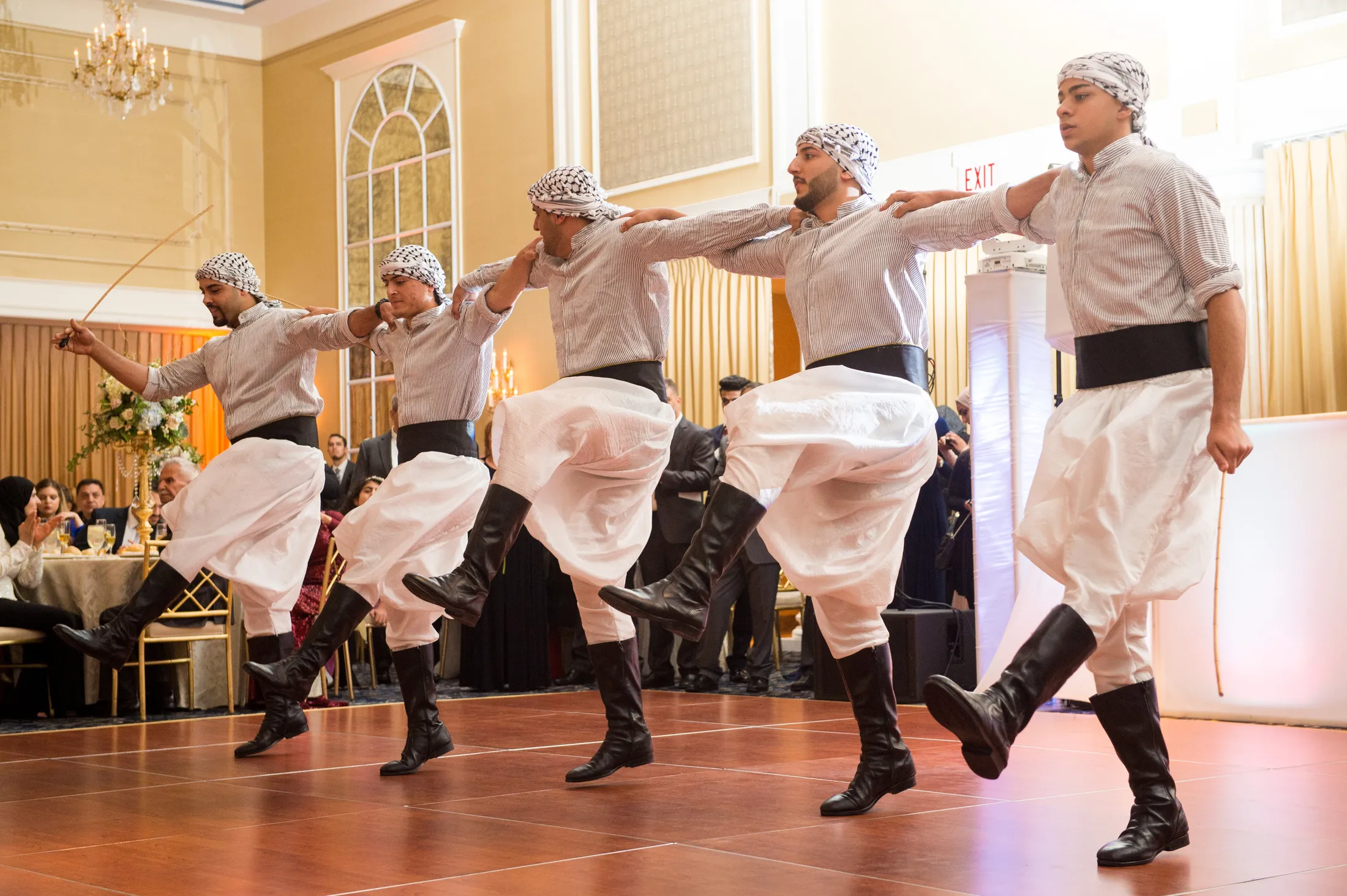
Choose the function you want the performance to serve. A choreographed showcase gives guests something to watch, a guided circle invites participation and a drum feature can mark an entrance or another specific moment. These formats need different floor arrangements and musical cues, even when some of the same performers are involved. Tell us whether your guests already know dabke, which regional songs matter and whether the couple wants to join. At a cultural or corporate event, discuss whether a brief introduction would help the audience understand what they are seeing. Request the format that supports the event rather than assuming more participation is always better. A common mistake is placing a guest circle where only a viewing area has been planned. The brief should make clear when guests watch, when they may join and who guides that change.
What should the requested dabke and drummer lineup include in writing?
Specify the requested dancers and drummers by role, along with costumes, musical direction and the number of appearances you want considered. A dancer showcase and a percussion appearance are not interchangeable, so the proposal should distinguish them. If you want a lead dancer to invite guests into a line, name that expectation. Identify any requested swords, sparklers or LED props separately, with their confirmation dependent on availability and approval. Explain whether the performers support an entrance, a featured set, cake cutting or several moments, because waiting and transitions affect the plan. Ask who provides recorded music, microphones or sound connections where needed. Avoid assuming that live drumming means every musical element will be performed acoustically. A clear lineup describes the actual presentation and technical responsibilities instead of leaving the whole performance hidden behind the word troupe.
How do we choose lighting and effects without overcrowding the important moments?
Begin with the result you want guests and cameras to see. Uplighting shapes the room, pin spotting draws attention to details and a dance floor wash supports visibility. A projected monogram needs a suitable surface, while moving lights introduce motion that may suit dancing better than speeches. Clouds or sparks belong to a particular cue rather than replacing a complete lighting plan. Tell us which moments matter most and share room photographs before choosing equipment. Discuss the desired appearance with your photographer so colors and brightness support people as well as decor. Avoid combining every available effect simply because it appears in inspiration videos. Those videos may show different rooms and production conditions. A focused plan explains what each element contributes, where it operates and which requested ideas should be omitted if the venue or space makes them unsuitable.
What equipment and operating responsibilities should our effects request describe?
Separate permanent room lighting from individually cued effects. List the requested areas, fixtures or looks, then identify any monogram projection, low fog, haze, sparks, confetti, streamers or CO2 feature you want discussed. The proposal should explain what is actually confirmed, who operates it and which items remain conditional on approval. Ask about control positions, required consumables, electrical connections and any additional sound coordination. For confetti or streamers, clarify approved materials and removal responsibility; for projected artwork, confirm who supplies the final design. Equipment delivery alone is not the same as an operated effect timed to music. We recommend checking that setup, testing, cue operation and removal are assigned rather than assumed. A common mistake is approving a visual reference without identifying the machinery, staff and venue conditions needed to produce an appropriate version of that idea.
How do we choose a belly dancer presentation that suits our family and event?
Begin with the atmosphere you want: a focused performance for seated guests, an entrance feature or a more interactive celebration. Explain who will attend and how the family feels about participation, costume coverage and the couple becoming part of the presentation. A solo and a duo have different visual possibilities, but the right choice also depends on the usable floor and the surrounding program. Share references for musical or visual preferences without assuming a particular performer or costume is available. We can discuss what should be requested and what needs confirmation. Avoid describing the audience only as traditional or modern, because those words can hide very different expectations. A practical brief states what feels comfortable, which moments should remain private and whether the performance should lead into general dancing or end as a distinct feature guests simply enjoy watching.
Which details should be included in a belly dancer performance request?
Specify whether you are requesting a solo or duo, an entrance appearance, a separate featured set or more than one appearance. Discuss costume direction, musical preferences and the intended level of guest interaction. If you want live drummers or a coordinated zaffe role, identify those as additional requested elements with their own musical and timing arrangements. Ask who supplies playback, microphones if needed and the sound connection to the venue or DJ. The proposal should state the confirmed performance scope rather than leave it inside a general entertainment label. Any requested props should be named and reviewed for availability, space and venue permission. A common mistake is assuming the dancer's presence covers choreography with every other supplier. Joint moments need explicit preparation, particularly when a live drummer, entrance procession or first dance cue is expected to form part of the same sequence.
How do we choose between a featured instrumentalist and an Arabic band?
Think about whether the music should accompany conversation or become the main activity. An oud welcome, ceremony violin or selected saxophone feature can focus on a particular part of the day, while a singer or band may need an audience ready to listen or dance. Tell us which instruments and regional repertoire matter to your family, not just how many musicians you imagine. Discuss how much of the program must be live and where recorded music is appropriate. A larger lineup introduces more sound, positioning and coordination requirements, so it should serve a clear purpose. Avoid choosing by ensemble size alone. The useful question is which musical arrangement supports your chosen moment, fits the room and can be confirmed with suitable performers. Specific musician availability, repertoire and any requested arrangements belong in the proposal rather than being assumed from a general description.
What musical and technical inclusions should our live performance request identify?
Name the instruments or vocal roles requested, the event locations and the appearances you want considered. Ask whether the proposal includes amplification, microphones, stands, monitoring, playback and an audio operator, or whether those come from the DJ or venue. A musician's instrument does not imply a complete room sound system. Identify any requested custom arrangement, rehearsal, accompaniment track or performance with another supplier so preparation can be discussed. If performers need to move between ceremony and reception spaces, include those moves in the scope. Seating, suitable lighting and protected equipment positions should also be reviewed where relevant. A common mistake is comparing only the number of musicians while overlooking the technical support that makes them audible and coordinated. The written request should distinguish artistic choices, equipment responsibilities and items still awaiting agreement with the proposed performers or sound team.
How do we decide whether we need entrance hostesses, ballerinas or both?
Start by separating guest service from performance. Entrance hostesses can be discussed for greeting arrivals, presenting an agreed welcome detail or directing guests toward the appropriate check in team. Ballerinas provide a choreographed presentation and need suitable movement space, music and cues. One role does not automatically replace the other. Tell us whether your priority is helping guests understand where to go, creating a visual entrance or supporting a specific moment with the couple. Then review the room, arrival pattern and family expectations. If both roles are requested, define how they interact without asking performers to solve seating problems during choreography. Avoid choosing solely from a costume photograph. A useful brief explains the work involved, the desired presentation and which responsibilities remain with the planner, venue or security team, with performer availability and the final arrangement confirmed before booking.
What should our request specify about greeting duties, costumes and presentation details?
Describe the greeting location, requested language needs, number of hostesses or performers and the actual tasks you want considered. If flowers or another welcome detail will be presented, clarify who supplies them, how many are needed and where replacements are stored. Costume direction should be discussed alongside practical duties and confirmed availability. For ballerinas, identify whether you want an arrival tableau, a choreographed entrance or a separate performance; those are different requests. Music, props, flower presentations and any connection to the zaffe need explicit coordination. Ask which preparation, setup and removal activities are included rather than assuming all decorative items come with the performers. A common mistake is adding responsibilities during the event, such as managing a guest list or carrying unrelated items, that were never briefed. The written scope should make the welcome role clear enough for both the team and arriving guests.
How do we keep wedding decisions moving without letting last minute changes disrupt the day?
Agree who can approve changes and how those approvals reach the people doing the work. We suggest separating essential decisions from preferences that can remain flexible. Guest numbers, ceremony requirements, room layouts and supplier access usually affect other arrangements, so they deserve attention before small decorative choices. Keep a shared record of confirmed decisions and clearly label anything still proposed. As the event approaches, review outstanding items with the venue and relevant vendors rather than assuming silence means agreement. If dinner moves, the DJ, photographer, live performers and family speakers may all need revised cues. Give relatives a clear contact for requests so they do not redirect suppliers independently. The aim is not to make the schedule rigid. It is to understand the consequences of a change before approving it, while protecting the moments your family values most.
What prevents awkward gaps between the DJ, speeches and live entertainment?
Assign a cue owner for each transition and agree how that person communicates with the DJ. For a zaffe, establish what happens before the doors open, when recorded music changes and how the reception track begins after the procession. For speeches, decide who brings each speaker forward and where the microphone returns. Live musicians need an agreed ending so the DJ does not begin over an unfinished phrase. Catering should know when a quiet speaking moment is planned, and the photographer should know which entrances or dances are imminent. Timing needs to follow the actual event rather than a clock alone, but changes should reach everyone affected. Avoid having relatives request surprise announcements directly at the booth. Even a thoughtful dedication can interrupt dinner instructions, a religious moment or a prepared performance if nobody checks the context.
Arab Wedding Entertainment Florida
Packages for this service
Explore a starting point, then confirm the team, coverage and inclusions in your custom proposal.
Local planning
Explore local entertainment
Frequently asked questions
How do we request arab wedding entertainment in Florida?
Send your date, Florida venue type, guest estimate and priority traditions. Afrah discusses the scope and confirms availability before a written agreement.
Are effects automatically included?
No. Effects require specific confirmation and venue approval. Equipment, operators and any relevant authority requirements must be reviewed for the actual presentation.
Can we combine this with other entertainment?
Yes. Discuss DJ, zaffe, lighting or live musicians as appropriate for your event. Coverage windows, transitions and inclusions are confirmed individually.
Who should approve changes during the reception?
Choose one authorized coordinator and share their contact with the venue, DJ and performance lead. Requests that change coverage, equipment or the agreed sequence need confirmation before an announcement.
Does a room change preserve every approval?
No. A replacement room can have different power, entrances and effect conditions. Ask the venue to review the revised layout and each proposed effect rather than assume permission transfers automatically.
What should we send with our first inquiry?
Send the event date, city, venue type, estimated attendance and the moments you want covered. Add exact music references and any venue rules already received so we can discuss a realistic scope.
Arab Wedding Entertainment Florida
Pairs well with
Wedding Planning
Full or partial planning for Arab and multicultural weddings, from the katb el-kitab to the last dabke circle.
Explore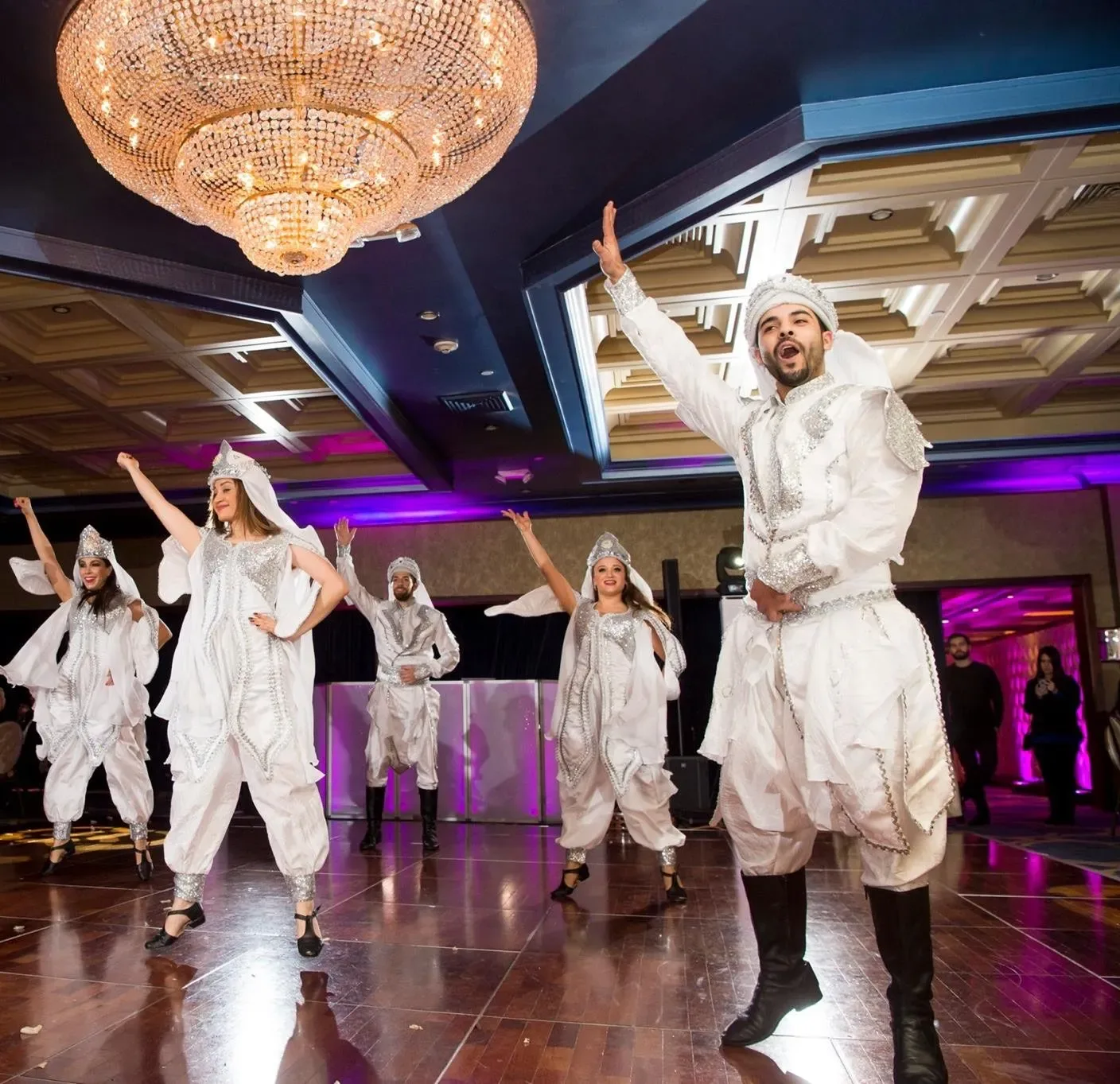
Event Planning
Engagements, henna nights, graduations and milestone parties planned with the same polish as a wedding.
Explore
Lighting & Visual Effects
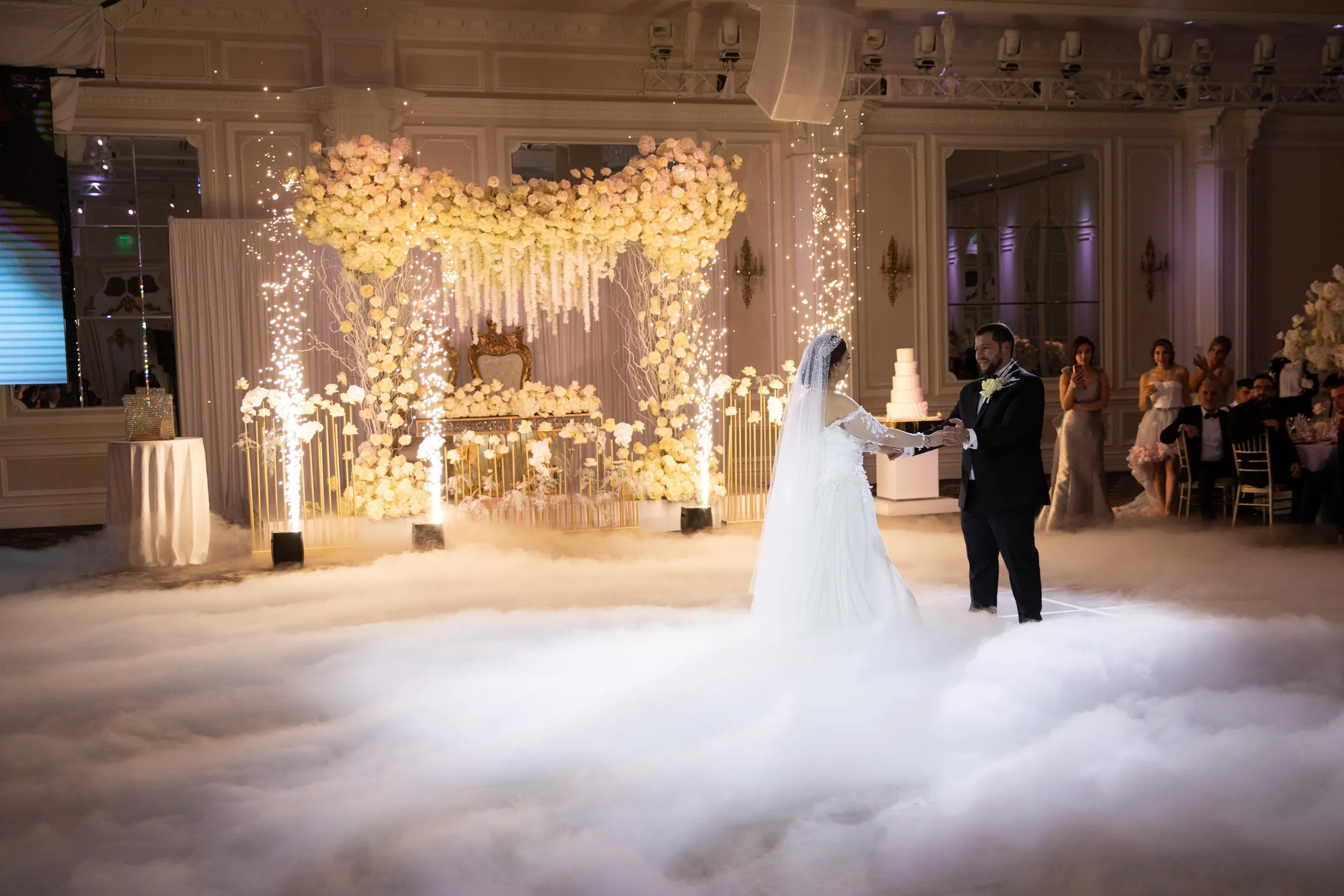
Wedding lighting, first-dance clouds and carefully timed effects designed around your room and venue rules.
Explore


Available across Florida. see all locations, including Miami, Orlando and Tampa.

Events with Elegance
Let's plan your entrance
Tell us your date, city and guest count. We reply within 24 hours.