By Afrah Events Team, Wedding entertainment specialists · Published · Last updated · 7 min read
An Egyptian zaffa is louder, brassier and more theatrical than many Levantine entrances. It can bring in the mizmar, the tabl baladi, a candelabra dancer, a tanoura spinner and a Saeedi stick dance. This guide explains each element and how Afrah Events plans them for Florida venues, including the safety questions hotels will ask.
On this page
What makes a zaffa Egyptian
Every Arab zaffa brings the couple into the celebration with music and movement, but the Egyptian zaffa has a character of its own. Historically it was a street procession that carried the bride and groom from the family home to the wedding, with drummers, reed players and dancers leading the way. In Egypt today it most often runs from a hotel lobby or garden to the ballroom doors, and Egyptian families in Florida usually want that same feeling of a procession arriving from somewhere, not just a couple walking onto a dance floor.
The sound is the first thing guests notice. An Egyptian zaffa leans on the tabl baladi, the riq and other frame drums, and in many weddings on the mizmar, a reed instrument with a bright, piercing tone that cuts through any room. Some modern zaffas in Cairo and Alexandria add trumpets or a full brass section. The songs are well known to Egyptian guests, and Etmakhtari, the classic wedding song that tells the bride she has been chosen, is the one families ask for most often.
The visual side is just as recognisable. A belly dancer balancing a lit candelabra on her head, a tanoura dancer spinning in layered skirts, and men from Upper Egypt performing the stick dance are all part of the Egyptian wedding picture. Not every family wants all of them. The rest of this guide explains each element so you can choose the ones that fit your wedding and your venue.
The sound: tabl baladi, riq and the mizmar
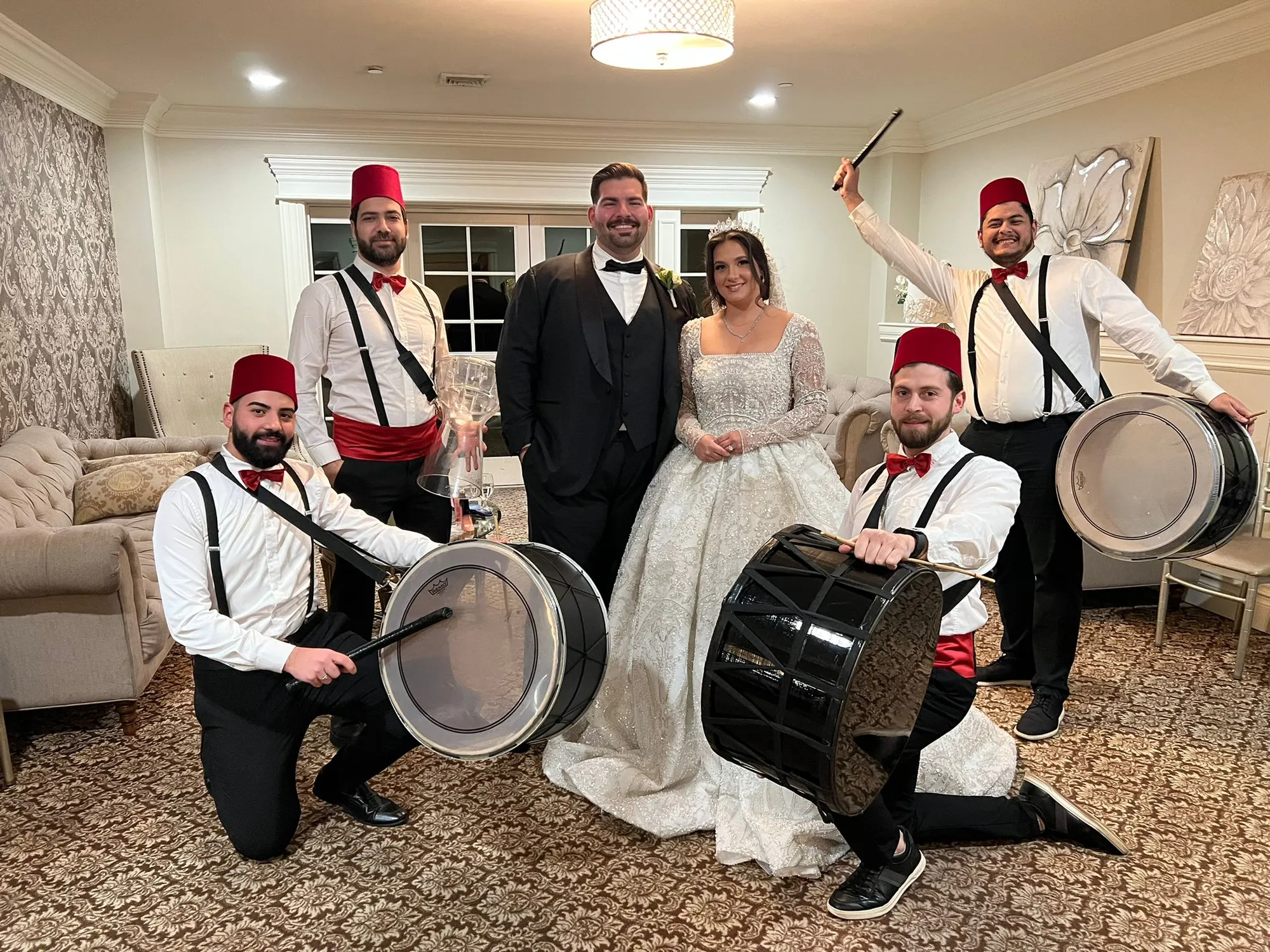
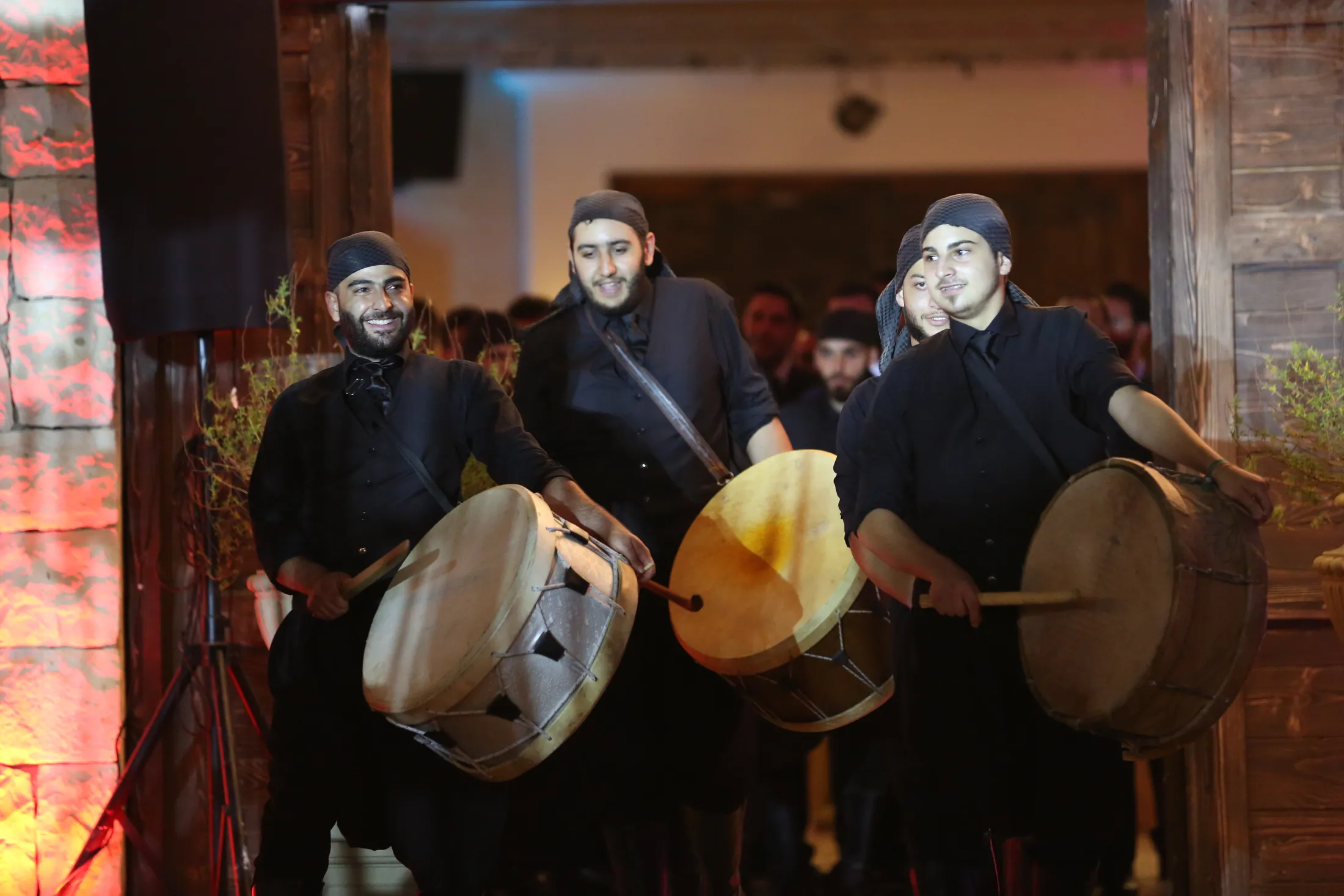
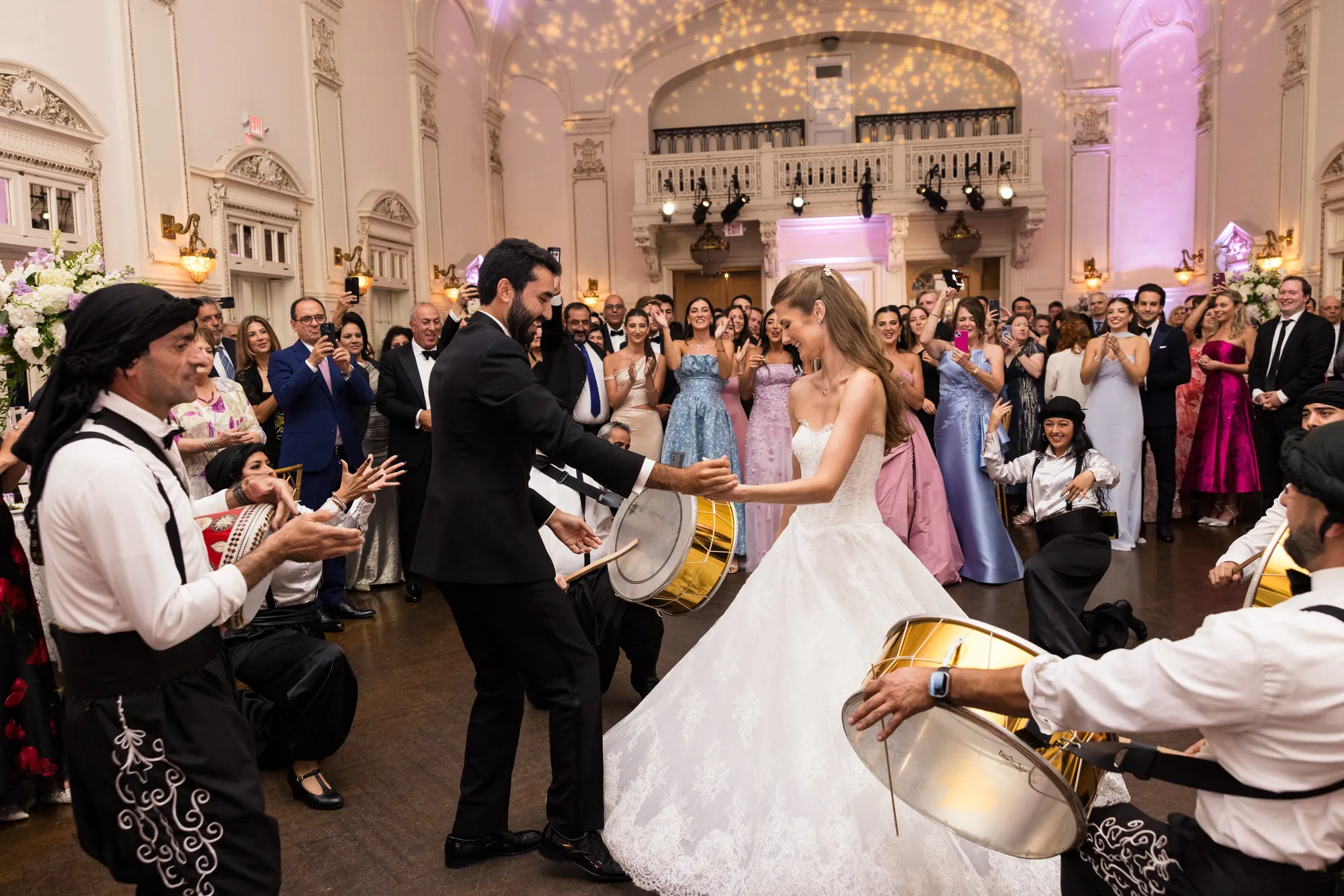
The tabl baladi is a double-headed drum played with a heavy beater on one side and a thin stick on the other, which gives the deep and sharp accents that drive an Egyptian zaffa. The riq, a small tambourine with jingles, adds a fast shimmering layer, and larger frame drums fill out the rhythm. Together they produce a sound that is unmistakably Egyptian even before a melody begins.
The mizmar is the instrument that gives many Egyptian zaffas their festive edge. Its tone is loud and bright, and it carries melody over the drums in a way no microphone can match. That strength is also why it needs planning. In a small or hard-surfaced Florida venue, a mizmar can be very loud for the guests nearest the route. We discuss the room with you and your venue before confirming the instruments, and we tell you plainly when a lighter arrangement will sound better.
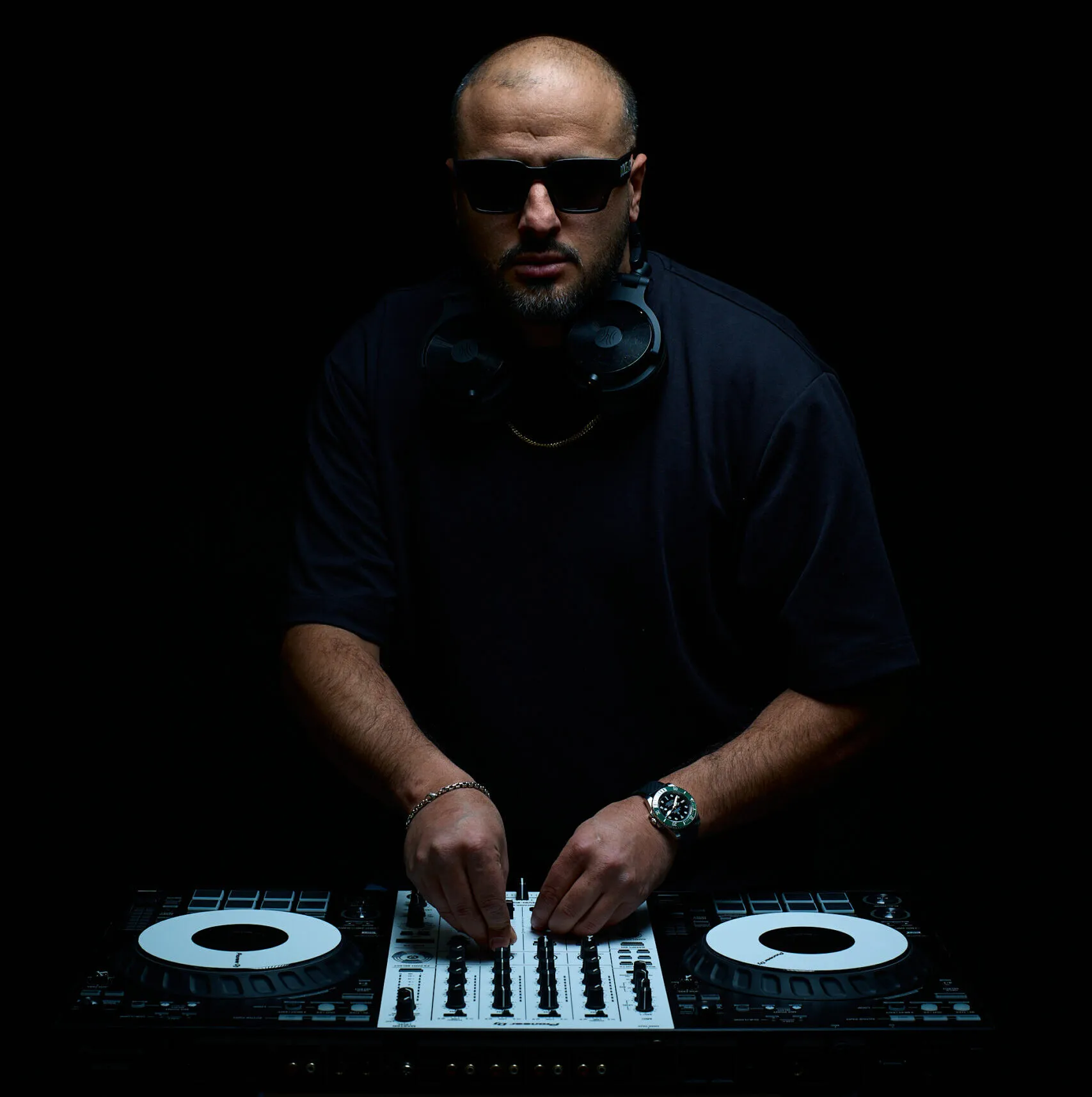
The instruments in your zaffa are confirmed per booking. Some families want a fully live Egyptian ensemble, others are happy with live drums carrying the rhythm while the DJ plays the melody of the songs they love. Both approaches can sound authentic. What matters is that the songs are right, the tempo suits the walk, and the transition from the zaffa to the first dance is clean.
The shamadan and the belly dancer
The shamadan dance is one of the most famous images of an Egyptian wedding. A dancer balances a tall candelabra on her head and leads the zaffa, moving slowly and steadily so the candles stay level. The candelabra is meant to light the couple's way into their new life, and for many Egyptian families the wedding does not feel complete without it.
In Florida, the candles are the first thing to discuss with your venue. Most hotels and many banquet halls restrict open flame in public areas, and a moving procession through a crowded room is exactly the situation fire rules are written for. Many couples choose a candelabra fitted with LED candles, which keeps the look and the meaning without the risk. We ask the venue for its rules early so the choice is made before the wedding week.
We also talk with families about the belly dancer's role and costume. Some families want a full belly dance set after dinner, others want the dancer only for the shamadan moment, and some prefer modest costumes because of the guests attending. These are normal requests, and we plan the performance so that it suits the room and the family rather than following a fixed routine.
Tanoura: the spinning dancer
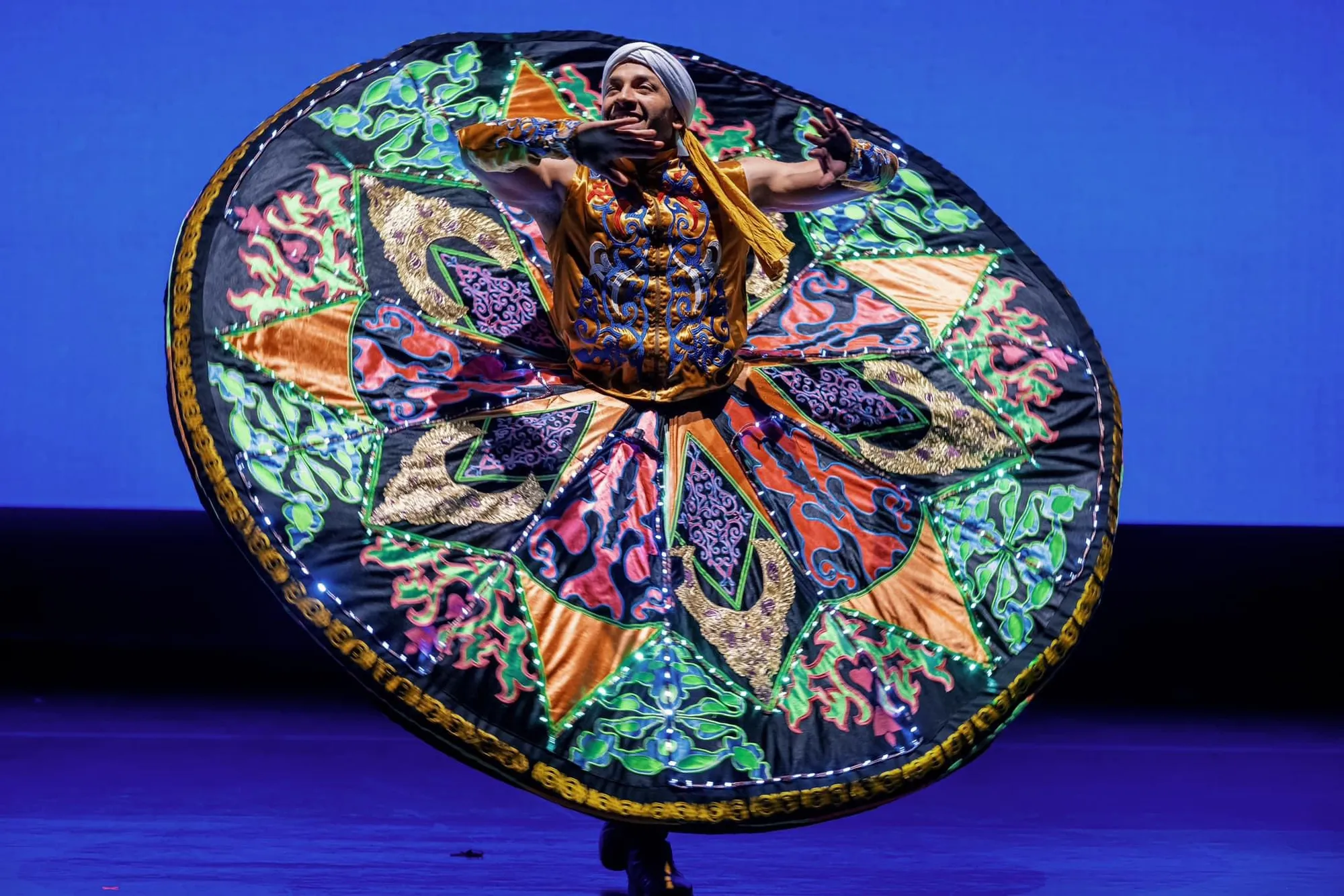
Tanoura is the Egyptian whirling dance, performed by a dancer who spins continuously while wearing several layered, brightly coloured skirts. It developed from Sufi practice and became a staple of Egyptian folk performance and celebrations. At a wedding, the dancer lifts and separates the skirts while spinning, so the colours open into wide circles above and around the body.
Tanoura needs space and a clear floor. The dancer needs a circle with enough room for the skirts to open fully, guests need to stand back far enough to stay safe, and the floor must be smooth and level. Many Florida couples place the tanoura after the zaffa and the first dance, or during dinner as a feature performance, rather than inside the procession itself, because a crowded entrance route rarely leaves enough room.
Some tanoura costumes include lights sewn into the skirts, which look especially strong when the room lights are dimmed. If you would like that effect, tell us when you share your lighting plans, because the DJ and lighting team will need to lower the house lights at the right moment.
They did the most amazing job at my daughter’s wedding. Their performance was perfect. They were punctual and were very welcoming to our guests. They made the wedding extra special. I highly recommend them
Saeedi music and the stick dance
Saeedi music comes from Upper Egypt, known as Al Saeed, and it has its own rhythm, its own songs and its own dances. Families from Upper Egypt often ask for a Saeedi section at the wedding even when the rest of the evening is mostly Cairo pop and shaabi, because the rhythm instantly brings their relatives onto the floor.
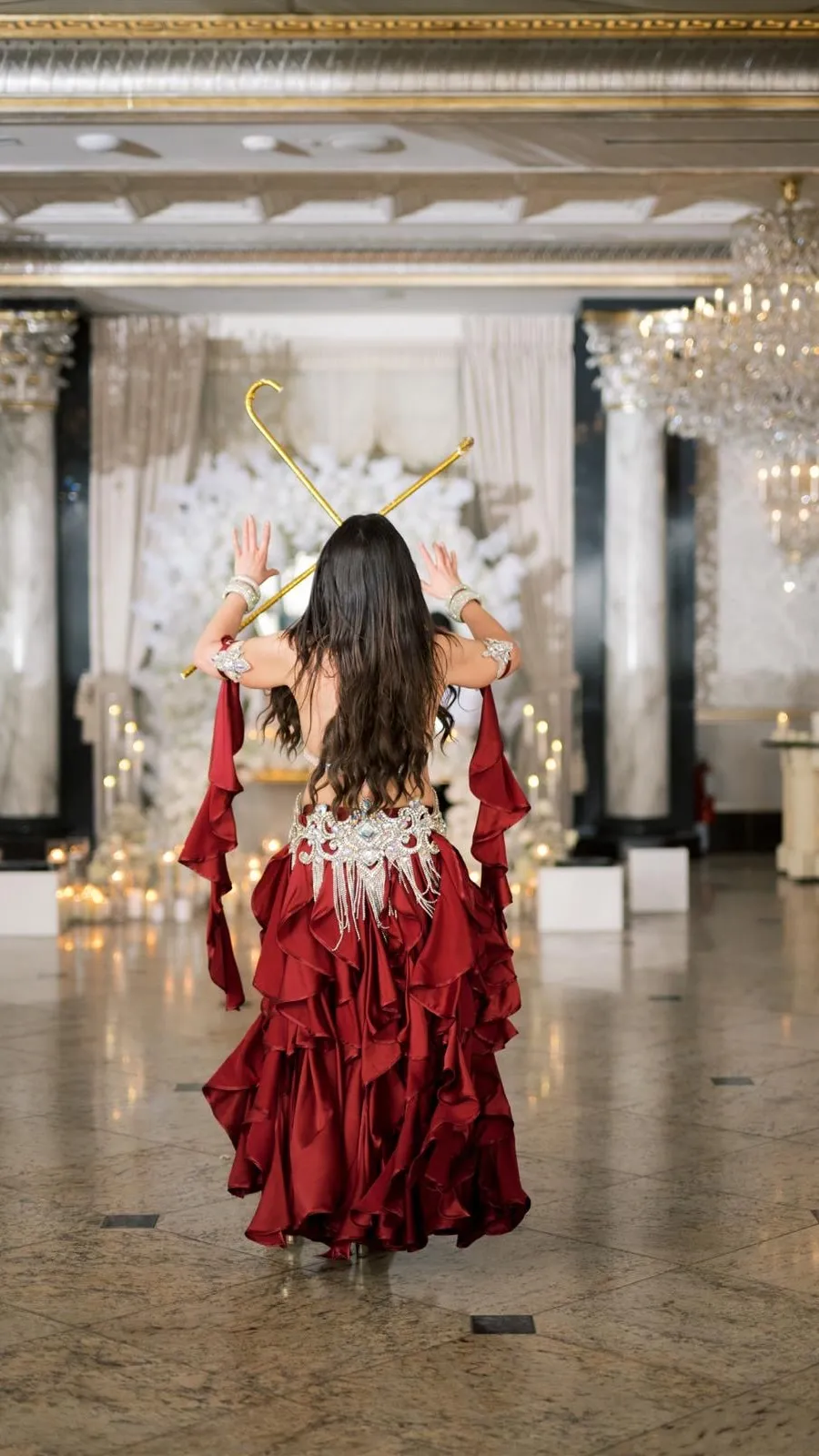
The best known Saeedi dance is tahtib, a men's stick dance that began as a martial art and is performed as a mock duel to music. It was added to the UNESCO list of intangible cultural heritage in 2016. At weddings it is usually performed by two men with long sticks, circling each other to the mizmar and the tabl, and guests often join with sticks of their own. Women sometimes perform a lighter cane dance in the same spirit.
Sticks and canes need room and a sober, careful approach. We plan the Saeedi section as a defined moment, with the floor cleared and children kept back, and we make sure the music and the performers are ready before the MC calls it. Done this way it becomes one of the most joyful parts of an Egyptian wedding.
Putting an Egyptian zaffa into a Florida timeline
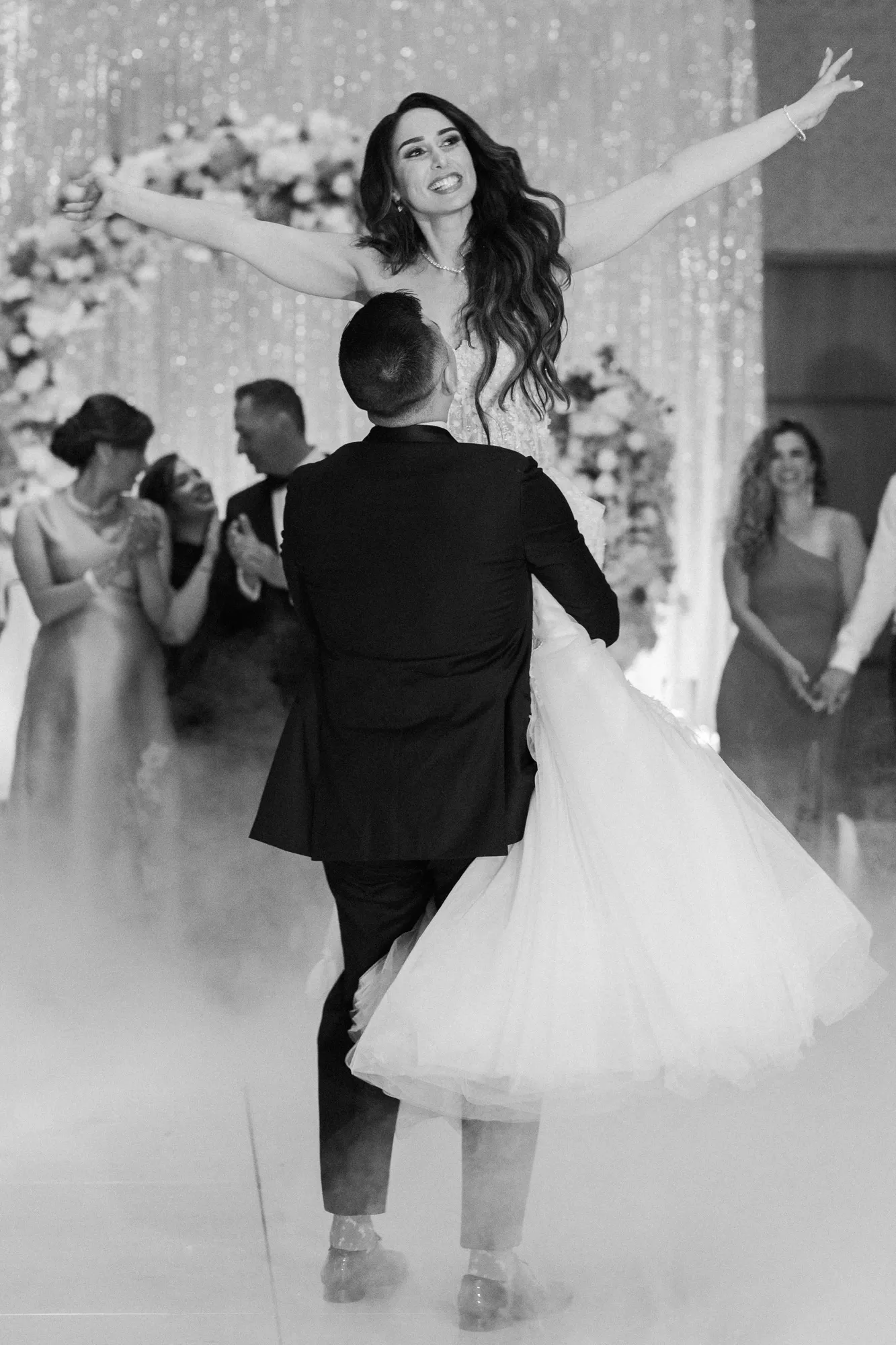
A typical Egyptian wedding evening in Florida might begin with the zaffa from the lobby or terrace, led by the drummers, the mizmar if confirmed, and the shamadan dancer. The couple reaches the dance floor or the kosha, the drums build to a finish, and the DJ moves straight into the first dance. Dinner follows, with the tanoura as a feature performance, and the Saeedi section and open dancing take the rest of the night.
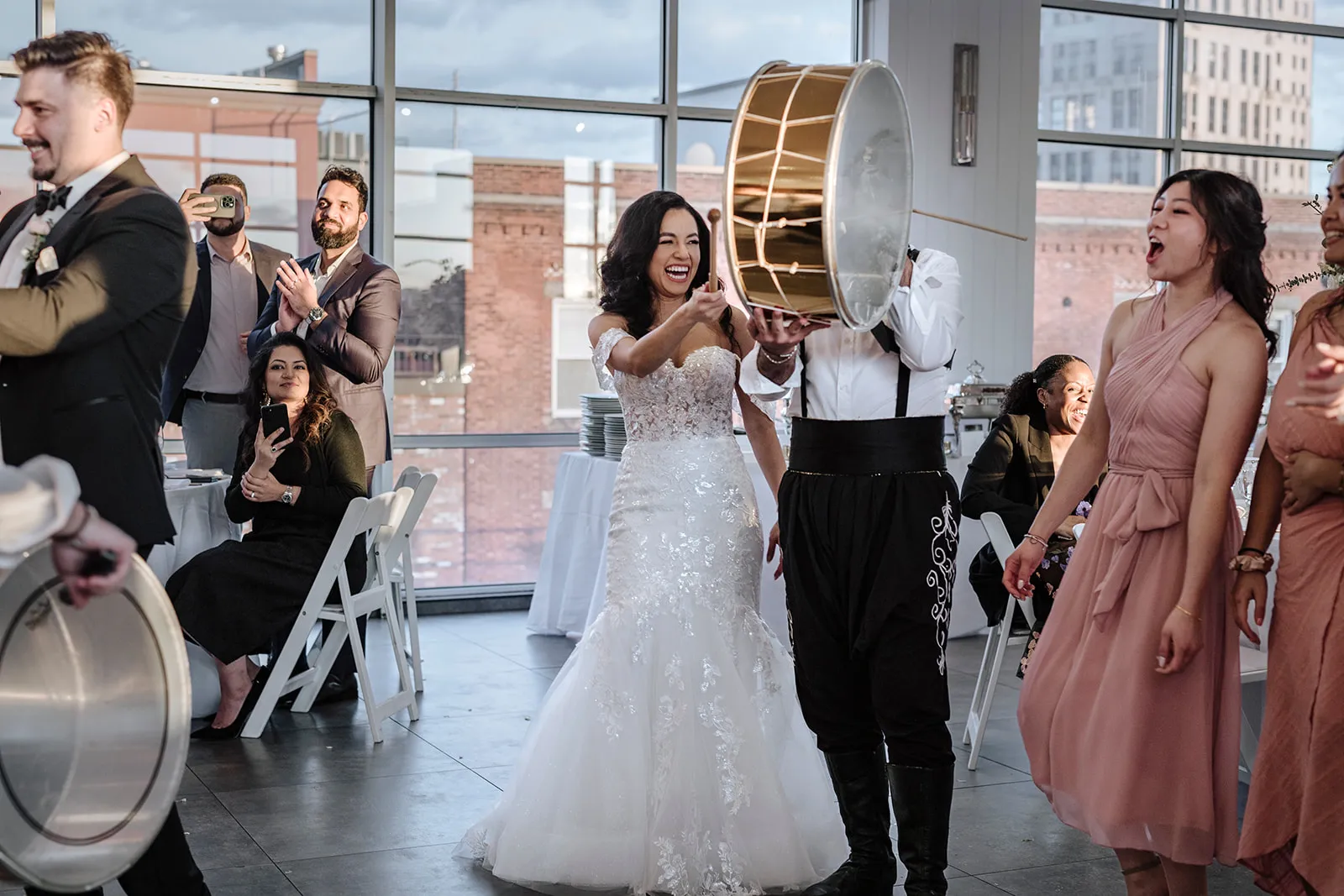
Many Egyptian weddings in Florida are mixed weddings, joining an Egyptian family with a Levantine, Gulf, American or Latin family. In those weddings we often add a dabke set for the Levantine side and plan English announcements alongside Arabic ones. The DJ moves between Egyptian classics, shaabi, Arabic pop and English music so that every part of the room has its moment.
The bilingual MC is especially useful for an Egyptian zaffa. A short explanation of the shamadan or the tanoura before it begins helps guests who have never seen them understand what they are watching, and it gives the moment a sense of occasion rather than surprise.
What to send us for an Egyptian zaffa quote
Send the date, the venue and the specific room, your expected guest count, and which elements you would like: drummers, mizmar, shamadan, belly dance, tanoura, Saeedi stick dance, dabke, DJ and MC. If you have a recording of the zaffa song your family wants, send it, because Egyptian families often have a particular version in mind.
Pricing depends on guests, drummers, dancers, duration and travel, and starting ranges are available on request. Every proposal lists the confirmed performers and inclusions. Afrah Events serves Miami, Fort Lauderdale, Orlando, Tampa, Jacksonville and all of Florida, travel is included in the quote, and we reply within 24 hours by email.
Continue planning with wedding entertainment packages, Miami venue logistics and Orlando resort planning.