By Afrah Events Team, Wedding entertainment specialists · Published · Last updated · 6 min read
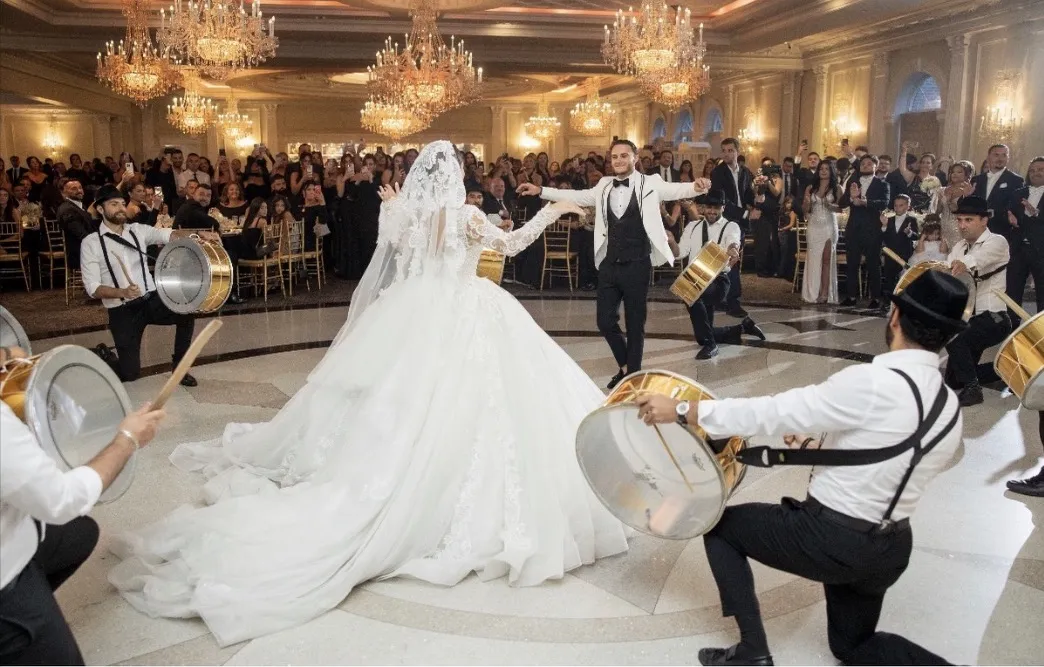
Gulf and Iraqi weddings share the zaffa with the rest of the Arab world, but their formats are distinct. Gulf weddings often centre on the bride's slow entrance in a women's hall, men may perform the ardah or ayyala, and Iraqi families bring the chobi line. This guide explains each and how we plan them in Florida.
On this page
The Gulf bride's entrance in the women's hall
At many Gulf weddings, the bride's zaffa is a slow, formal walk rather than a lively procession. The women's hall is set with a long runway leading to the kosha, the lights dim, and the bride walks the length of the runway to a slow zaffa song while guests watch from their tables. The moment is about elegance and anticipation, and the walk can take several minutes.
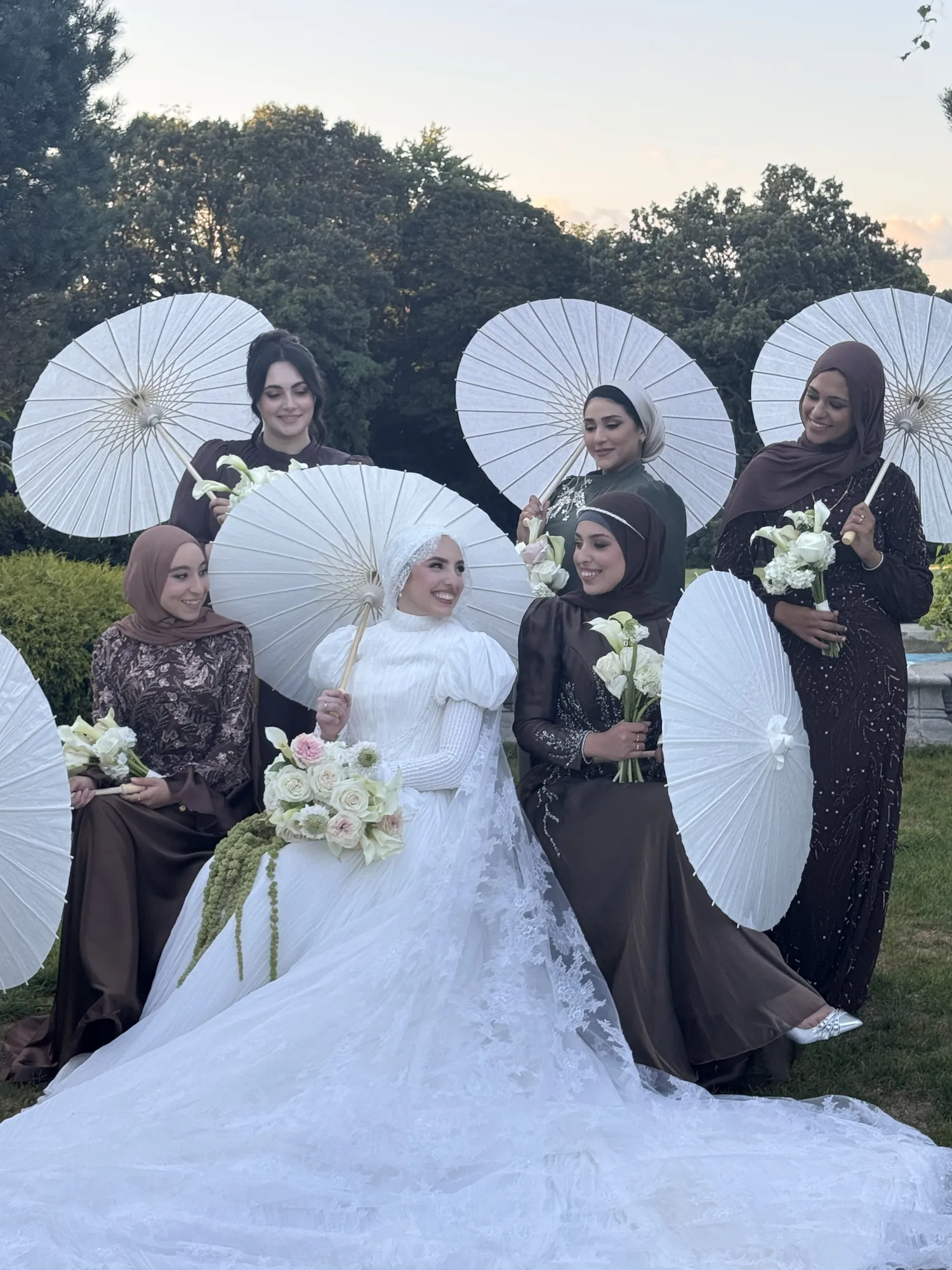
Because the hall is for women, guests dress without hijab, and many families restrict photography and phones. The music before and after the entrance is Khaleeji, and women dance in the Gulf style, including the hair-tossing dance known as na'ashat. Later in the evening, the groom often enters the women's hall with his father and close male relatives for photographs with the bride.
Planning this entrance means planning the runway, the lighting and the music cue together. The runway must be long enough for the walk but safe for the bride's dress and shoes, the lights must change at the right moment and the song must start exactly as she appears.
Men's celebrations: the ardah and the ayyala
Men's celebrations at Gulf weddings may include traditional performances. The ardah, from central Saudi Arabia, is performed by lines of men carrying swords, chanting poetry to the beat of drums, and it was added to the UNESCO list of intangible cultural heritage in 2015. The ayyala, performed in the United Arab Emirates and Oman, sets two rows of men facing each other with thin canes, drums and chanted verses, and it was added to the same list in 2014.
These performances belong to specific regions and families, and some families perform them themselves with relatives and friends. If your family wants an ardah or ayyala moment, tell us how you see it: performed by guests with our drummers supporting, or with performers leading.
In mixed weddings, where a Gulf groom marries into a Levantine or Egyptian family, the men's celebration and the main reception sometimes combine. The groom may enter with a short ardah moment led by his relatives, followed by a drum zaffa that brings both families into the reception. We plan the order so each tradition has its own clear moment instead of the two running into each other.
Swords and canes need a clear plan with your Florida venue. We use performance props, keep movements choreographed and agree the space with the venue so guests and staff stay clear.
Iraqi weddings: zaffa, henna night and the chobi
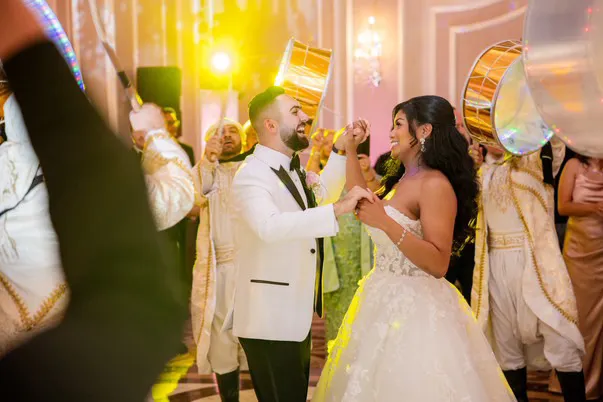
Iraqi weddings often begin with a henna night, when the bride's hands are decorated and the women of both families sing and dance. The wedding itself usually has a zaffa with drums and singing, and families often have particular Iraqi songs they expect to hear as the couple enters.
The chobi is the Iraqi line dance that fills the floor after the entrance. Like the dabka, it is led by a dancer at the head of the line, often waving a handkerchief, but its steps and rhythm are its own, and Iraqi guests notice immediately if the music is wrong. Assyrian and Chaldean families from Iraq may ask for the khigga, and Kurdish families for their own line dances.
Tell us the region your family comes from and send the songs you expect. Our dancers and drummers then prepare the right steps and rhythms, and the DJ plans the Iraqi sets around them.
Iraqi families also tend to keep the dance floor busy late into the night, moving between the chobi, Iraqi pop and other Arab music. We plan the evening so the energy builds rather than peaking too early, and we agree with you when the chobi sets happen, how long each runs and which songs should close the night.
They did the most amazing job at my daughter’s wedding. Their performance was perfect. They were punctual and were very welcoming to our guests. They made the wedding extra special. I highly recommend them
Music for Gulf and Iraqi guests
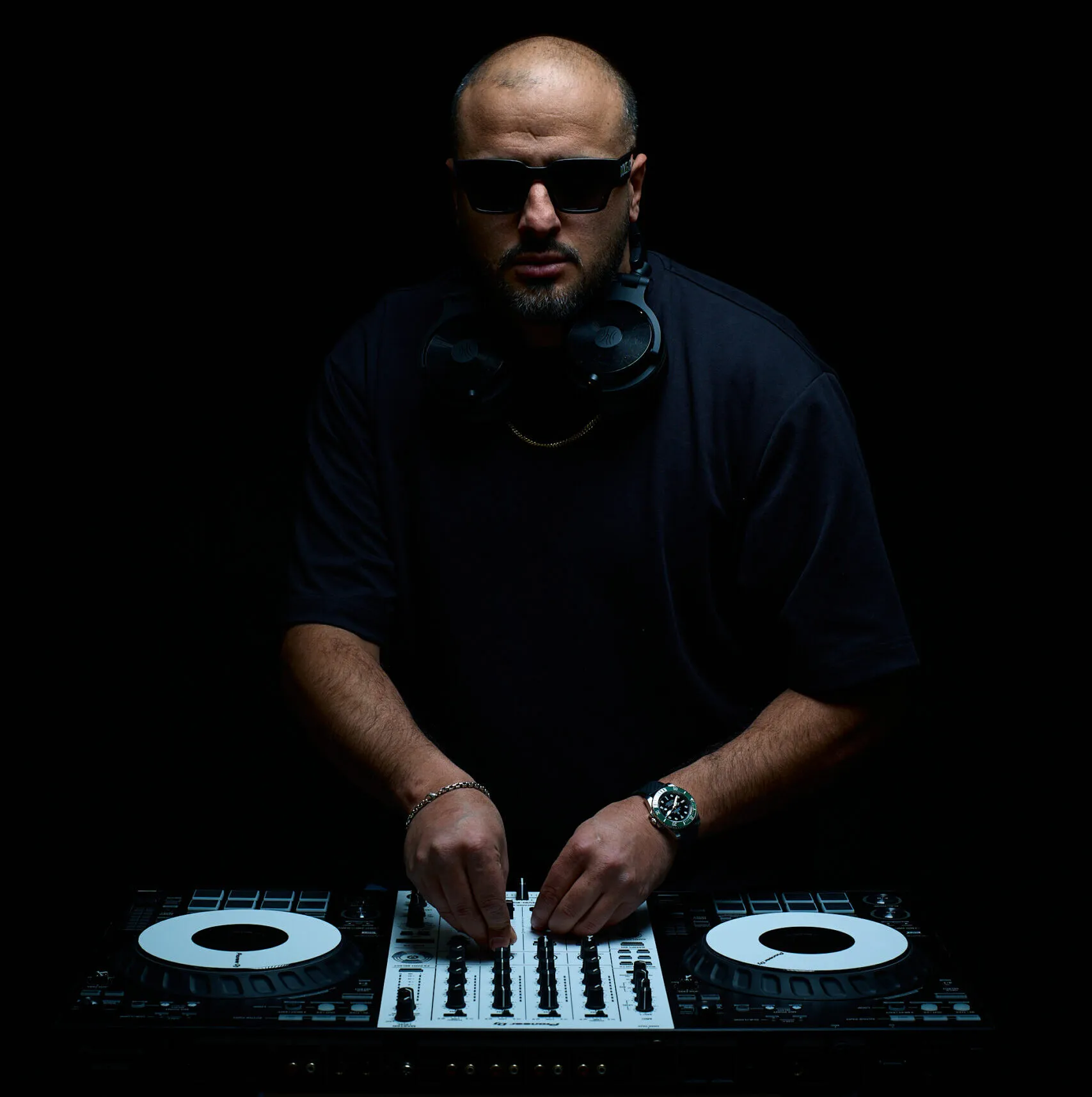
Khaleeji music has its own rhythms and its own stars, and Gulf guests expect to hear it for most of the evening. Iraqi music is just as distinct. A DJ who plays mostly Levantine and Egyptian music needs to prepare carefully for a Gulf or Iraqi wedding, and should ask the family for a list of songs and artists.
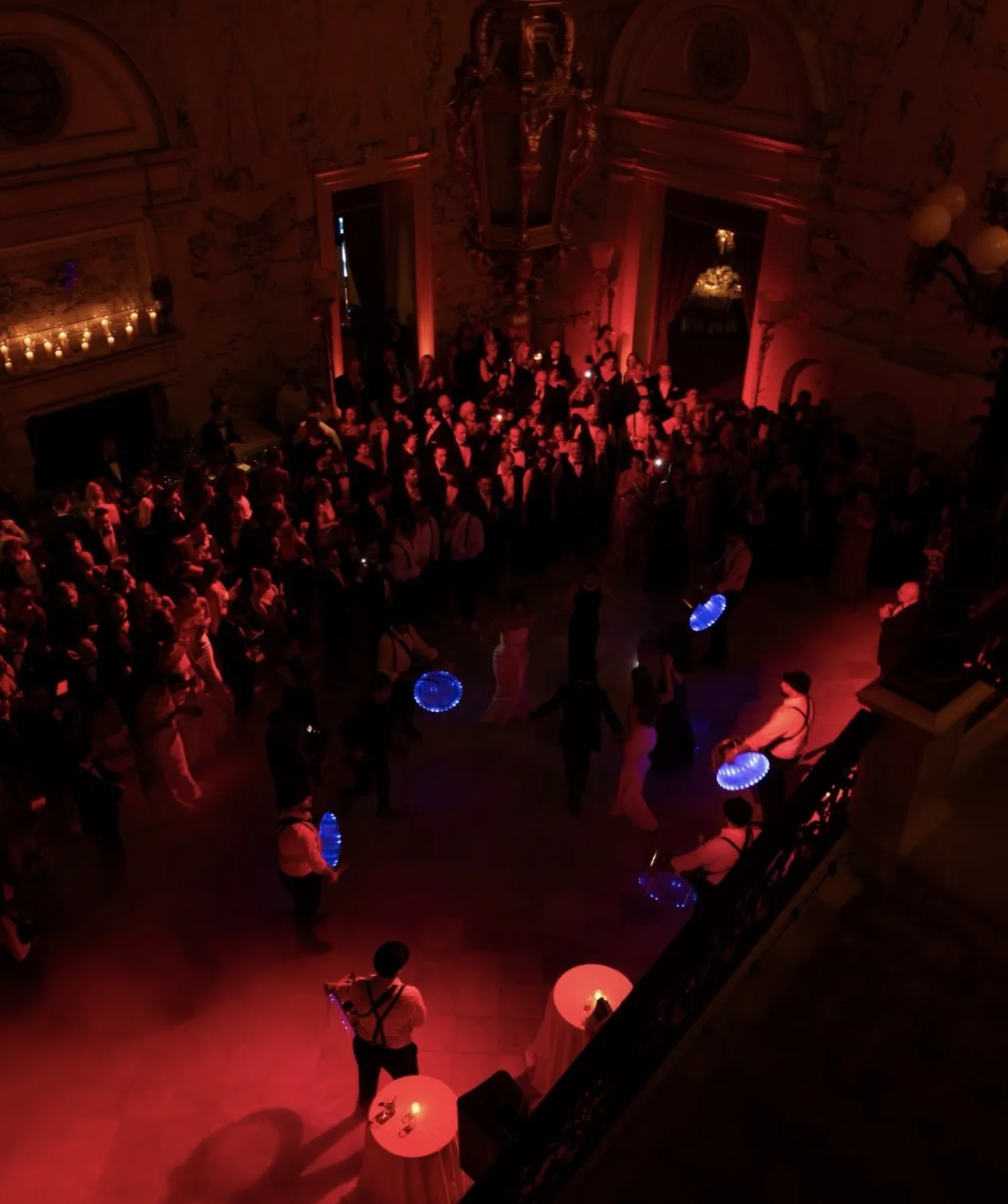
In mixed weddings, the DJ balances Khaleeji or Iraqi sets with Levantine, Egyptian and English music for the other family. We plan the shape of the evening with you so each side has its moments on the floor and the transitions feel natural.
For Gulf weddings with separate halls, two sound setups are often needed, one for the women's hall and one for the men's. Each has its own music and its own timing, and the two must not compete when the rooms are close together. We plan both, agree the volume for each room with the venue and make sure the groom's entrance into the women's hall has its own music cue.
Lighting, runways and staging in Florida venues
The Gulf bride's entrance depends on staging more than most zaffas. A raised runway, a lit kosha, uplighting that dims and changes on cue, and sometimes an LED wall behind the kosha all shape the moment. Florida hotels and halls will ask who builds the runway, how it is secured and what power the lighting needs.
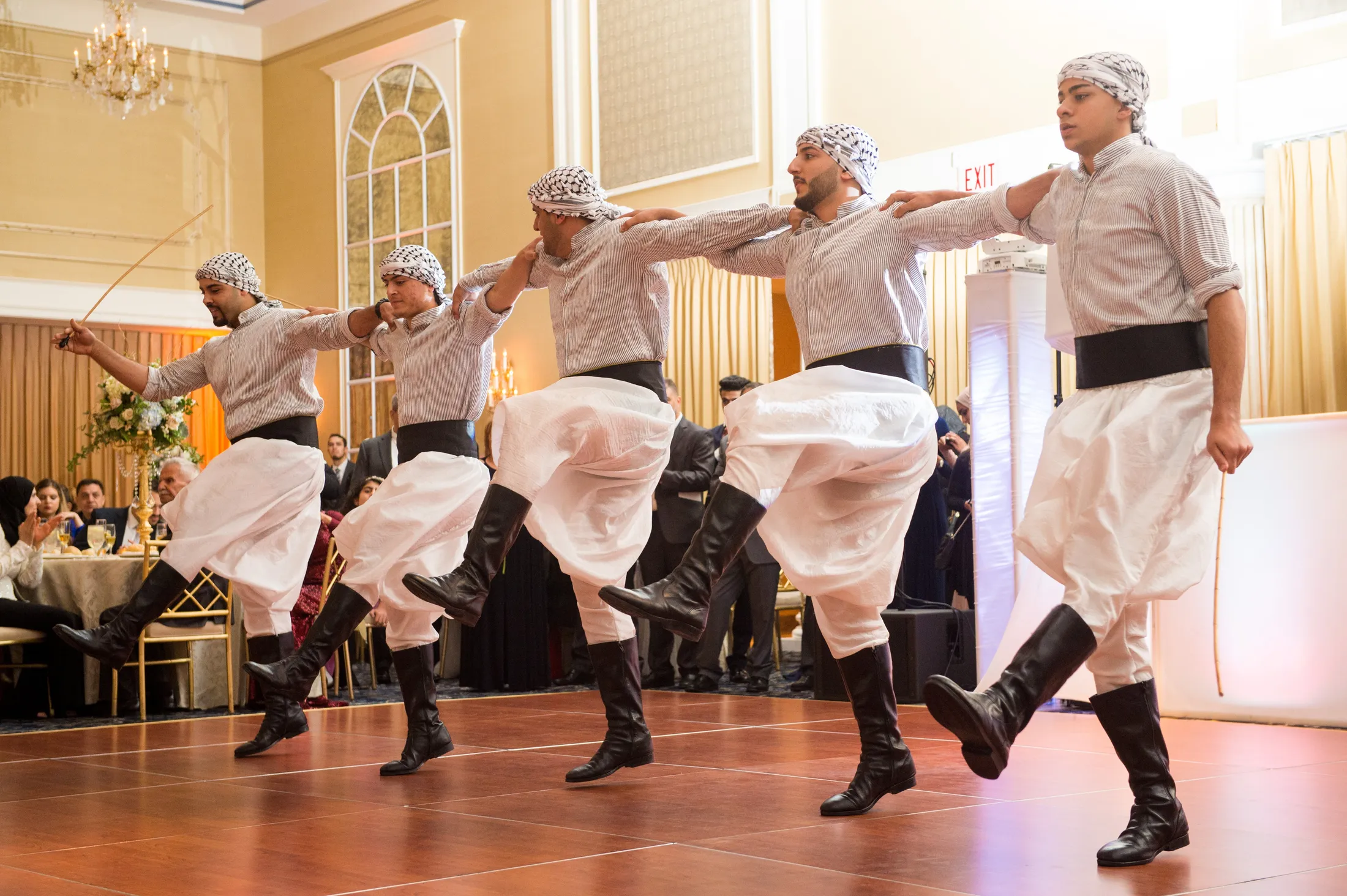
Afrah Events provides lighting, effects, sound and LED video walls alongside the performers, so the music cue, the lighting change and the bride's first step are planned together. Ask your venue early about runway construction, power and any limits on effects in the ballroom.
Florida venues differ in what they allow. Large hotel ballrooms in Miami, Orlando and Tampa often accept a raised runway and full lighting with enough notice, while smaller halls and historic rooms may limit staging or effects. Ask for the venue's rules on staging height, floor protection and installation times, and share them with us so the design fits the room from the start.
What to send us
Send the date, the venue and the rooms, the guest count and the format: separate or mixed celebrations, the bride's entrance you have in mind, any men's performances and the songs your family expects. If the wedding includes a henna night, send that date and venue too.
Pricing depends on guests, drummers, dancers, staging, duration and travel, and starting ranges are available on request. Every proposal lists the confirmed performers, equipment and arrangements. Afrah Events serves Miami, Orlando, Tampa, Fort Lauderdale, Jacksonville and all of Florida, travel is included in the quote and we reply within 24 hours by email.
Continue planning with wedding entertainment packages, Miami venue logistics and Orlando resort planning.