By Afrah Events Team, Wedding entertainment specialists · Published · Last updated · 6 min read
An LED video wall is a bright modular screen that stays clear in a fully lit room and can form part of the stage design. A projector and screen give a large image at a lower cost but need dimmer lighting. Choose by room lighting, viewing distance, what you will show and how long the screen must stay on during the event.
On this page
What is the difference between an LED video wall and a projector?
An LED video wall is built from modular panels, each covered in small light-emitting diodes that produce their own light. The panels lock together into a screen of almost any size or shape, from a narrow strip behind a head table to a full stage backdrop. Because the wall emits light directly, it stays bright and readable even when the ballroom lights, uplighting and moving heads are on.
A projector throws an image onto a screen or surface from a distance. A bright projector paired with a proper screen produces a large, sharp picture, often at a lower cost than an LED wall of the same size. The image depends on the room being dim enough. In a bright room, projected images look washed out, and colors lose their depth.
Both can show the same content: monograms, photos, video montages, live camera feeds and presentations. The difference lies in how each behaves in the room. An LED wall is a light source that can form part of the decor all night. A projector is best for planned moments when the room lighting can be lowered.
How does room lighting decide the choice?
Room lighting is the deciding factor for most Florida weddings and galas. A reception with uplighting, a lit dance floor, moving heads and candles on every table is too bright for most projection to look its best. An LED wall suits that room, because it holds its brightness and color against everything else that is lit.
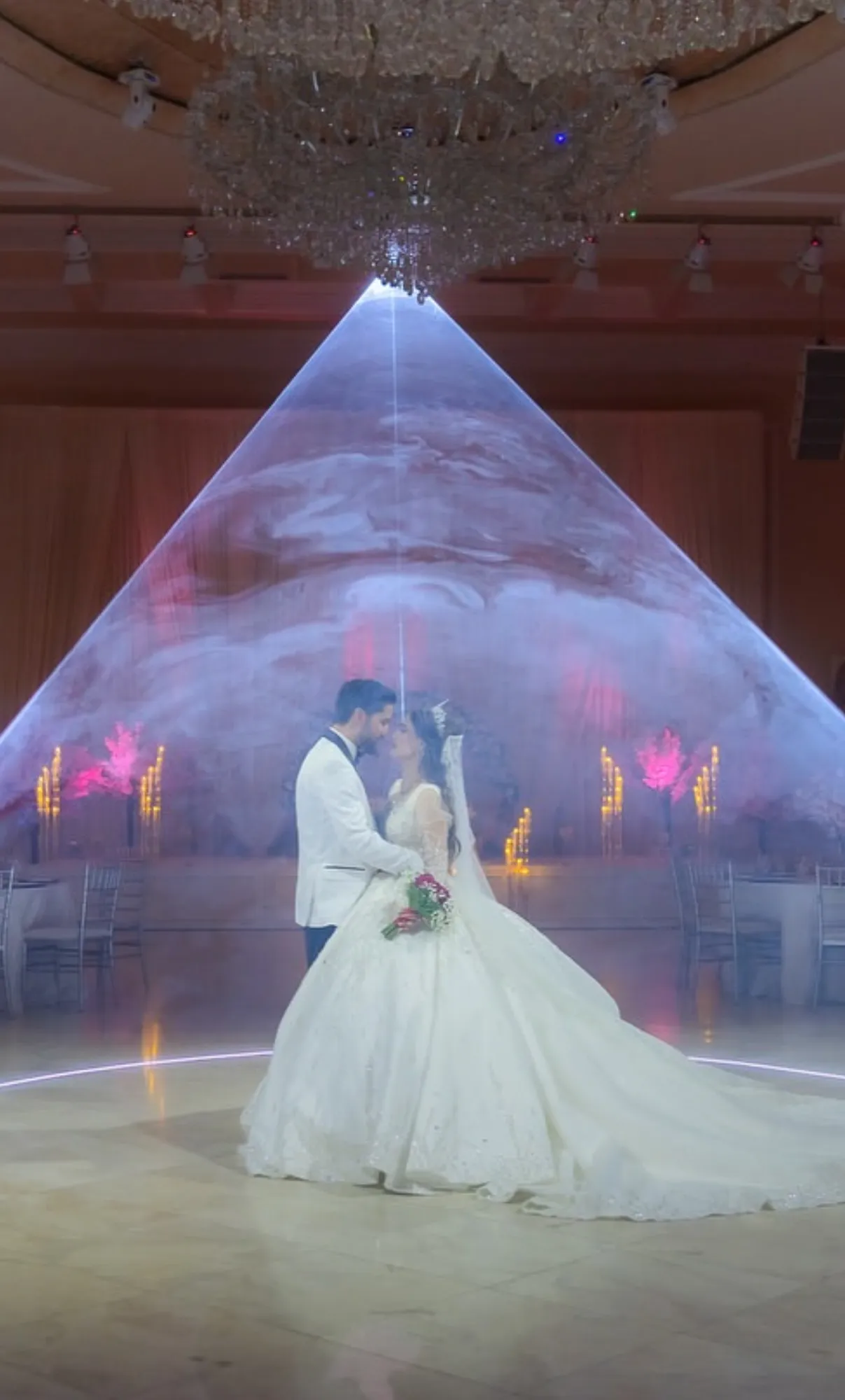
Daylight matters too. Many Florida venues have large windows or open onto terraces, and summer sunsets arrive late in the evening. A projected image during an early cocktail hour or a daytime corporate session may be hard to see. An LED wall stays visible in daylight, which makes it the safer choice for outdoor or bright daytime events, with a covered position and a weather plan.
Projection works well when the program includes planned darker moments: a family montage during dinner, a slideshow before the first dance or a keynote presentation with the house lights down. If the screen only needs to shine at those moments, projection gives a big picture without the cost of an LED wall that runs all night.
What screen size do you need for your room?
Screen size depends on the distance between the screen and the furthest guest. A useful rule is that guests at the back should be able to read the largest text comfortably and see faces in a video. Text-heavy content, such as speaker names, award categories or corporate slides, needs a larger screen than artwork or video.
Ceiling height limits how tall a screen can be. Hotel ballrooms in Miami, Orlando and Tampa usually allow a generous stage screen, while restaurants and private homes may not. An LED wall must also fit through the load-in route, because large walls arrive in road cases and are assembled on site. Check doorways, service elevators and the stage height with the venue.
Some events use more than one screen. Two side screens beside the stage help guests at long ballroom tables, and a separate screen in a cocktail area can show the live feed of the ceremony. Send your floor plan, ceiling height and guest count, and the screen sizes can be planned from where guests actually sit.
What can you show on the screens at a wedding or gala?
At a wedding, the most popular content is a monogram with the couple's names and date, moving artwork in the wedding colors, a family montage of childhood and engagement photos, and messages from relatives abroad who could not travel. A live camera feed lets every guest see the zaffe entrance, first dance and cake cutting, even from tables far from the stage. If your videographer prepares a same-day highlight edit, it can play near the end of the night.
At a corporate gala or award night, screens carry the agenda, speaker names, sponsor loops, award categories and winners, live feeds of speakers and presentations. A non-profit gala may add an impact video before the appeal. Each segment should be listed in the run of show with its screen cue, so the screen changes with the program instead of showing the wrong slide.
Content can be prepared in English, or in Arabic and English together for bilingual families and audiences. Send photos, videos, logos and slides at least two weeks before the event, so files can be checked for quality and format and the playback order approved.
They did the most amazing job at my daughter’s wedding. Their performance was perfect. They were punctual and were very welcoming to our guests. They made the wedding extra special. I highly recommend them
How do screens fit with lighting, effects and sound?
Screens, lighting and sound should look and sound like one design. The screen artwork should match the uplighting colors, and the visuals should change with the program: a calm monogram during dinner, brighter visuals when the dancing starts and a close-up of the couple during the first dance. When one team runs lighting, video and sound, the cues follow one timeline.
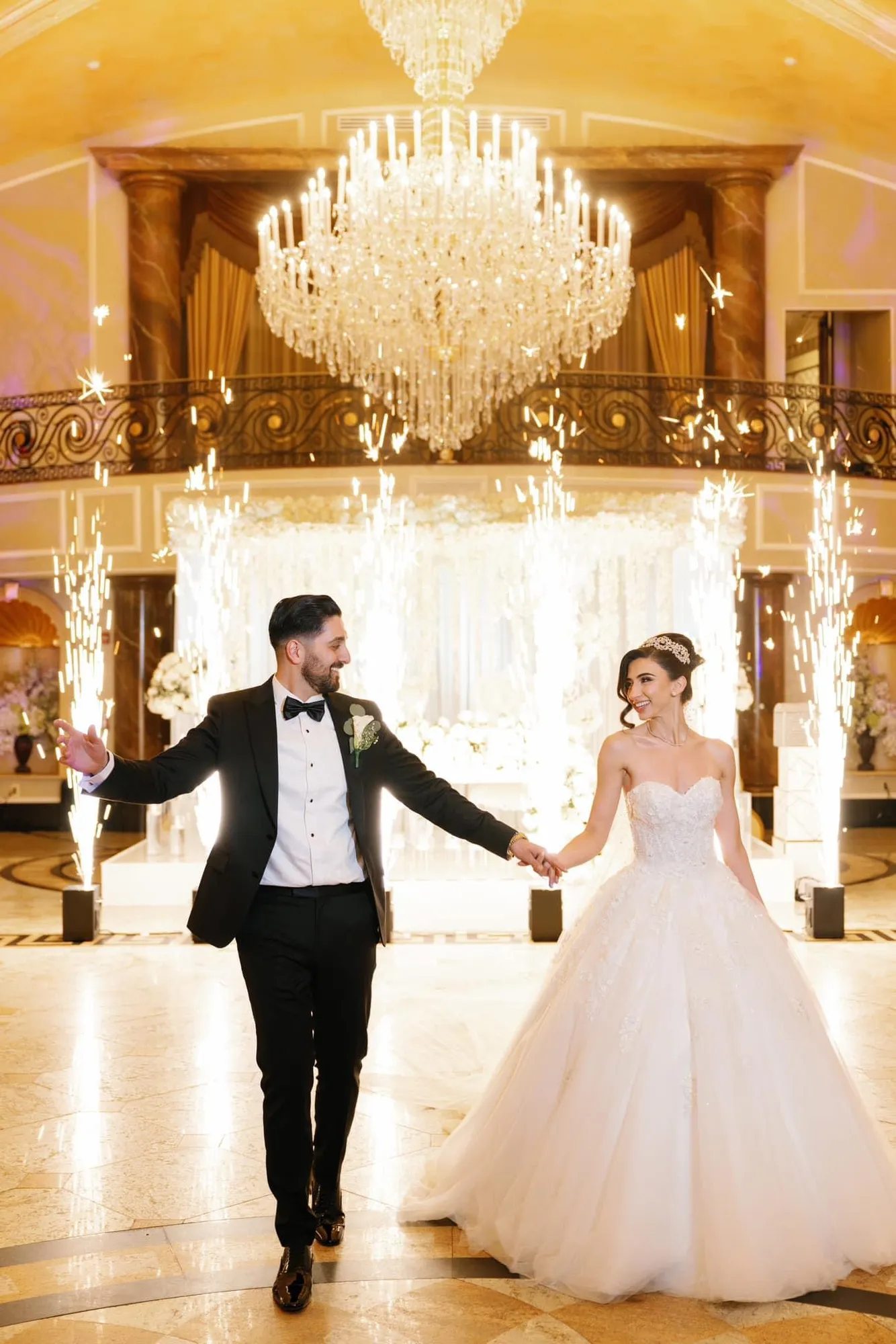
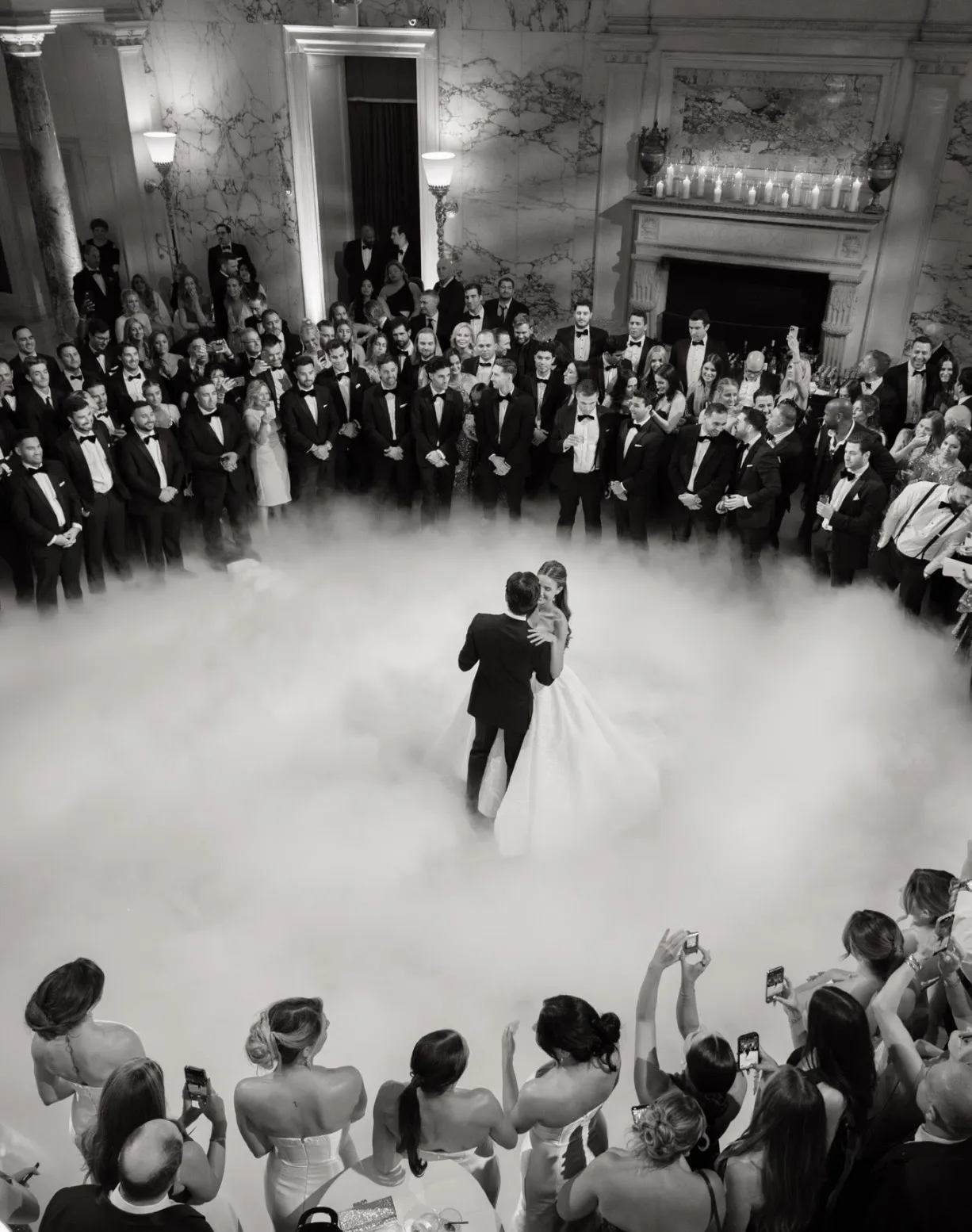
Effects need coordination with the screens. During a cold-spark or low-cloud first dance, where your venue approves those effects, the screen can show the couple's names or a live close-up while the room lighting frames the moment. The video operator, the lighting operator and the DJ need the same cue, which is why a single run of show matters.
Audio for the screens also needs a plan. A montage with music, a video message from abroad or a corporate film must play through the sound system at the right level. Test every file with sound in the room before guests arrive.
How are LED walls and projectors set up at a Florida venue?
An LED wall arrives in road cases and is assembled on site. Smaller walls stand on the floor or stage on a ground support frame, while larger walls may hang from rigging points if the venue allows it and its engineers approve the load. The wall needs a dedicated power supply, a signal cable from the playback position and time to calibrate colors so the image looks even across every panel. A large wall can take several hours to build, so the venue's load-in window matters.
A projector needs a clear line from the lens to the screen, with no chandeliers, centerpieces or standing guests in the beam. Front projection places the projector in the room, usually on a stand or a rigging point, and rear projection hides it behind the screen when there is enough depth. The screen must be tensioned and positioned before the room is set, because moving tables later disturbs the whole floor plan.
Both options need a final test in the room before guests arrive: every file, every transition and every live feed played through the actual screen and sound system. Removal is planned for after the last guests leave, coordinated with the venue's own breakdown. Hotel ballrooms in Miami, Fort Lauderdale, Orlando and Tampa usually publish load-in rules, so share them with your production team early.
Which should you choose for your Florida event?
Choose an LED video wall when the screen must stay bright all evening, when the room is full of lighting or daylight, when the screen forms part of the stage design or when you want a live camera feed visible throughout the night. LED walls suit large weddings, galas, award nights and brand events at hotels and resorts across Florida.
Choose projection when the screen is needed for planned moments with dimmer lighting, such as a dinner slideshow or a presentation, and when budget matters more than all-night brightness. A projector and screen also suit smaller rooms where a large LED wall would dominate the space.
Afrah Events provides LED video walls, projectors and screens with lighting, sound and the DJ and MC across Florida, including Miami, Fort Lauderdale, Boca Raton, Orlando, Tampa and Jacksonville. Pricing depends on screen type and size, content preparation, any camera operator, setup time and travel. Starting ranges are available on request, and every proposal lists the equipment and playback included.
Continue planning with wedding entertainment packages, Miami venue logistics and Orlando resort planning.