By Eyad, Founder of Afrah Events · Published · Last updated · 7 min read
Middle Eastern wedding music in Florida often has to serve several cultures at once: Arabic, Persian, Turkish, Armenian, Greek and the English or Latin music that friends expect. The best results come from a DJ who plans the night in blocks, a clear must play list from each family and an MC who can introduce each set in a way every guest understands.
On this page
Why does Middle Eastern wedding music need a specialist DJ?
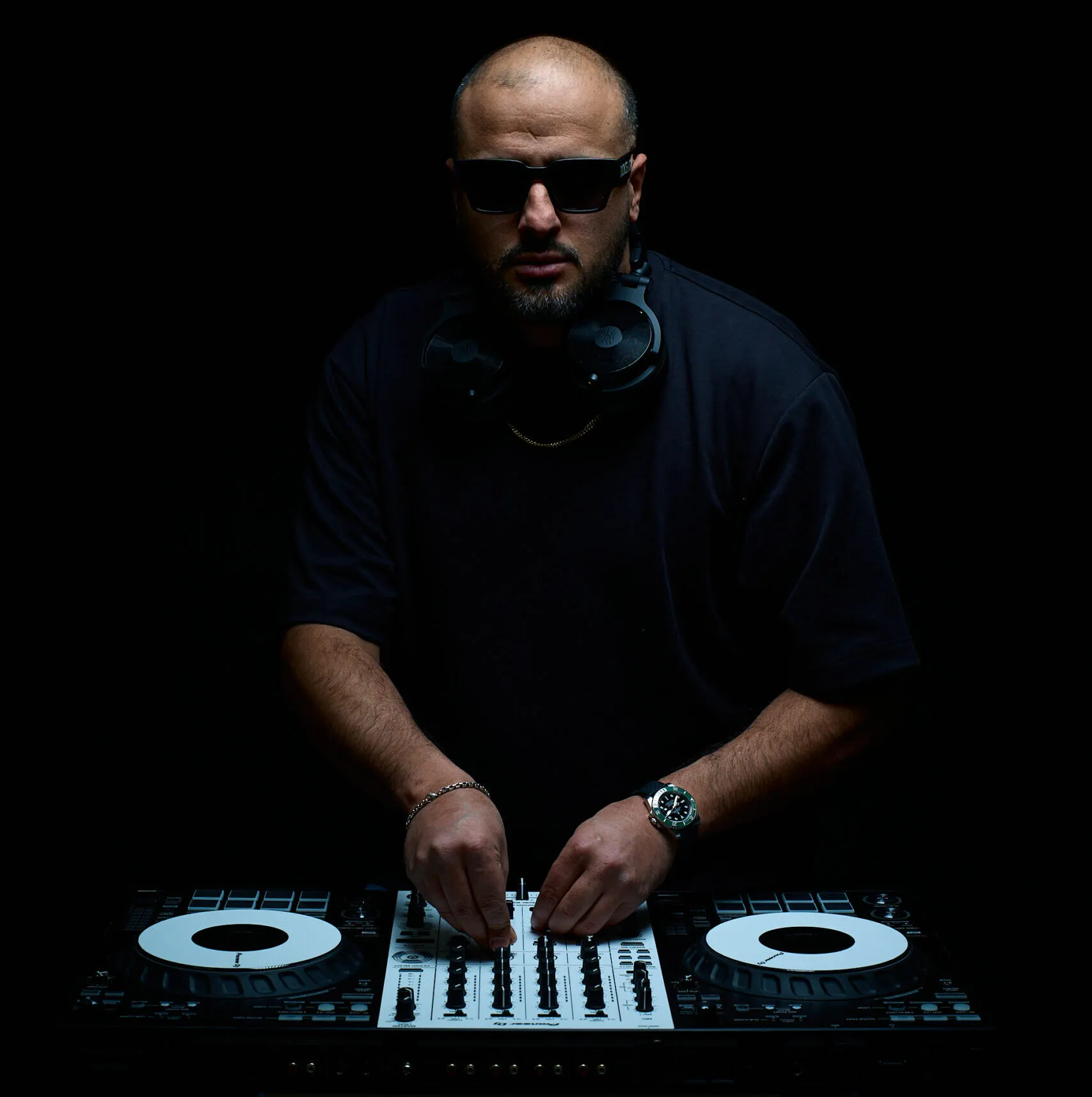
A general wedding DJ may play a few well known Arabic or Persian songs, but a Middle Eastern guest list expects more than a token track. Families notice when the wrong version of a song is played, when the dabke starts with a weak opener or when a regional favorite is missing. A specialist DJ knows which songs bring each generation to the floor and how to move between them without losing energy.
Language matters too. A bilingual MC who can announce the couple, introduce family members and guide guests in both English and Arabic helps everyone feel included. Pronunciation of names should be confirmed ahead of time. Small details like these show families that the entertainment was planned with care.
Specialist DJs also understand how live performance fits into the night. A zaffe, a belly dance set or live drummers each need cues, transitions and space on the timeline. When the DJ already knows how these moments work, the handoffs feel natural instead of awkward.
How do you plan an Arabic music set?
Arabic wedding sets often move through several regional styles. Levantine dabke songs, Egyptian pop, Khaleeji rhythms and Iraqi or Moroccan tracks each appeal to different families. Ask both families which regions should be represented and which songs are essential. A Lebanese family may expect certain dabke anthems, while an Egyptian family may want classic and modern Egyptian hits.
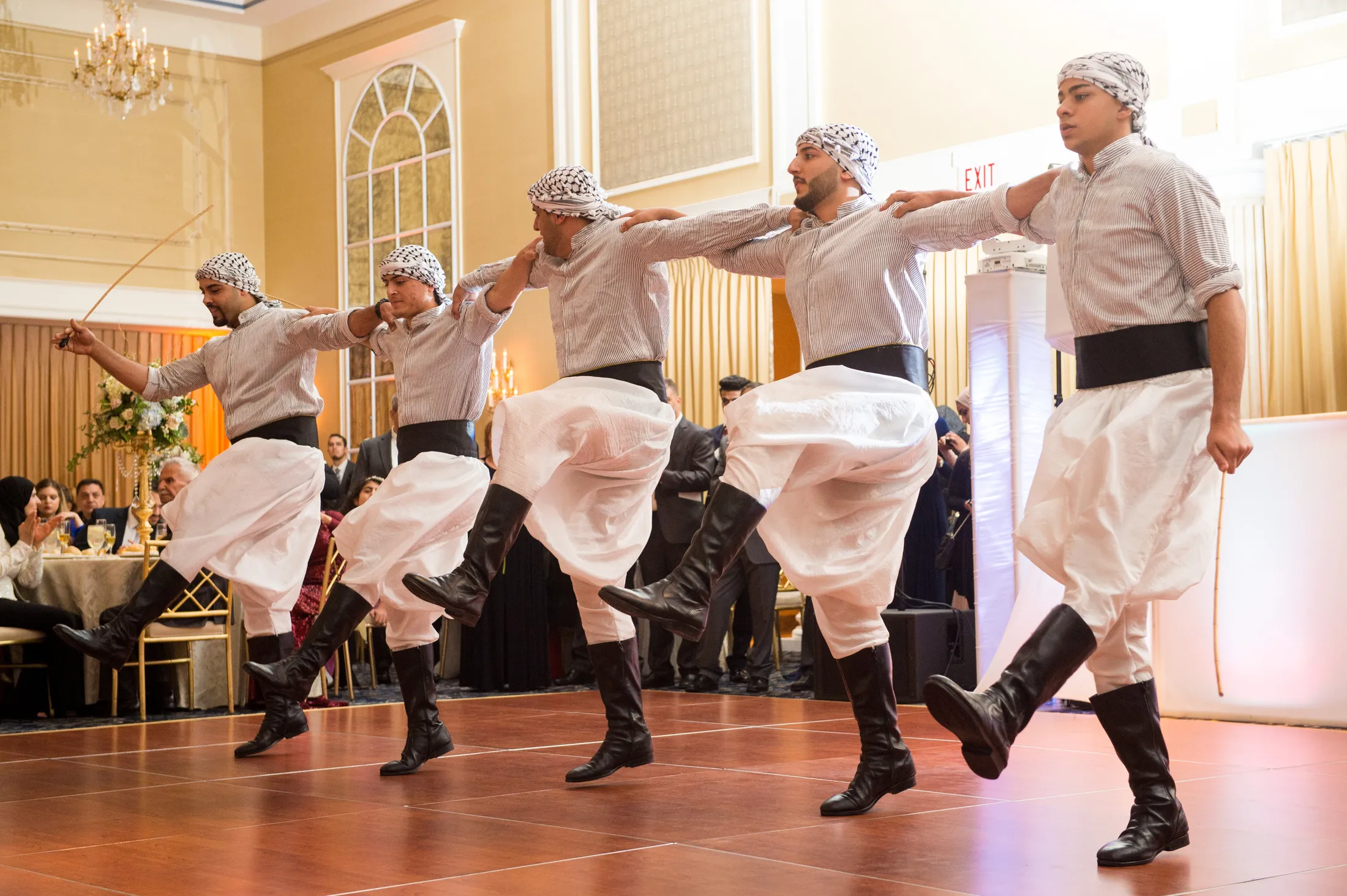
Start the first Arabic block with a song that everyone recognizes. Once the floor is full, the DJ can move into deeper cuts for the families who know them best. Live tabl or darbuka drummers joining the DJ for a dabke block can lift the energy and give the room a moment that recorded music alone does not provide.
Keep the Arabic blocks long enough for a dabke circle to form and grow. Cutting a dabke after two songs leaves guests frustrated. A set of fifteen to twenty minutes is a good starting point, with the DJ extending it when the floor is clearly enjoying it.
How do Persian, Turkish, Armenian and Greek sets fit in?
Many Florida weddings bring together families from across the Middle East and Mediterranean. Persian pop, Turkish halay, Armenian line dances and Greek syrtos or kalamatiano each have devoted dancers. If your guest list includes these communities, plan a dedicated block for each rather than a single mixed playlist. Each group will dance harder when they hear a set built for them.
Ask your DJ honestly which styles they can cover with confidence. If a style is outside their usual repertoire, provide a list of songs your family loves and ask the DJ to prepare those tracks in advance. Afrah Events confirms which styles our DJs can cover for your date, so you know what to expect before you book.
Group dances from these cultures share a lot with dabke: linked arms, a leader at the front and a circle that grows as more guests join. Placing these blocks next to each other can create a long stretch where most of the room is on the floor together, which is often a highlight of a multicultural reception.
How should the night be structured from start to finish?
Cocktail hour suits softer music: oud, violin, saxophone or a relaxed mix of Arabic and international instrumental tracks. Live musicians are especially effective here because guests are mingling rather than dancing. The music should allow conversation while still setting the mood.
The grand entrance or zaffe opens the reception. After the couple's first dance and any family dances, dinner music should stay at conversation level. Once dinner ends, the dance floor blocks begin. A common order is an Arabic dabke block, an international or Latin block, a Persian or Turkish block and then a mixed peak hour where the DJ plays the night's biggest songs.
Close the night with songs that bring everyone back together. Many families like to end with a final dabke or a well known song from the couple's culture. Discuss the last song with your DJ so the evening ends on a moment you choose rather than a random track.
What role do lighting and effects play in the music plan?
Lighting changes can signal each new music block. Warm amber for cocktails, bright color for dance blocks and a soft wash for slow songs help guests feel the shift. Moving head lights and pin spots on the dance floor make the room look full in photos and videos even when the circle is just forming.
Effects such as cold sparks or low fog work best at specific musical moments, such as the first dance or the couple's entrance after the zaffe. They should always be approved by the venue first. Ask the venue about fire authority rules, smoke detectors and clearance around guests before planning any effect.
When lighting and music are run by coordinated teams, cues land exactly on the beat. Afrah Events offers DJ, MC and lighting together so the music and visuals follow one plan rather than two separate vendors guessing at each other's timing.
Our favorite was definitely [the DJ and MC], [they] stuck to our playlists and meshed all our genres together effortlessly, guests raved about it.
What should you send your DJ before a Middle Eastern wedding?
Send a guest overview: approximate numbers from each background, ages and languages spoken. Add three lists for each family: must play, play if the floor is full and do not play. Include the song for the entrance, the first dance, any family dances and the last song of the night.
Include the timeline with every live moment marked: zaffe, belly dance set, live drummers, speeches, cake cutting and any cultural ceremonies. Note who will give the cue for each moment. Provide pronunciation guides for every name the MC will announce.
Finally, schedule a planning call about two weeks before the wedding. Walk through the timeline with the DJ and confirm the music blocks. This short call often makes the biggest difference to how smoothly the night runs, especially when several cultures share one dance floor.
How do you include live musicians alongside the DJ?
Live musicians add a personal touch that recorded music cannot. A violinist or saxophonist during cocktail hour, an oud player during dinner or a singer for the first dance can make the evening feel more personal. Live drummers can join the DJ during dabke blocks for extra energy.
Live musicians need sound checks and a clear position in the room. Ask the venue where they can set up and whether additional power is available. Coordinate with the DJ so the sound system can support both the DJ and the live performers without conflict.
Plan the handoffs between live music and the DJ. A live set should end on a clear cue, and the DJ should be ready to start the next song immediately. These small transitions keep the energy steady and prevent long silences between moments.
What mistakes should you avoid when planning wedding music for several cultures?
The most common mistake is giving the DJ too little information. A single list of a few songs does not tell the DJ which regions, generations or languages are in the room. Provide context about the guests and the songs that matter to each family so the DJ can plan properly.
Another mistake is trying to please everyone with constant switching. When every song changes style, no group stays on the floor long enough to build energy. Blocks of music give each group a real chance to dance and enjoy their own music.
Finally, avoid leaving the most important songs to chance. If a particular song must be played for the entrance, a family dance or the last dance, put it on the timeline in writing. Confirm it with the DJ during the planning call so it is ready at the right moment.
How does the MC keep a multilingual crowd together?
A good MC does more than announce names. At a Middle Eastern wedding, the MC sets the tone for each part of the night, welcomes guests in the languages they understand and invites each group onto the floor when their music begins. Short, confident announcements work better than long speeches between songs.
The MC also manages the timeline. When dinner runs late or a speech goes long, the MC works with the DJ and planner to adjust the schedule without the guests noticing. This keeps important moments such as the cake cutting and the last dance on track.
Share a list of announcements with the MC in advance, including family members to be recognized, the order of entrances and any phrases the family wants said in Arabic or another language. Confirm pronunciation during the planning call so every name is spoken correctly.
Continue planning with wedding entertainment packages, Miami venue logistics and Orlando resort planning.