
By Eyad, Founder of Afrah Events · Published · Last updated · 7 min read
A useful wedding timeline shows dependencies, not just a list of songs and speeches. Eyad outlines an adaptable sequence from guest arrival and zaffe preparation to dinner, dancing, and the final musical moment. This sample uses event cues rather than fixed performance times, leaving room for your venue and family traditions.
On this page
What should happen before the zaffe begins?
Build the sample sequence from readiness rather than a dramatic entrance cue alone. Guests need to know where to gather, the couple needs an agreed waiting location, and performers need confirmation that the route is available. The photographer, videographer, planner, and venue should understand what happens next. An entrance works best when those dependencies are resolved before anyone is asked to start the music or open doors.
A practical opening sequence is guest arrival, seating or gathering, final supplier checks, couple readiness, and the entrance cue. Your actual order may change if cocktail hour happens elsewhere or a ceremony precedes the reception. Assign one person to confirm readiness across teams. That avoids several well-intentioned relatives or suppliers giving different instructions because each can see only one part of the overall event situation.
How should the zaffe connect with the couple’s entrance?
Decide whether your zaffe is the entrance itself or a separate procession that leads into a ballroom reveal. That distinction affects guest positioning, music, photography, and the handoff to the DJ. Identify the starting point, route, and ending position. If family members will join, specify when they participate and where they move afterward so the couple remains visible and the reception can continue without unnecessary confusion.
For this sample sequence, the readiness confirmation leads to the zaffe, then the couple reaches the agreed focal point. The next cue might be a welcome announcement, a first dance, or a transition into general celebration. Choose one direction in advance. Leaving several possibilities open can create an awkward pause precisely when guests are most attentive and the couple is waiting for someone to guide the next moment.
Should the first dance happen before or after dinner?
There is no universal answer. A first dance immediately after the entrance can create a continuous emotional opening, especially when guests are already focused on the couple. Placing it later can provide a fresh focal point after a meal or family welcome. Consider your comfort, the musical transition, and the catering plan rather than assuming one placement is required for an Arab wedding reception.
In one adaptable version, the sequence runs from zaffe to couple introduction, first dance, and a brief welcome before dinner service. In another, the couple enters, guests settle for the meal, and the first dance introduces the main dancing portion. Share the preferred version with the venue and entertainment team. They need to coordinate the transition instead of treating the first dance as an isolated song request.
Where do dinner, speeches, and family traditions fit?
Ask the catering team how service will operate before placing speeches or performances around the meal. A moving service team, cleared plates, and a focused listening moment can compete with one another. Choose appropriate points together and identify who controls microphones. If relatives will speak, confirm the speakers and their order so the DJ is not trying to interpret unexpected requests while the venue is managing food service.
Add family traditions deliberately rather than leaving them as unnamed extras. A parent dance, a special song, a cultural presentation, or a family-led moment needs a place in the sequence and an agreed cue. Explain what each involves, including who participates and any required music. The sample middle section might therefore include dinner service, selected speeches, a family tradition, and a clear transition into broader guest participation.
How do you build dancing without constant interruptions?
Group formalities thoughtfully so guests can settle into the dance floor. Repeatedly stopping music for announcements, photographs, or unplanned presentations can fragment the evening. That does not mean every formal moment must happen together, but each interruption should have a purpose. Discuss the desired musical progression with the DJ and identify which songs, cultural styles, or family participation moments are essential to your reception experience.
A sample later sequence could move from the final planned formality into open dancing, a designated cake moment if desired, and a return to dancing before the closing cue. Adjust that structure to your meal and photography priorities. If live musicians or dabke performers are involved, specify their relationship to the DJ’s set. The goal is coordinated energy, not several suppliers independently deciding when the room needs a change.
What should happen before the final song?
Check the venue’s contracted event boundaries and build the close around them. Decide whether you want a final shared dance, a private musical moment, or a straightforward closing announcement. Any departure feature needs separate coordination with the venue and relevant suppliers; effects require venue approval. Tell the photographer which closing moment matters so the ending is not planned independently from the coverage you actually have arranged.
Your final working timeline should list sequence, cue owner, location, participants, and essential music references. Add contingency notes for delayed readiness or a change of space without inventing fixed performance lengths. Share the current version with Afrah and the other relevant teams. We review written booking and confirmation requirements with you. The timeline should reflect that agreed scope rather than quietly adding performances or duties that were never confirmed.
Our favorite was definitely [the DJ and MC], [they] stuck to our playlists and meshed all our genres together effortlessly, guests raved about it.
Build the sample around service and guest access
Treat any sample timeline as a planning model, not an Arab wedding rule. Begin with the venue's guest access time, meal service requirements and final music cutoff. Add any ceremony or religious observance only after its timing is confirmed with the appropriate people. We recommend separating vendor operations from the guest facing schedule. Sound checks, room lighting checks and performer preparation need their own entries before the invitation time. A reception that begins at six does not mean musicians and production staff can first enter the room at six.
For an illustrative evening, guests might arrive at six for refreshments and conversation while the couple completes photographs. The coordinator can begin seating guests around six forty, with the entrance planned for approximately seven once the room is ready. These are examples rather than promised durations. Check whether travel between ceremony and reception changes the sequence. Assign someone to track the couple's readiness and someone to confirm the ballroom is prepared. The entrance cue should follow both confirmations instead of starting automatically because the printed schedule has reached a particular minute.
Connect the entrance to the next meaningful moment
Place the zaffe assembly before the public cue and identify exactly who joins. Our drummers need time to reach the agreed position, while photography needs a clear route to the couple. The procession should have a destination, such as the dance floor or couple's seating. Agree on a concise ending signal and the DJ track that follows. If family participation grows, the coordinator should know which parts can be shortened. Do not let the entrance continue without a plan while guests wait for the couple to work out where to stand.
After the entrance, choose between a first dance, a welcome or a brief participation segment according to the couple's priorities. A first dance at approximately seven fifteen might suit a reception where the couple wants that moment before dinner. Another family may prefer a welcome and immediate service, with the first dance later. Neither order is culturally mandatory. Tell catering which option is selected and whether plates should wait during the feature. Keep any requested effect conditional on written venue approval and prepare the same moment with music and lighting alone.
Place dinner, speeches and participation without competition
If dinner begins around seven thirty in the example, ask catering when service traffic will be heaviest and where servers cross the floor. Schedule speeches during an agreed quieter interval, not simply at the moment the first plate appears. Confirm microphone locations and introduce speakers in a known order. Give each speaker a duration target and identify who closes the segment. Families may include additional traditions, but those should be named and timed individually. A general entry called family customs does not tell the DJ or photographer what must happen next.
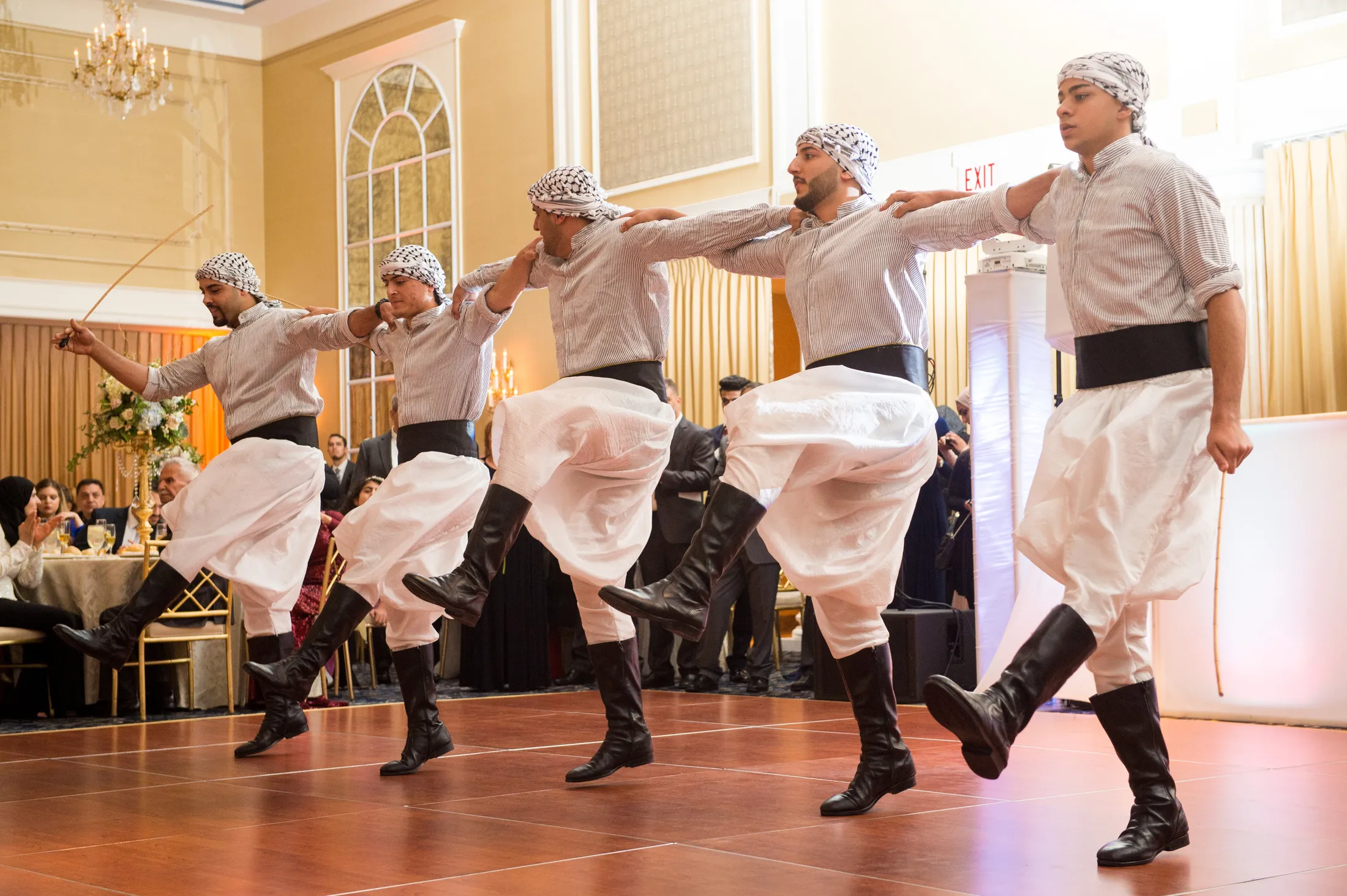
A dabke segment or featured performance might follow dinner around eight thirty once the floor is clear. Decide whether guests watch first, join immediately or are invited after a demonstration. Give the DJ the correct recording and our performers the planned duration. Keep cake cutting and family photographs away from a strong guest dance period where possible. If a relative must leave early, place their important moment deliberately rather than interrupting the floor later. One coordinator should decide whether a delay is absorbed by background music, a shorter announcement or a revised performance window.
Protect open dancing and close the event deliberately
Once open dancing begins, reduce unnecessary announcements. The DJ can work with the couple's music priorities and guest response without introducing a new formal moment after every few songs. Schedule any late performance before the final stretch if it requires the floor to clear. Ask the venue when bars, food stations and music must close, since those times may differ. The final song should end within the approved limit. Do not assume an enthusiastic room authorizes overtime or that every supplier can stay beyond the contracted coverage.
The operational timeline should continue after the last dance with guest departure and equipment removal. Confirm that vendors use the approved route and do not begin disruptive packing while a formal farewell is still happening. Send the final schedule with a version date and remove outdated copies from shared planning folders. Include contacts, cues and the person authorized to change the order. We want each supplier to understand the next transition without needing to consult the couple. A useful timeline remains flexible in its adjustable intervals while keeping service, safety and important family moments clear.
Continue planning with wedding entertainment packages, Miami venue logistics and Orlando resort planning.

