By Eyad, Founder of Afrah Events · Published · Last updated · 7 min read
Wedding lighting works best when each layer has a job. Uplighting shapes the room, monograms add a personal detail and dance-floor lighting changes the energy. Learn how to combine them thoughtfully, discuss practical venue restrictions and create a lighting brief that supports your celebration rather than overwhelming its design.
On this page
What should wedding lighting achieve in your room?
Start with how the room should feel during arrivals, dinner and dancing. Lighting can make architectural features more visible, draw attention toward a focal point and signal a change in atmosphere. Before choosing fixtures or colors, identify the parts of the venue you want guests to notice. Also identify anything you would rather not emphasize, such as a service doorway or an awkward empty corner.
Consider the existing light before adding more. Windows, chandeliers, wall finishes and ceiling height all influence the result. A pale ballroom may reflect color differently from a dark restaurant or a space with strongly colored walls. Share venue photographs and, where possible, discuss the room after sunset. The same decorative concept can look quite different once daylight disappears and the reception's main lighting takes over.
How does uplighting change the atmosphere?
Uplighting directs light upward onto walls, columns or other surfaces to build a background mood. It is useful when you want the room itself to participate in the design rather than relying entirely on table decorations. Placement matters as much as color: evenly considered positions can create rhythm, while poorly chosen locations may highlight obstructions, expose visual clutter or leave important parts of the room disconnected.
Choose colors in conversation with your flowers, linens and venue finishes. Rather than requesting a vague romantic glow, share references and explain whether you prefer warmth, restrained color or a stronger party look. Ask whether the lighting appearance can change during the event and who controls those changes. Check that decorative color will not be treated as a substitute for suitable lighting on faces during important photographs.
Where should a wedding monogram be projected?
A monogram projection works best on a surface that stays visible and relatively uncluttered. A wall may hold the design more consistently than a busy dance floor, while a floor projection can create a strong impression before guests begin dancing. Think about furniture placement and sightlines. A beautiful graphic loses impact if it falls across chair legs, door openings or a patterned surface that makes it difficult to read.
Keep the artwork legible at the intended distance. Fine lines, elaborate lettering and crowded dates may not translate as clearly as they appear on a screen. Confirm spelling, initials and the final design before production. Ask where the projector can be positioned and whether guests or staff will regularly cross its path. The projection needs a practical home, not just an attractive mockup in the planning presentation.
What makes dance-floor lighting different from decorative lighting?
Dance-floor lighting is about movement, focus and energy rather than simply coloring the room. It can help distinguish open dancing from dinner or formalities, but its style should suit your guests. Tell the production team whether you want a lively club-inspired atmosphere, a softer celebration or something that develops gradually. Share preferences about flashing effects and rapid movement instead of assuming everyone interprets party lighting the same way.
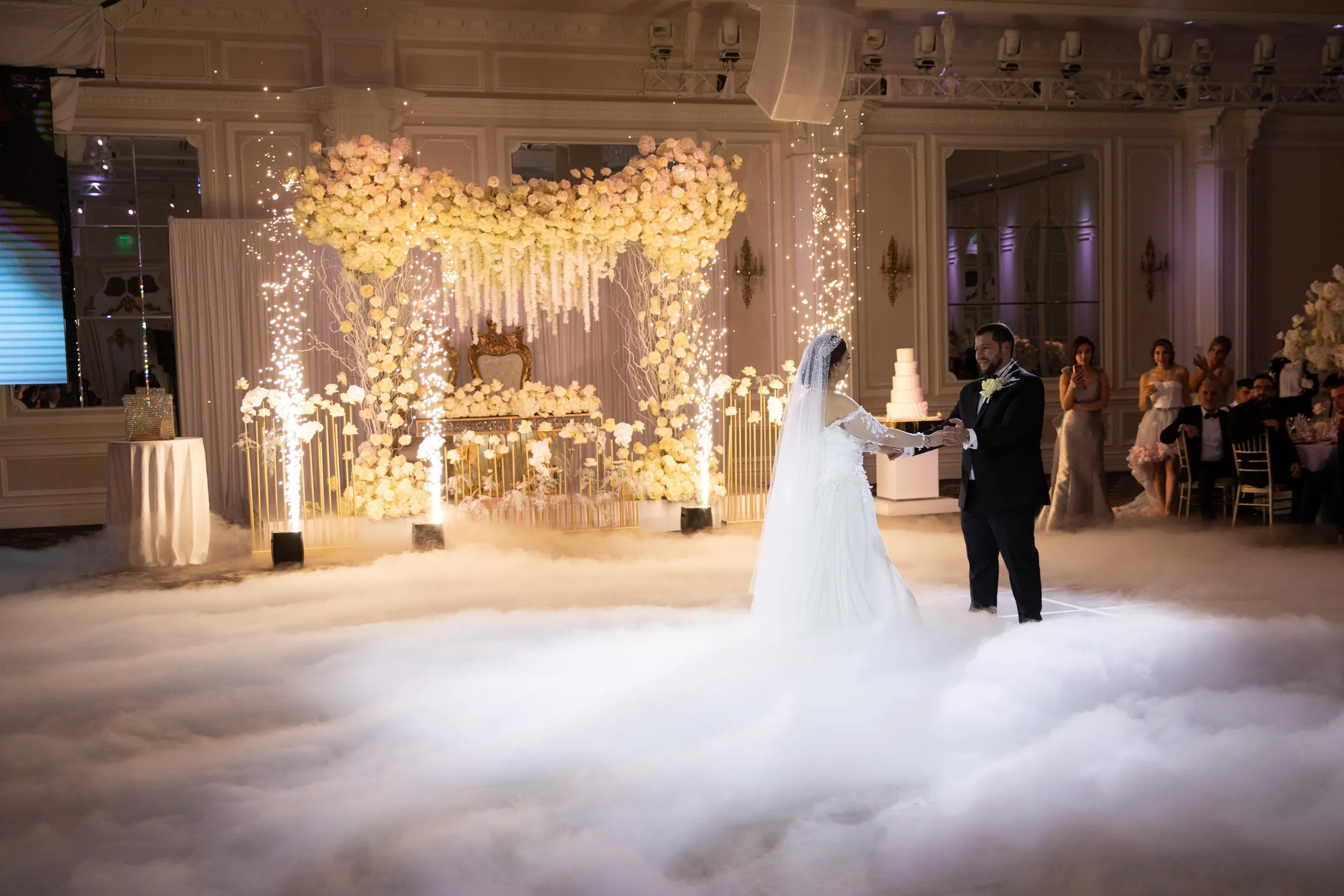
Coordinate lighting changes with the DJ, planner and photographer. A first dance may need a different treatment from a high-energy group set, and speeches usually benefit from stable visibility rather than roaming beams. Ask who operates the lighting and whether cues are planned or adjusted live. Good coordination makes a room feel responsive to the celebration without making every musical change trigger an unrelated visual distraction.
Which venue and outdoor details need checking?
Ask the venue about power, installation access, equipment positions and any restrictions on attaching items to walls or ceilings. Confirm whether fixtures must be freestanding and how cables will be managed around guest routes. Do not assume the same setup works in every room. If the celebration moves between spaces, clarify which areas receive lighting and whether equipment stays in place or requires a planned changeover.
Outdoor lighting needs a separate conversation about equipment suitability, weather decisions and the venue's requirements. Atlantic hurricane season runs June 1 through November 30, so review relocation procedures for Florida events with outdoor components. All effects require venue approval, including any effect proposed alongside the lighting design. Ask for the venue's requirements early and make sure the production plan reflects the approved layout and any operating conditions.
How do you request a useful lighting proposal?
Send the venue name and location, room photographs, event schedule and a concise description of the atmosphere you want. Identify priorities: perhaps architectural uplighting, one readable monogram and a distinct dance-floor look. Pricing factors include the equipment scope, installation complexity, event duration, location and staffing. Compare proposals by coverage and responsibilities rather than assuming a larger fixture count automatically produces a more considered or attractive design.
Afrah serves Florida as a service-area business, so accurate venue information helps frame the request. Ask what is included, who supplies power-related infrastructure and how changes will be handled. Review the written booking process and confirmation requirements with Afrah. Before signing, review the proposed scope and relevant terms, then keep approved artwork and lighting notes with the final event timeline so design decisions are not lost during production planning.
Our favorite was definitely [the DJ and MC], [they] stuck to our playlists and meshed all our genres together effortlessly, guests raved about it.
Plan lighting around faces, movement and the room
Begin with the moments guests need to see clearly: the couple's arrival, speeches, dinner and dancing. Decorative lighting should support those needs rather than replace the room's functional light. Ask the venue which overhead fixtures can be dimmed and who controls them during the event. A reception can have warm walls while still needing a separate light for a speaker's face. We recommend reviewing the plan with photography and video so a dramatic room does not leave the people at its center poorly lit.
Bring the actual floor plan to the lighting discussion. Mark tables, floral structures, the couple's seating, the dance area and guest routes. Look for surfaces that can receive light without pointing fixtures into seated guests' eyes. Identify glass or reflective finishes that might produce distracting reflections. If the room will change after sunset, arrange a review that accounts for evening conditions rather than relying only on a daytime walkthrough. The same fixture can look restrained in daylight and noticeably stronger after the exterior light has disappeared.
Use uplighting and monograms with the architecture
Uplights direct light upward along walls, columns or other suitable surfaces. Their effect depends on wall color, texture, spacing and surrounding illumination. Ask to see a proposed color against your actual linens and florals, not only on a supplier's screen. Saturated color close to the couple may also affect photographs, so discuss where a more neutral treatment is useful. Do not assume every wall needs a fixture. A selective arrangement can emphasize the room's shape while leaving service areas and exits readable and free of equipment.
For a projected monogram, first identify a surface that remains visible after tables and decor are installed. Confirm the artwork, spelling, date and orientation before production. A projection on the dance floor may disappear beneath guests, while one on a wall can be interrupted by flowers or a screen. Ask about the projector's placement and whether passing guests could block its beam. The venue must approve attachment methods and equipment locations. Keep a proof of the final artwork so an old version is not used after a design revision.
Give dancing its own lighting treatment
Dance lighting serves a different purpose from room decoration. Movement, direction and changes in intensity can signal that open dancing has begun, but the couple should decide how active that look becomes. Discuss preferences around flashing or rapid movement before equipment is chosen. If guests have relevant sensitivities, communicate the specific restriction to the production lead and agree on an alternative. A comfortable dance floor does not require every available effect. Our team needs to know which looks are approved for the entrance, first dance and later party segments.
Coordinate changes with the DJ and photographer. A first dance may need steady light on the couple even if the surrounding room is dim. Speeches need a readable face and a clear route to the microphone. Avoid a plan that requires the coordinator to find a venue employee for every small adjustment. Identify who operates each lighting system and which cues can be rehearsed. If the venue has permanent equipment, clarify whether its operator is included and how that system connects with any additional supplier's fixtures.
Check installation, outdoor suitability and the final scope
Ask who provides power, cable protection and any approved mounting equipment. Guest routes, accessible paths and emergency exits must remain clear. Battery fixtures may reduce some cable runs, but they still need suitable placement and sufficient operating time. Outdoor lighting requires equipment and installation appropriate to the conditions, plus a weather decision plan. A fixture advertised for events is not automatically suitable for rain, wind or a beachfront environment. Let qualified production staff and the venue determine the installation rather than improvising supports with decor or furniture.
Request a proposal that identifies fixture types, intended positions, operation, installation and removal. Separate decorative lighting from cold sparks, fog, CO2 or other effects, which require their own assessment and written venue approval. Applicable authority requirements may also apply. Confirm when a room check will happen and who can approve corrections before guests enter. We suggest recording a small number of agreed looks instead of requesting constant changes. A clear lighting plan gives each reception moment its own treatment while keeping attention on the people rather than the equipment.
Continue planning with wedding entertainment packages, Miami venue logistics and Orlando resort planning.