By Afrah Events Team, Wedding entertainment specialists · Published · Last updated · 6 min read
A zaffa wedding entrance can be simple or theatrical, but the best ones are built around a few clear ideas rather than every option at once. These twelve ideas cover who walks in, lifts and sword moments, light and effects, outdoor starts and welcome performers, with the Florida venue questions each one raises.
On this page
Start with what the entrance should say
A zaffa is the procession that brings the couple into the reception with drummers, singers and dancers. Families spell it zaffa, zaffe, zaffeh or zeffa, and every version shares the same purpose: to announce the couple with joy and noise and to gather the whole room around them. Before choosing any of the ideas below, decide what you want the entrance to say about your families.
Some couples want a traditional entrance that their grandparents would recognise. Others want a short traditional opening that turns into a modern moment with lights and effects. Some want both families visibly included, especially when only one side grew up with the zaffa. Write one sentence describing the feeling you want, and use it to judge every idea.
Then choose two or three ideas, not twelve. A zaffa usually runs around fifteen to twenty minutes from the first drum to the first dance, and every extra element needs time, space and a clear cue. The ideas below are a menu. Pick the ones that fit your story and your Florida venue.
Ideas 1 to 3: who walks in
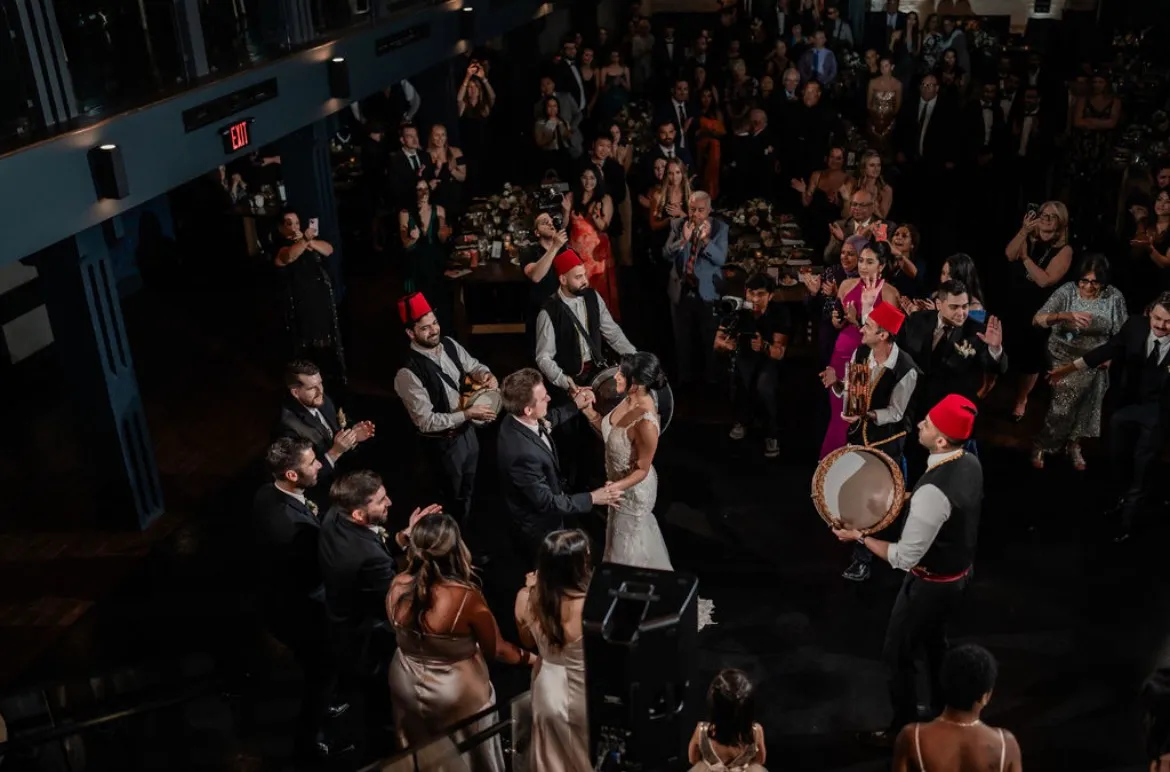
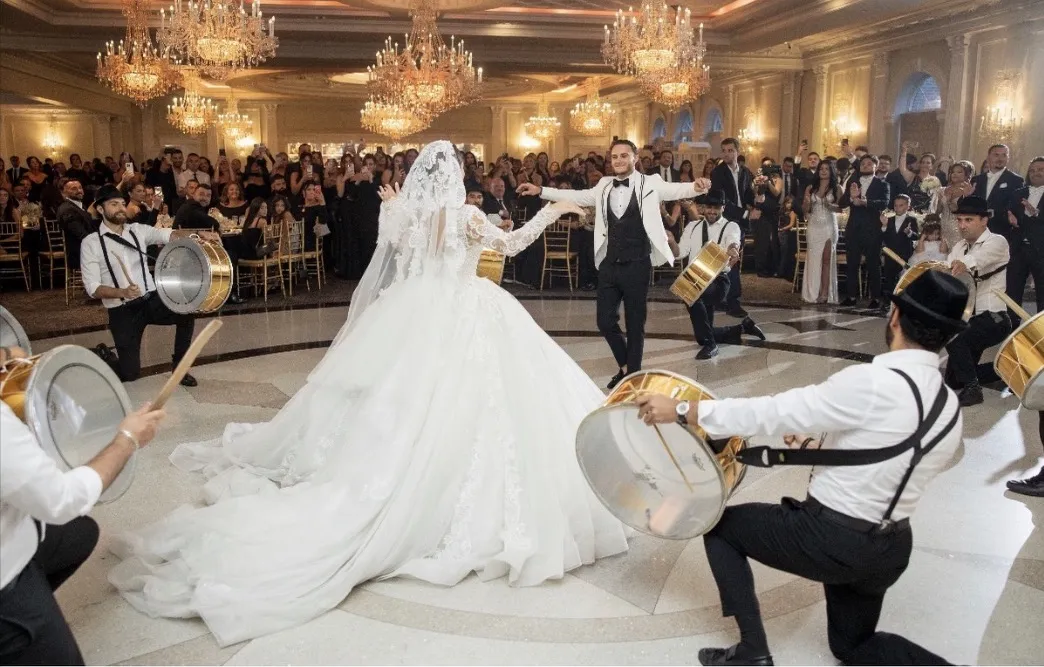
Idea 1: the couple enters together. This is the most common format in Florida. The drummers and dancers lead, the couple follows at the centre of the procession, and guests gather around the dance floor. It is simple to plan and works in almost any room.

Idea 2: the groom's zaffa, then the bride's. At many Palestinian, Jordanian and Syrian weddings, the groom arrives first with his friends and relatives, often lifted and carried, and then the bride enters to her own music. The two processions meet on the floor. This takes longer and needs a clear plan for where the groom waits while the bride enters.
Idea 3: parents and siblings lead the way. The couple's parents, siblings or grandparents walk ahead of the couple inside the procession, sometimes dancing with the drummers. It is a natural way to include both families, and it gives guests who are new to the zaffa a reason to stand and clap from the first moment. Tell us who will walk and in which order, so the dancers leave room for them.
Ideas 4 to 6: the lift, the sword and the candles
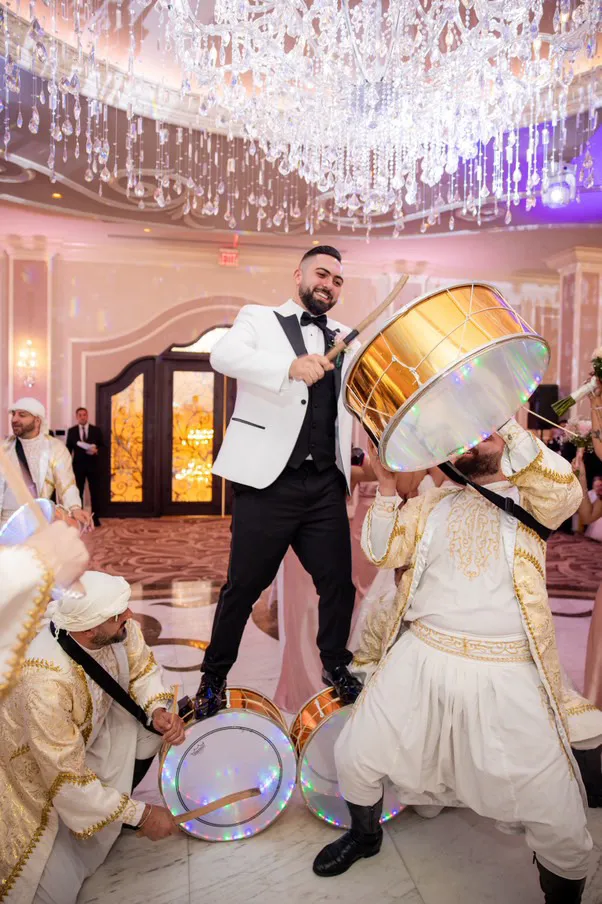
Idea 4: the groom on shoulders. Lifting the groom onto the shoulders of friends or drummers is one of the most photographed moments of any zaffa. It needs strong, sober hands, a clear route without low chandeliers or doorframes, and a cue from the MC so guests make room. Decide in advance whether performers or relatives will lift him.
Idea 5: a sword moment. Some Lebanese and Syrian families include a sword dancer or a sword and shield display, and some couples use a sword to cut the cake after the entrance. Florida hotels will ask what props are being used. We use performance props, choreograph every movement and agree the route with the venue so guests and staff stay clear.
Idea 6: candles or a candelabra. Egyptian families often want a dancer carrying a lit candelabra, the shamadan, and other families like candles carried by welcome performers. Many Florida venues restrict open flame in a moving procession, and LED candles keep the look without the risk. Ask your venue about its rules early, before you fall in love with a picture.
Ideas 7 to 9: light and effects
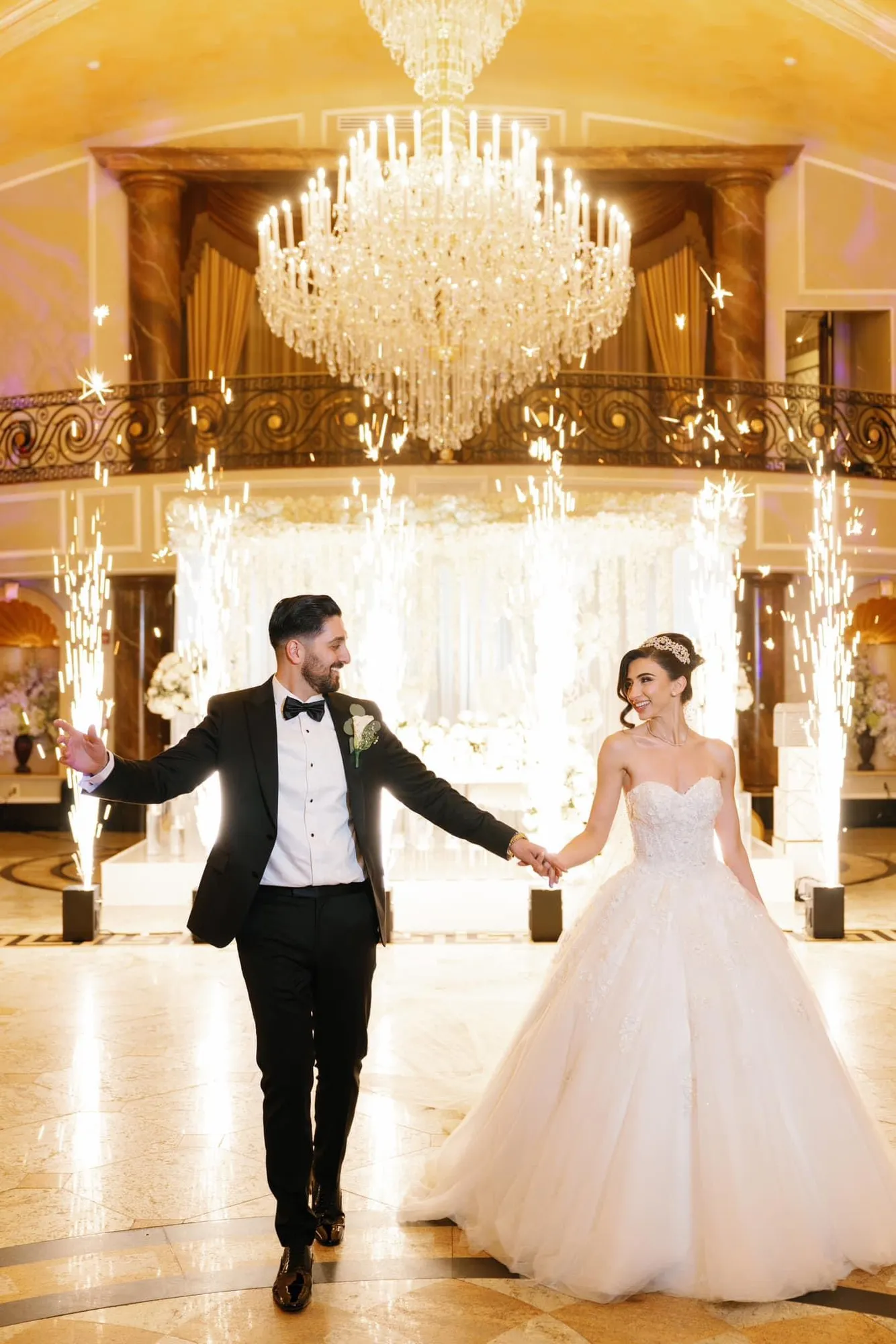
Idea 7: cold sparks as the drums finish. Cold spark machines placed at the edge of the dance floor can fire as the couple arrives and the drums hit their last beat. The effect marks the end of the zaffa and the start of the first dance. Cold sparks need venue approval and a trained operator, and some venues use an approved supplier only.
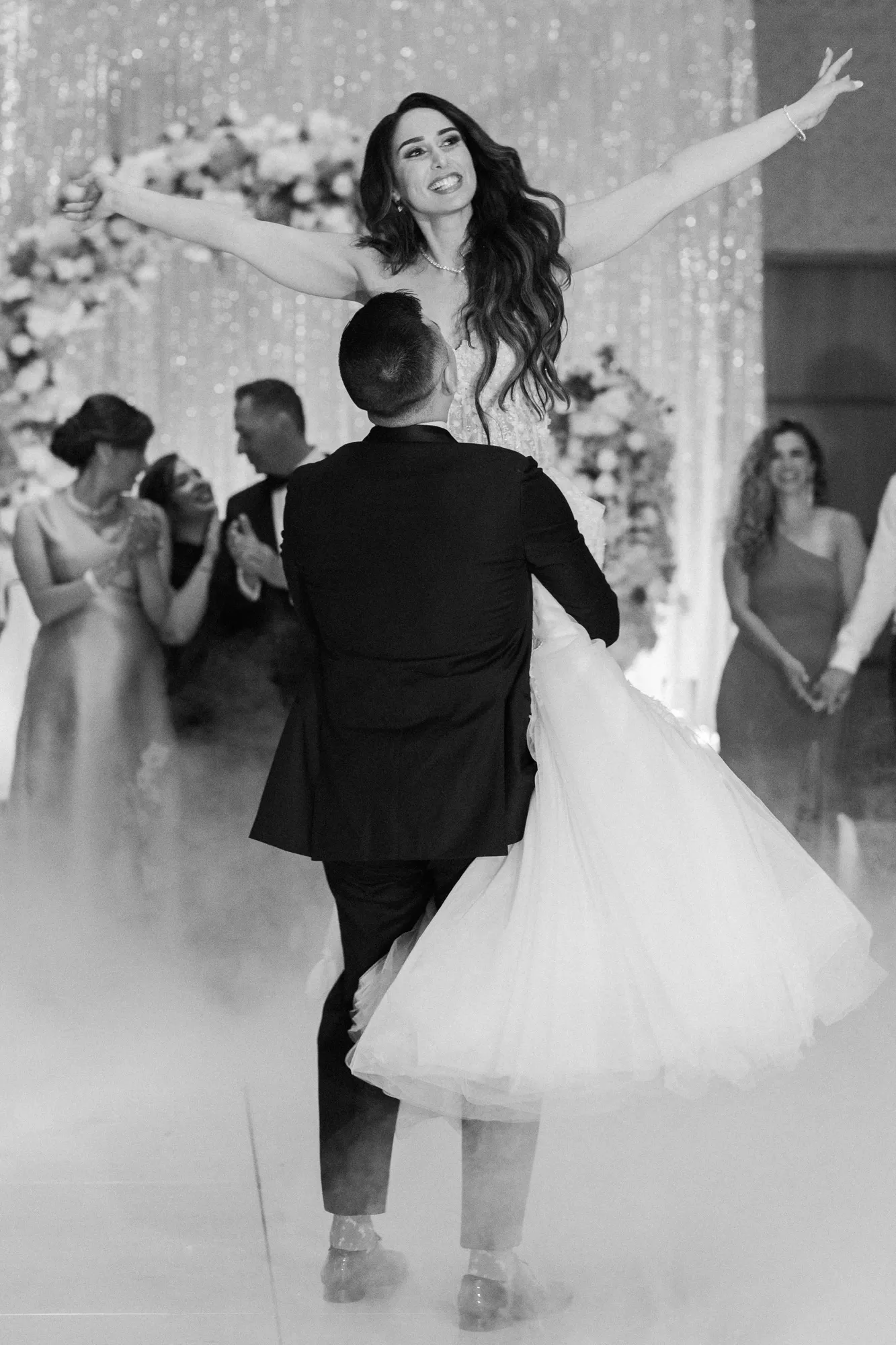
Idea 8: low fog for the first dance. A thick, low-lying fog, sometimes called dancing on the clouds, can roll across the floor as the zaffa ends and the first dance begins. It looks best when the drummers clear the floor quickly and the lights dim. Ask your venue whether fog is allowed and whether it affects the smoke detectors in the room.
Idea 9: a lighting change on the cue. Uplighting that shifts colour when the doors open, a spotlight that follows the couple, or a monogram on the floor all frame the entrance without adding anything to the route. Lighting effects are usually easier for venues to approve than sparks or fog, and they suit historic rooms where other effects are not allowed. Afrah Events provides lighting and effects with the entertainment, so the cues come from one plan.
They did the most amazing job at my daughter’s wedding. Their performance was perfect. They were punctual and were very welcoming to our guests. They made the wedding extra special. I highly recommend them
Ideas 10 and 11: starting outside
Idea 10: a sunset start on the terrace. Florida's weather and waterfront venues make an outdoor start tempting. The zaffa can begin on a terrace or lawn at sunset, gather guests from cocktail hour and lead everyone inside to the ballroom. It needs an agreed indoor route for rain, a sound plan that respects outdoor limits and a surface that suits the drummers and the couple's shoes.
Idea 11: a beach welcome, then the full zaffa inside. On beach venues in Miami Beach, Fort Lauderdale, Clearwater or the Emerald Coast, sand does not suit a full drum line or dancing. A short welcome on a deck by the sand, followed by the full zaffa inside, keeps the beach in the story without asking the troupe to perform on sand.
For both ideas, remember that summer storms in Florida often arrive in the late afternoon, and hurricane season runs from June 1 to November 30. Agree the indoor version with your venue in advance so the entrance keeps its music and its family roles wherever it happens.
Idea 12: welcome performers and finishing touches
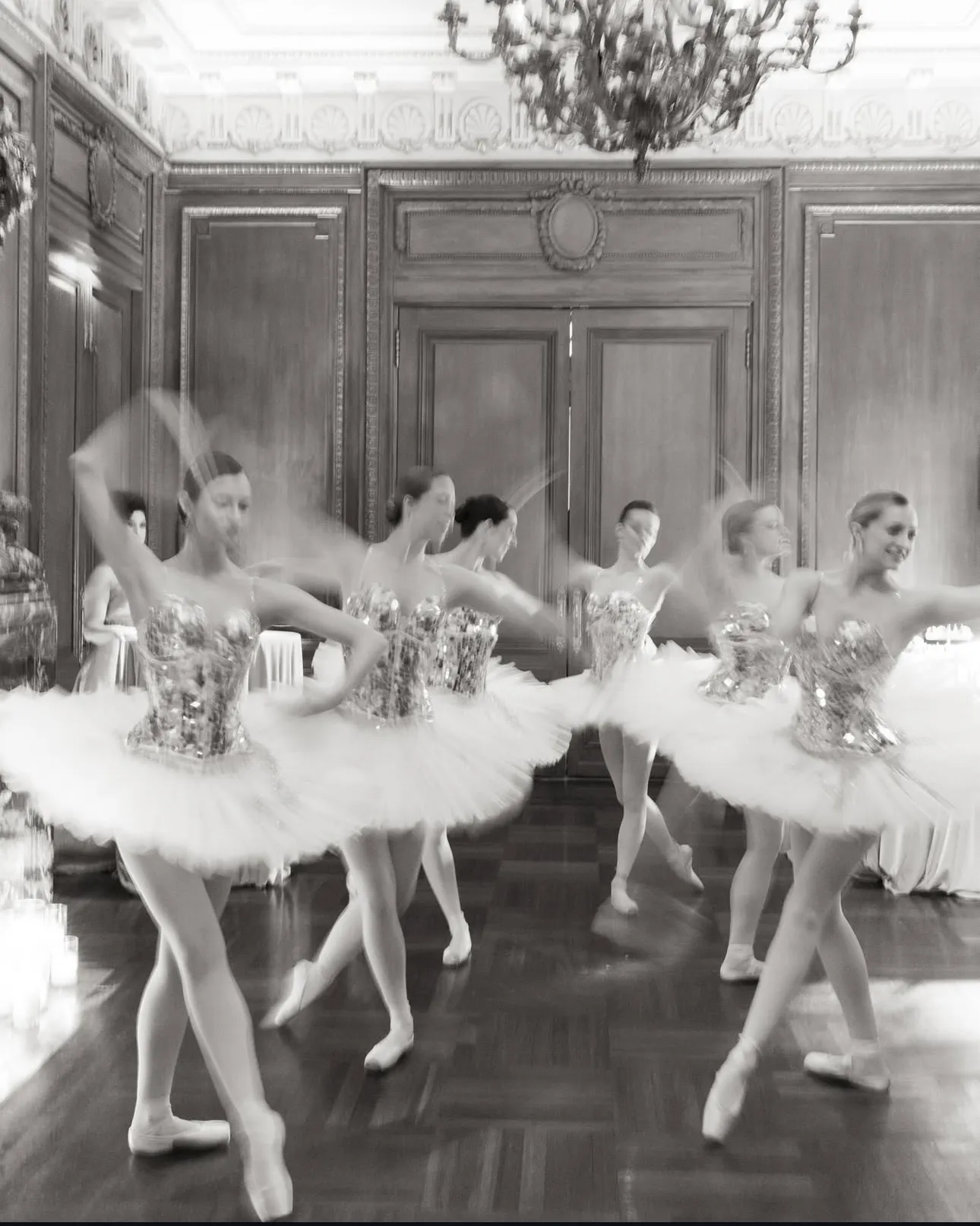
Idea 12: add welcome performers. Ballerinas, welcome performers with lighted lampshades, a tanoura dancer or a belly dancer can greet guests before the zaffa or walk in front of the couple. Choose one, not all of them, and decide whether they appear before the zaffa, inside it or after the first dance.
Small touches also shape the entrance. Drummers can wear traditional dress that matches the family's region. The MC can introduce the couple by name in Arabic and English. Some families carry the flags of their home countries; if you plan to, tell us and check your venue's policy. Some couples choose a song that both families know for the final steps onto the floor.
Whatever you choose, the zaffa should still feel like a procession led by drums and voices. Effects and performers support the entrance, they do not replace it.
Putting your ideas into one plan
Once you have chosen your ideas, we turn them into a short cue sheet: where the troupe assembles, who walks in which order, when the doors open, when the lift happens, when the sparks or fog fire and which song starts the first dance. Your coordinator and the venue receive the same sheet, so everyone works from one plan.
On the day, the troupe assembles out of sight about fifteen minutes before the cue, the couple and any relatives joining the procession meet us at the agreed point, and our lead performer walks everyone through the order once. That short briefing is what lets a lift, a sword moment or a lighting change happen exactly when it should, instead of relying on guesswork in front of two hundred guests.
Send the venue and the room, the guest count and the ideas you like, along with any recordings of the songs you want. Pricing depends on guests, drummers, dancers, duration, effects and travel, and starting ranges are available on request. Afrah Events performs across Florida, including Miami, Fort Lauderdale, Orlando, Tampa and Jacksonville, travel is included in the quote and we reply within 24 hours by email.
Continue planning with wedding entertainment packages, Miami venue logistics and Orlando resort planning.