By Eyad, Founder of Afrah Events · Published · Last updated · 9 min read
A zaffe is a celebratory entrance procession, while dabke is a dance tradition associated with communities across the Levant and their diasporas. They can appear close together at a wedding, but they are not two names for the same activity. A procession brings attention to the couple and moves toward a destination. A dance performance or guest dance gathering organizes people around movement and rhythm.
On this page
The main difference is purpose
A zaffe is a celebratory entrance procession, while dabke is a dance tradition associated with communities across the Levant and their diasporas. They can appear close together at a wedding, but they are not two names for the same activity. A procession brings attention to the couple and moves toward a destination. A dance performance or guest dance gathering organizes people around movement and rhythm.
A wedding may include both, only one or neither, depending on the couple and family. It is not accurate to describe either element as compulsory for every Arab celebration. Regional background, religion, generation and personal preference all influence the plan. We recommend asking relatives what they expect to see and hear, then translating those expectations into a practical brief. The service name should begin the conversation rather than substitute for one.
When contacting our team, say whether you want an entrance, a staged dance feature, guest participation or a sequence combining those functions. That distinction affects performers, music, space and timing. A request for drummers alone does not establish a full entrance route or dance showcase. A request for dabke does not automatically include live percussion. Clear descriptions help the proposal reflect the actual celebration instead of leaving important assumptions to be discovered at the ballroom doors.
What the zaffe does during a reception
The zaffe gives the couple's arrival a defined musical and visual focus. Depending on the agreed arrangement, percussionists, singers, dancers or family members may participate. The procession might begin near the reception doors or in another approved area and finish on the dance floor or at the couple's seating. The exact route and lineup need confirmation. A venue booking does not automatically permit a live procession through every lobby or corridor.
Plan the assembly separately from the public performance. The couple and participating relatives should know where to wait, while photography and the DJ receive the readiness cue. Ask the venue to confirm that the route is clear and the reception space is prepared. Our drummers should not have to guess whether to continue outside closed doors while staff finish setting the room. A short hold with background music is more useful than starting without a clear destination.
Discuss duration after the route, songs and family participation are understood. An entrance does not need to match another wedding's length to feel complete. If considering fifteen to thirty minutes, clarify whether that window includes assembly, waiting and the room arrival. Some venues or couples will need a shorter format. The important detail is a beginning, an intentional progression and a clear ending that hands attention to the next reception moment without leaving the couple uncertain about where to stand.
What dabke does during a celebration
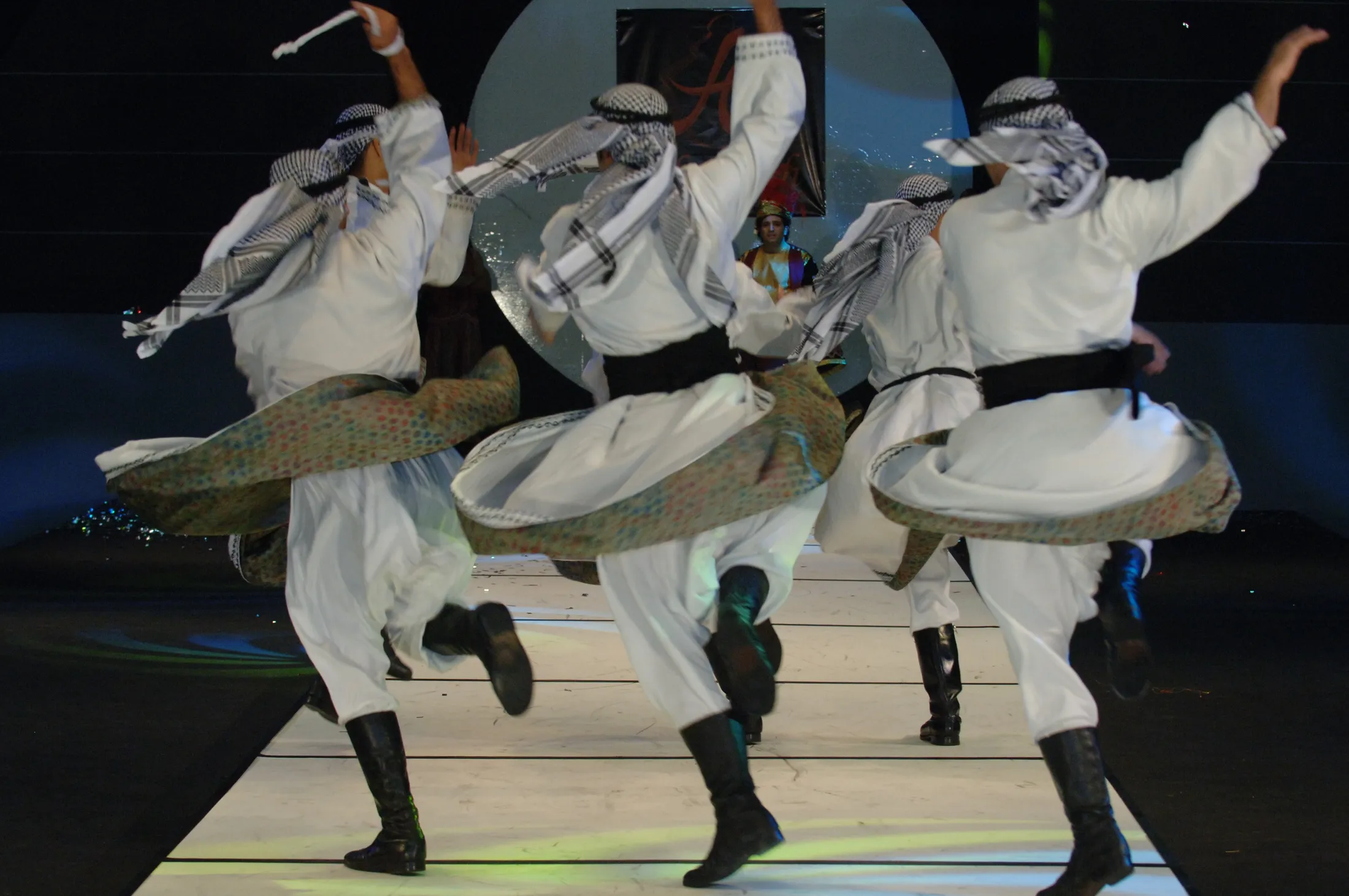
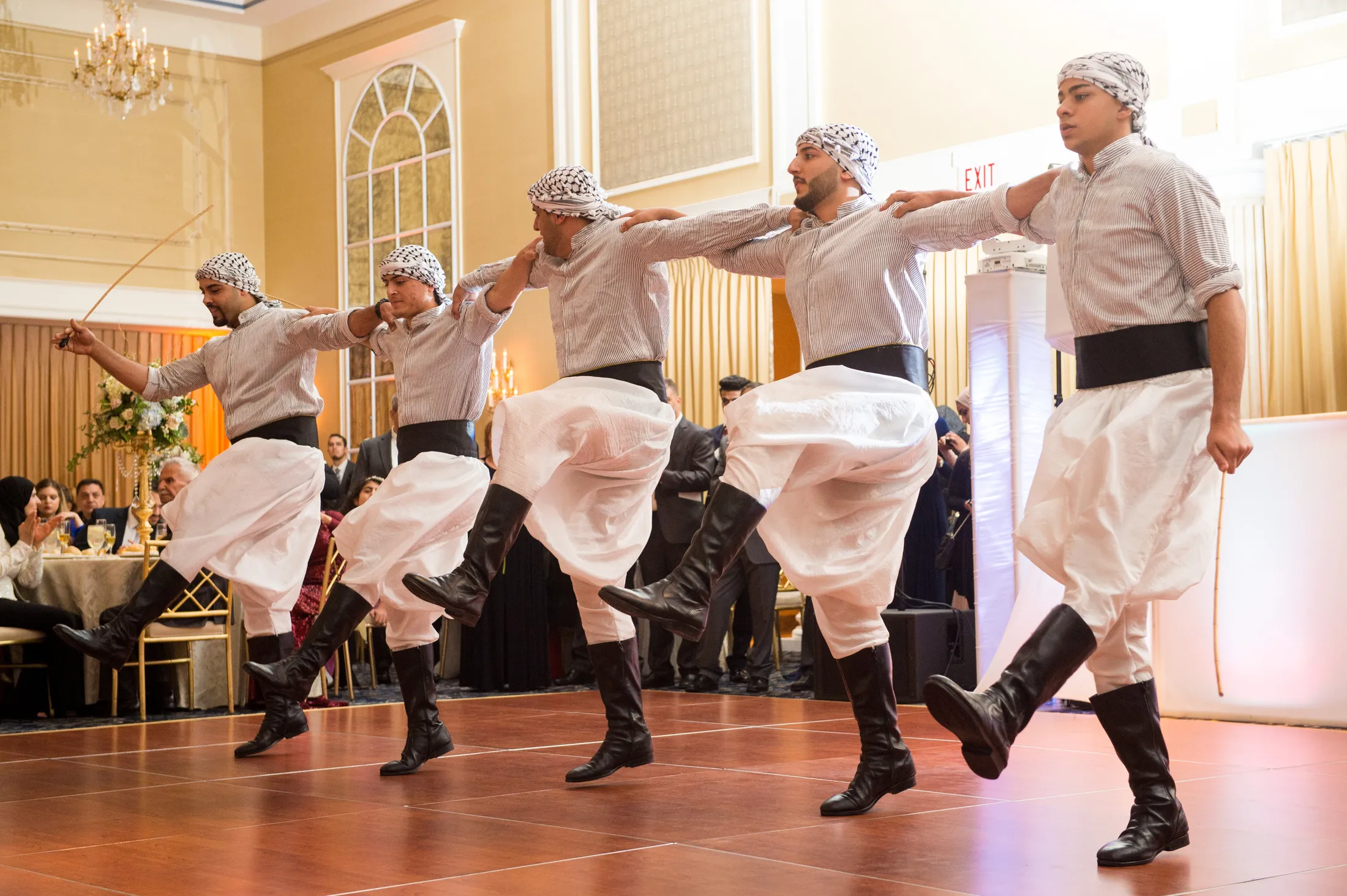
Dabke includes regional dance forms associated with places such as Palestine, Lebanon, Syria and Jordan. Steps, musical choices, formations and leadership practices vary, so one demonstration should not be presented as the single correct version for every community. At a wedding, dabke may appear as a professional showcase, a family led dance or an invitation for guests to participate. Ask which format is being proposed and which references matter to your family.
A professional performance gives guests a defined feature to watch. It needs a clear area, appropriate sightlines and an agreed beginning and ending. Guest participation has different requirements: space to join, a manageable pace and someone who can lead the group. The same booking can sometimes connect those formats, but that transition must be discussed. Our dancers need to know whether they are presenting choreography, helping guests participate or doing both during separate parts of the reception.
Do not assume every guest knows the steps or wants to join. A brief demonstration and a welcoming invitation can help people participate without embarrassment. Relatives who prefer to watch should remain comfortable and have an unobstructed route to their seats. Guests with mobility limitations may choose another form of participation, such as clapping from a seated position. The plan should support those choices without publicly singling anyone out or making participation a test of cultural knowledge.
Music and instruments overlap without making the events identical
Percussion can appear in both a zaffe and a dabke segment, which is one reason the terms are sometimes confused. The function of the music remains different. Entrance music supports procession and arrival, while dance music needs to suit the intended movement and participants. A familiar recording may work well for one moment and be unsuitable for another. We ask couples to provide reference tracks with notes about the purpose of each selection.
Confirm which music is live and which comes through the DJ. An entrance may combine live drums with playback, while a dance showcase might use a prepared recording or another agreed arrangement. Instrument names and performer numbers should appear in the proposal where relevant. Do not infer a singer, melodic instrument or additional drummer from a video showing a different event. The sound requirements must match the actual lineup booked for your room and schedule.
Exact recordings matter for rehearsed material and timed handovers. A remix can change tempo, shorten an introduction or remove a musical passage the dancers expect. Send the approved version to the DJ and performance lead rather than relying on a title alone. If family members will sing or lead a particular chant, discuss that in advance and check pronunciation where needed. Clear preparation protects the cultural detail without expecting performers to reproduce an unfamiliar arrangement after hearing a phone clip at the last minute.
Space requirements are different
A zaffe needs a workable route and an arrival area. A dabke performance or guest dance needs a suitable floor and viewing or participation space. Those requirements can overlap, but they should be drawn separately on the layout. Start with the actual table plan, couple's seating, service stations and equipment. A room that holds the dining count may still lack the space required for a large participatory dance without revising the furniture arrangement.
For the entrance, inspect doorways, turns and changes in level. Consider the couple's clothing, the performers' formation and the pace of participating relatives. Keep the route clear of cables, bags and service equipment. The venue must approve use of shared areas. If a lobby route is unsuitable, a shorter entrance at the ballroom can still provide a meaningful arrival. Avoid making the procession longer simply to use more of the property.
For dabke, ask the performers to assess the floor and the intended activity. Spills, loose surfaces and crowded edges need attention before the invitation begins. Preserve accessible routes and emergency exits. If guests will form a line or circle, provide a practical entry point and enough room to return to seating. Coordinate with catering so people are not dancing across a path used for hot plates. The layout should accommodate those who watch as carefully as those who participate.
Our favorite was definitely [the DJ and MC], [they] stuck to our playlists and meshed all our genres together effortlessly, guests raved about it.
Decide how the two moments connect
One possible sequence is a zaffe entrance followed by a short dance feature or guest participation. Another is an entrance followed by the first dance or dinner, with dabke later. Neither arrangement is a universal rule. Ask the couple what they want the arrival to accomplish and whether guests are ready to participate immediately. A room still settling into seats may need a different transition from one where everyone is already gathered near the floor.
If dabke follows directly, agree on where the couple stands and who starts the next song. The performance lead and DJ should recognize the same ending signal from the zaffe. Decide whether our dancers demonstrate first and how guests receive the invitation. Do not allow two separate announcements to compete or have the DJ start a dance track while performers are still completing the entrance. A concise cue sheet can make the connection clear without requiring constant microphone instructions.
If the dance comes later, mark its performance window and the event immediately before it. A useful time may be after a service interval when the floor is clear, but catering and family priorities should guide the decision. Tell the photographer if a particular relative will lead or join. Keep room for guest dancing after the formal feature rather than interrupting again immediately. The aim is to give each tradition a distinct role, not to compress every energetic moment into the couple's first few minutes inside.
Book by the confirmed scope and avoid common assumptions
Ask for a written description of each service. For a zaffe, confirm participants, instrumentation, route, music and approximate performance window. For dabke, confirm whether the booking covers a showcase, guest involvement or both. Ask who provides sound, whether a microphone is needed and how the DJ coordinates playback. If one team supports both moments, identify the time between them and any waiting or additional coverage included. A shared supplier does not automatically mean every possible performance is part of the same fee.
Props and effects require a separate discussion. Swords, candles, cold sparks or fog are not necessary to distinguish a zaffe from dabke and should not be treated as proof of authenticity. The venue must approve the proposed items and installation, with applicable authority requirements considered where relevant. Qualified operators should control equipment and retain the right to withhold a cue. Keep the musical moment complete without an optional effect so permission or technical issues do not create a gap in the reception.
Avoid describing a national style as a fixed checklist. Ask relatives for specific references and confirm which details our performers can deliver. Do not promise guests that every requested song will be played live or that everyone will be taught an entire dance during a short feature. Review cancellation, substitution, overtime and schedule change terms before booking. Practical clarity lets the couple compare proposals accurately and prevents a broad cultural label from carrying responsibilities that no supplier has actually agreed to provide.
Help guests participate without turning the reception into a lesson
Guests unfamiliar with the traditions usually need only a little practical guidance. Before the zaffe, an emcee can ask them to keep the entrance route clear and direct attention toward the couple's arrival. Before a participatory dance, the leader can show a manageable starting movement and explain where to join. Long cultural speeches are rarely necessary unless the couple specifically wants one. Use the announcement languages that help the actual guest list understand what to do next.
Prepare family participants in advance. A relative leading a dance should know the chosen song and whether the professional performers begin first. Someone joining the entrance should know the assembly point and final destination. Our team should receive those names through the coordinator rather than through several separate conversations during setup. If a guest declines participation, move on politely. The room should feel welcoming to people with different experience levels, comfort boundaries and physical abilities.
The final review should connect the floor plan, music and timeline. Confirm what guests watch, what they join and when the couple moves to the next activity. Share one current cue sheet with the DJ, coordinator and our performance lead. The distinction then becomes straightforward in practice: the zaffe brings the couple into the celebration, while dabke provides a particular form of dance expression and participation. Including either or both should reflect the family's real preferences and the venue's workable conditions.
Continue planning with wedding entertainment packages, Miami venue logistics and Orlando resort planning.