By Afrah Events Team, Wedding entertainment specialists · Published · Last updated · 6 min read
Palestinian dabka is a living tradition with named styles, from the steady shamaliyya that every guest can join to the fast karadiyya and the men's sha'rawiyya. This guide explains the styles, the lawweeh who leads the line, the songs families expect and how Afrah Events plans a Palestinian dabka group for Florida weddings.
On this page
Why dabka matters at a Palestinian wedding
For many Palestinian families, dabka is more than a dance. It is a way of keeping village traditions, songs and identity alive across generations and across the diaspora. At a wedding, the dabka line is where grandparents, parents and children dance together, and where the families of the bride and groom become one celebration.
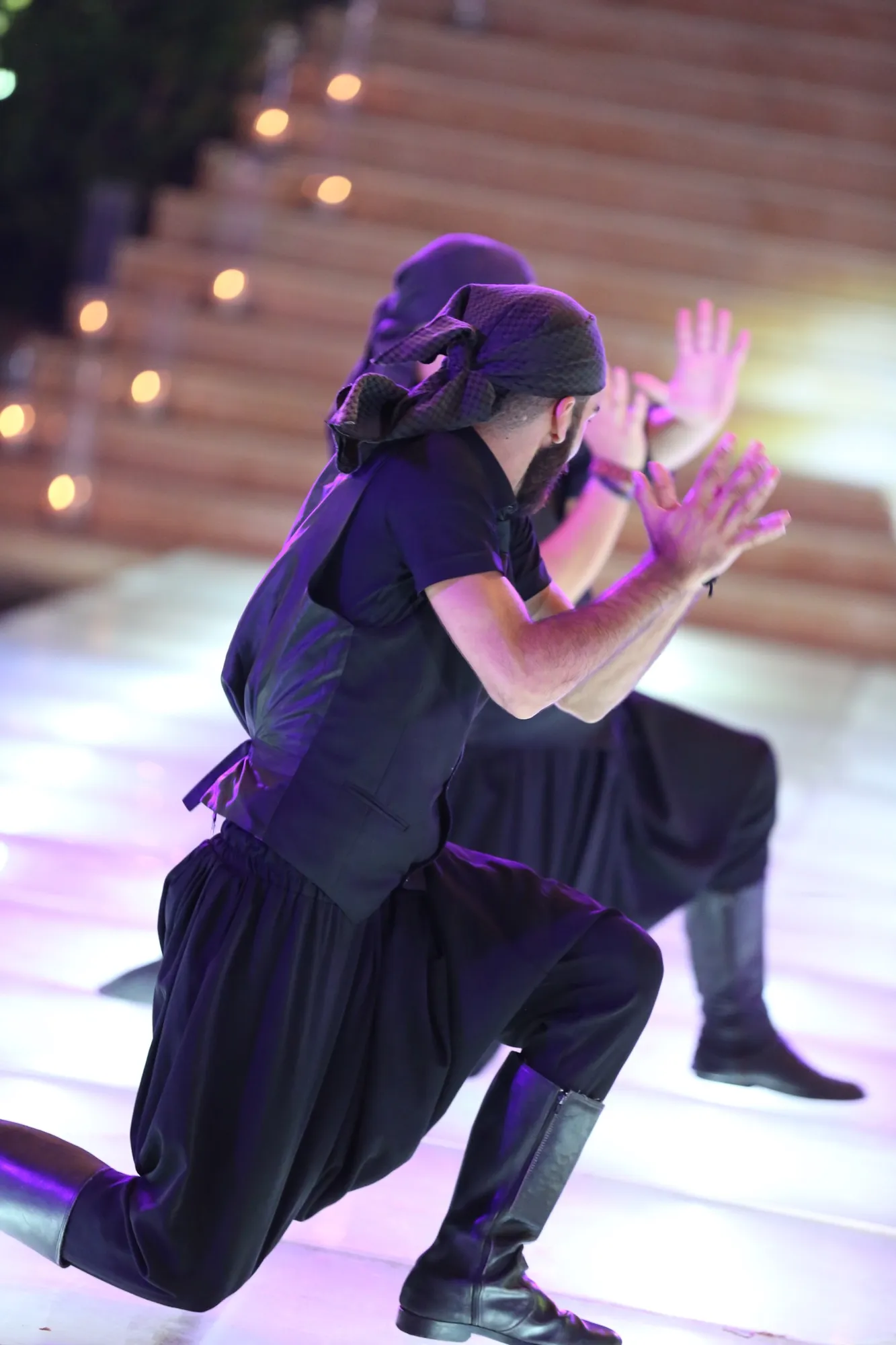
Palestinian dabka has also been preserved and developed on stage. Troupes such as El-Funoun, the Palestinian Popular Dance Troupe founded in 1979, helped document and choreograph traditional dances, and their influence shows in the polished showcases that many families now expect at weddings.
This guide explains the main styles, the role of the leader and the songs, and how to plan a Palestinian dabka in a Florida venue. For the entrance before it, see our guide to the Palestinian zaffa.
The main Palestinian dabka styles
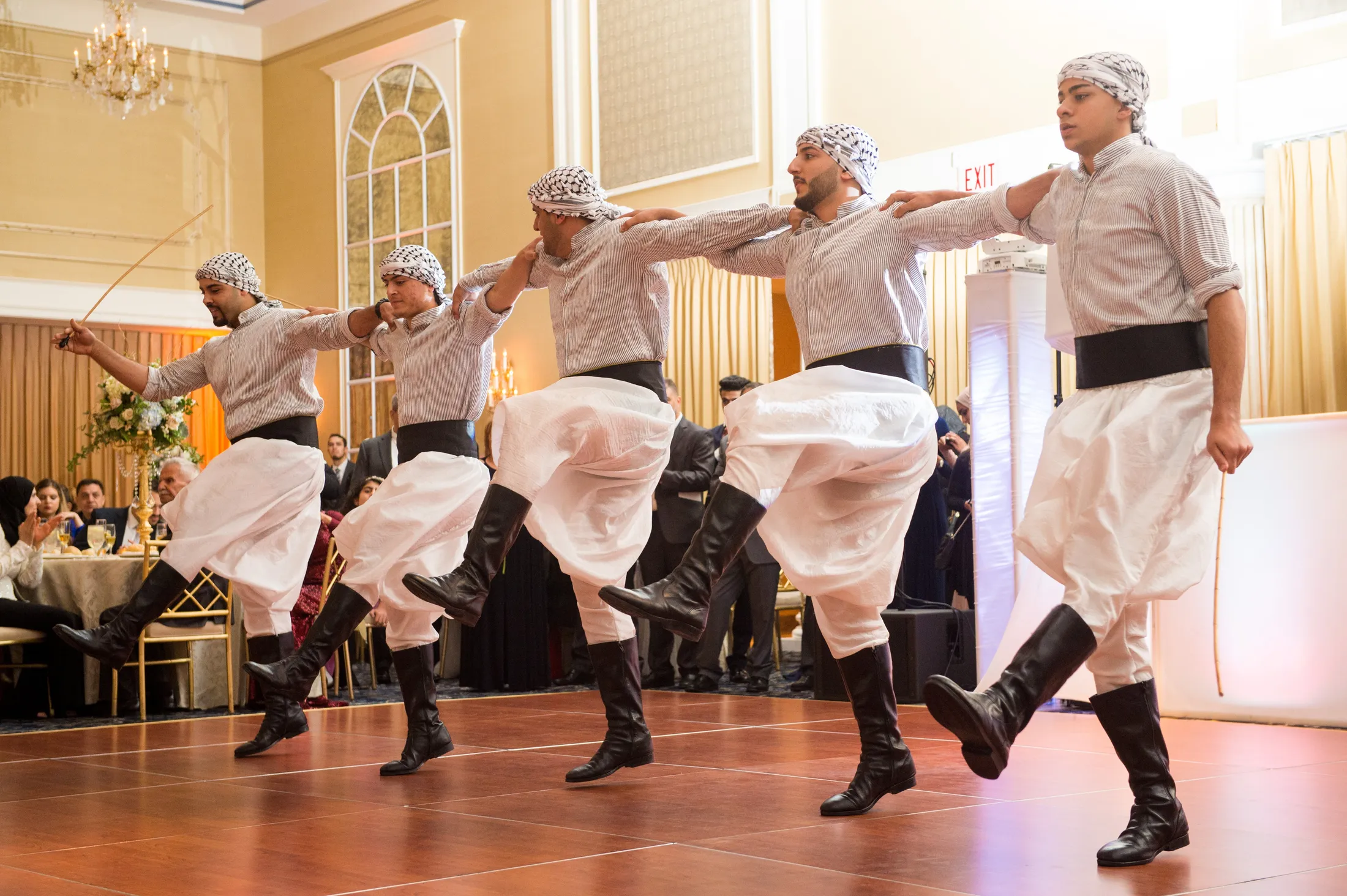
The shamaliyya is the most common dabka at Palestinian weddings. It is a steady line dance with a clear, repeating step, which is why guests of all ages can join. The leader sets the pace and adds variations as the line grows, and the shamaliyya can run for many minutes while the floor fills.
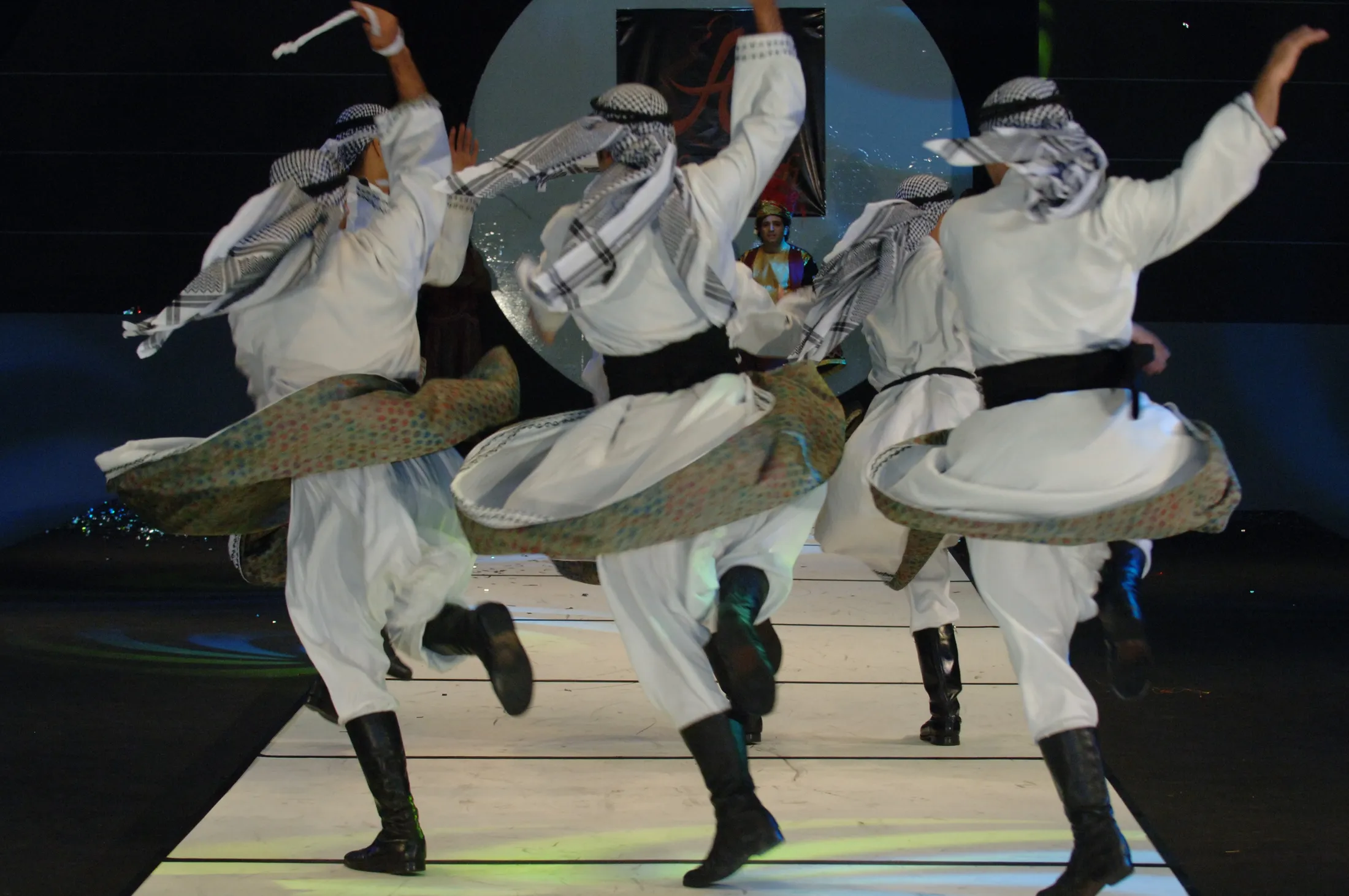
The karadiyya is quicker and more energetic, with faster footwork that suits experienced dancers and younger guests who want to show off. The sha'rawiyya is traditionally danced by men, with its own steps and character. Many weddings move between styles during a set, starting with the shamaliyya to bring everyone in and building to faster steps as the night goes on.
Every town and region has its own variations. If you are not sure of the name of your family's dabka, a video from a family wedding is the most useful thing you can send. Our dancers and drummers can then match the step, the tempo and the feel your guests expect.
The lawweeh and the open line
The leader of a Palestinian dabka line is often called the lawweeh, from the waving of a handkerchief or string of beads that signals the steps and changes. The lawweeh is part dancer and part conductor, reading the line and the music and deciding when to speed up, when to add a jump and when to slow down so new dancers can join.
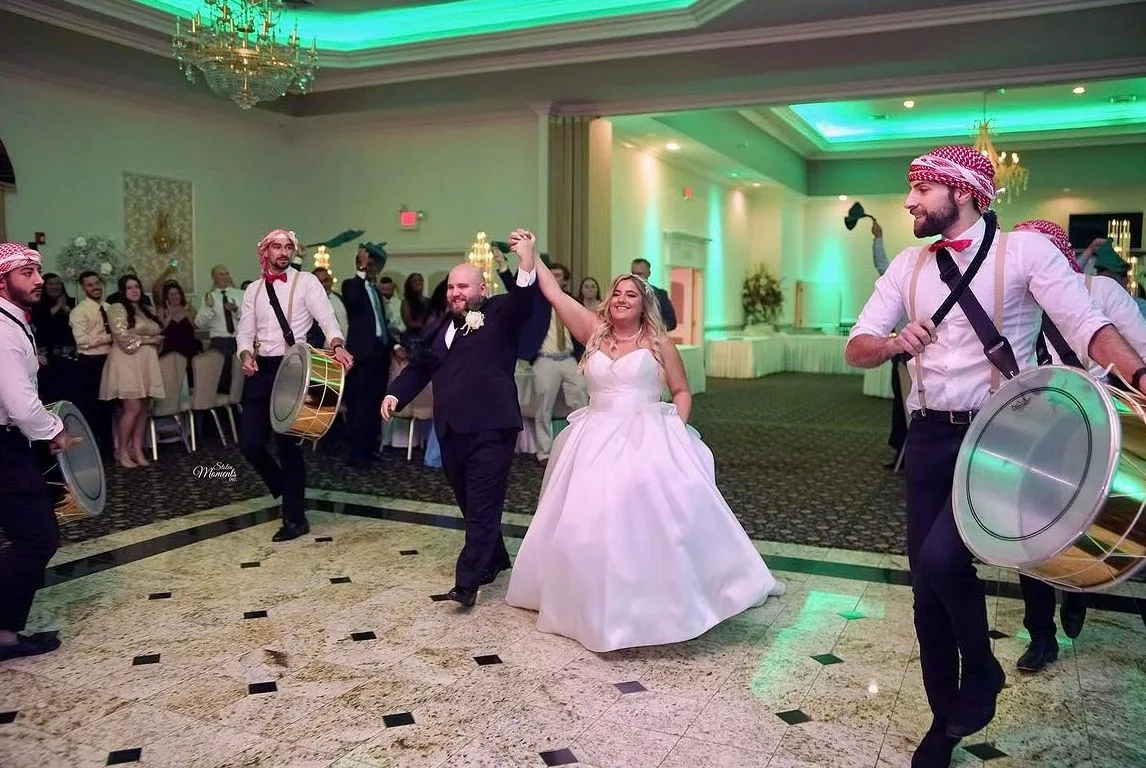
At a wedding, the dabka usually starts with a showcase by trained dancers, who perform tight formations and fast footwork. Then the lawweeh opens the line to guests, and experienced dancers spread through it to guide newcomers. Family members who are known dancers often take over the lead for a song or two, which is part of the joy of the evening.
Songs and instruments for a Palestinian dabka
The best known Palestinian dabka songs, such as Ala Dal'ona and Ya Zarif al Tool, are sung at weddings across the Levant. Ataba, the improvised sung poetry of the region, often opens a dabka set with a singer calling verses and the line answering, giving the elders a moment of their own.
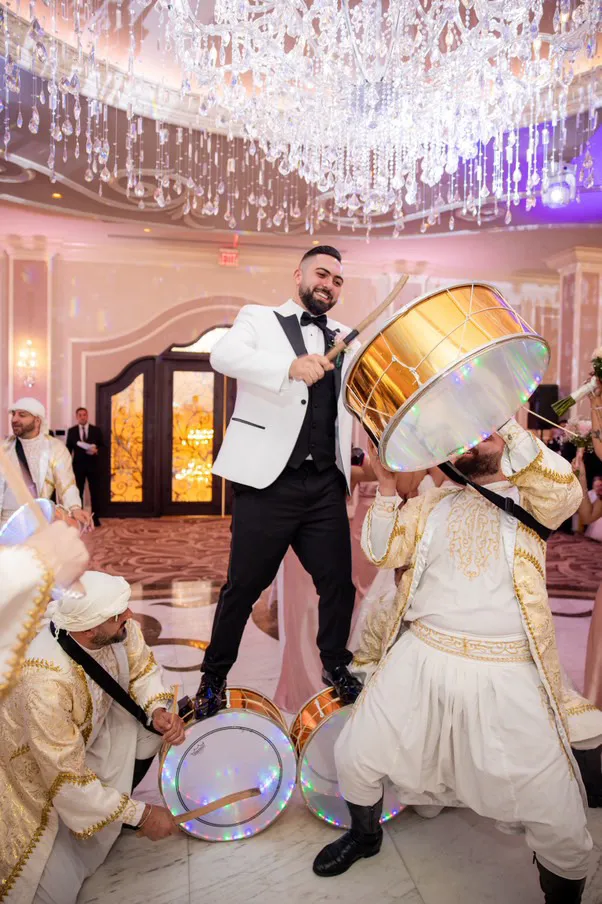
In village tradition the melody came from reed pipes, the double-piped mijwiz and the longer yarghoul, and from the shubbabeh flute, over the beat of the tabl. Today most Florida weddings blend live tabl with recorded melody, which lets the drummer follow the dancers while guests hear the songs they know. Live reed pipes and bands are confirmed per booking.
Send us your family's must-play list and any songs to avoid. The DJ prepares the dabka set around it, and the drummers rehearse the transitions so the line never stops.
Floor, space and timing in Florida venues
Dabka needs a firm floor. A wooden or laid dance floor is ideal, carpet works with care and sand does not work. For beach weddings in Miami Beach, the Keys or the Gulf coast, we move the dabka to a deck, terrace or the reception room.
Tell us the dance floor size so we can plan the showcase and the open line. Schedule the main dabka after dinner, away from catering service, and consider a short dabka straight after the first dance to open the floor. Many families also close the night with a final dabka.
They did the most amazing job at my daughter’s wedding. Their performance was perfect. They were punctual and were very welcoming to our guests. They made the wedding extra special. I highly recommend them
Palestinian dabka at henna nights and mixed weddings
Many families book dabka for the henna night as well as the wedding. A compact group of drummers and dancers suits a home or hall and gives the henna night its own celebration without repeating the wedding program.
At mixed weddings, dabka is one of the easiest traditions to share. A short invitation from the MC in Arabic and English brings guests from the other family onto the floor, and the DJ can follow the dabka with salsa, Arabic pop or English music so the floor stays full.
How a Palestinian dabka set builds through the night
A good dabka set builds in stages. It usually opens with the shamaliyya, so grandparents, parents and children can all join from the first song. As the line grows, the lawweeh adds variations, the drummers raise the tempo and faster steps such as the karadiyya bring the younger dancers to the front. The set ends at a peak, with the room clapping and the line stamping as one.
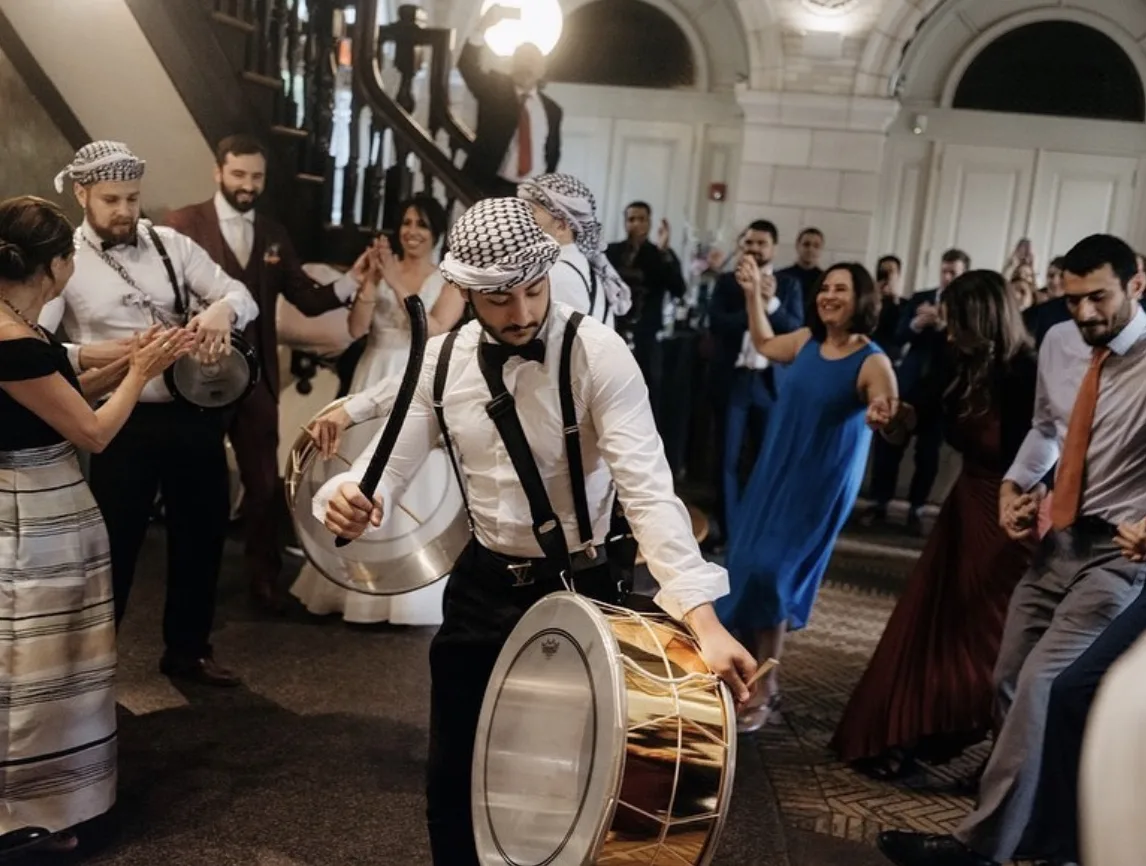
Many families ask for more than one dabka during the evening: a short one straight after the first dance, the main set after dinner and a final one near the end of the night. Each can feature different songs or styles, which keeps the evening fresh and gives different relatives the chance to lead.
The DJ fills the time between sets with Arabic pop, English music or salsa, so the floor stays busy while the dancers rest and the next dabka arrives as a highlight.
Teaching guests the shamaliyya
The shamaliyya is the easiest Palestinian dabka for newcomers: link arms with the people either side, follow the side step and stamp on the beat. Our dancers stand at intervals along the line so every new guest has someone experienced next to them, and the lawweeh keeps the step steady until the line is confident.
For couples who want their friends ready, a quick lesson at the henna night or a welcome dinner works well. A few minutes of practice means more guests join the line at the wedding, and the floor fills faster when the music starts.
Guests who prefer not to dance still play a part. Clapping in rhythm from the edge of the floor lifts the line, and the lawweeh often invites the loudest clappers in for the next song, which is how many first-time guests end up dancing after all.
What to send us for a Palestinian dabka quote
Send the date, the venue and room, the dance floor size if you know it, the guest count and your family's town or region. Tell us which styles you want, whether you want a showcase and open line, whether you also want a zaffeh or henna night, and send recordings of your dabka songs.
Pricing depends on guests, drummers, dancers, duration and travel, and starting ranges are available on request. Every proposal lists the confirmed dancers, drummers and inclusions. Afrah Events performs Palestinian dabka across Florida, from Miami and Fort Lauderdale to Orlando, Tampa and Jacksonville, travel is included in the quote and we reply within 24 hours by email.
Continue planning with wedding entertainment packages, Miami venue logistics and Orlando resort planning.