By Afrah Events Team, Wedding entertainment specialists · Published · Last updated · 6 min read
A Palestinian zaffa, often called the zaffeh, centres on the groom: his friends and relatives lift him onto their shoulders and carry him in, singing, while the women answer with zaghareet. This guide covers the groom's and bride's entrances, the henna night, the songs families ask for, and how Afrah Events plans a Palestinian zaffeh in Florida.
On this page
What makes a zaffa Palestinian
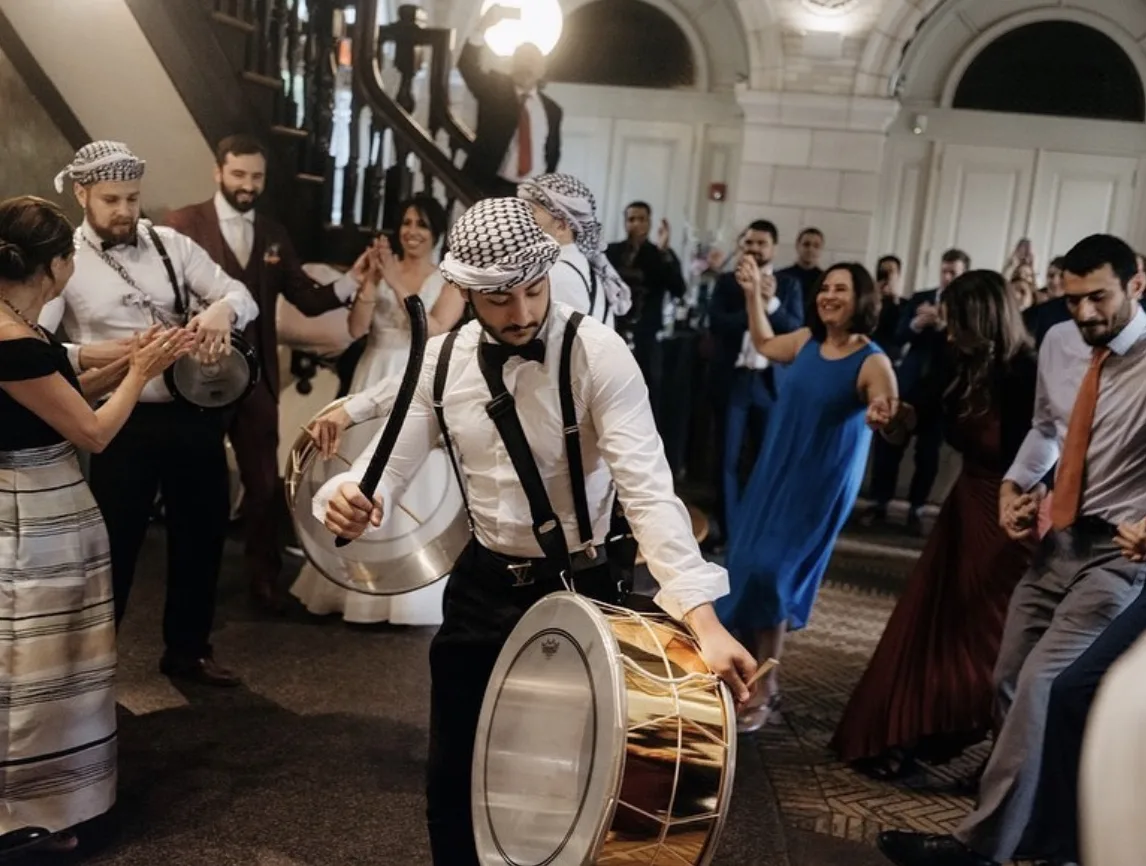
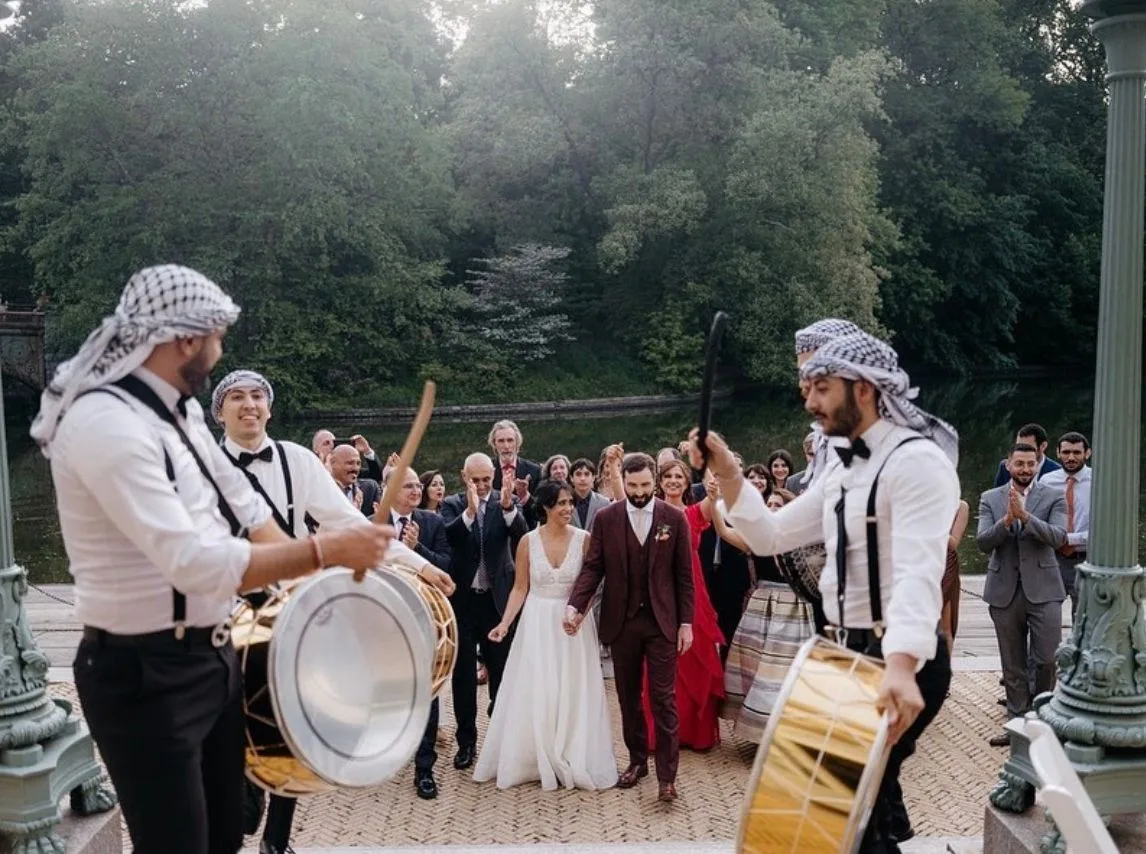
At many Palestinian weddings the zaffa begins with the groom. His friends and relatives gather around him, lift him onto their shoulders and carry him toward the celebration, singing and clapping, while drummers set the rhythm and the women answer each verse with zaghareet, the high ululation that marks joy. The bride's entrance follows or meets it, and the couple is brought together on the floor.
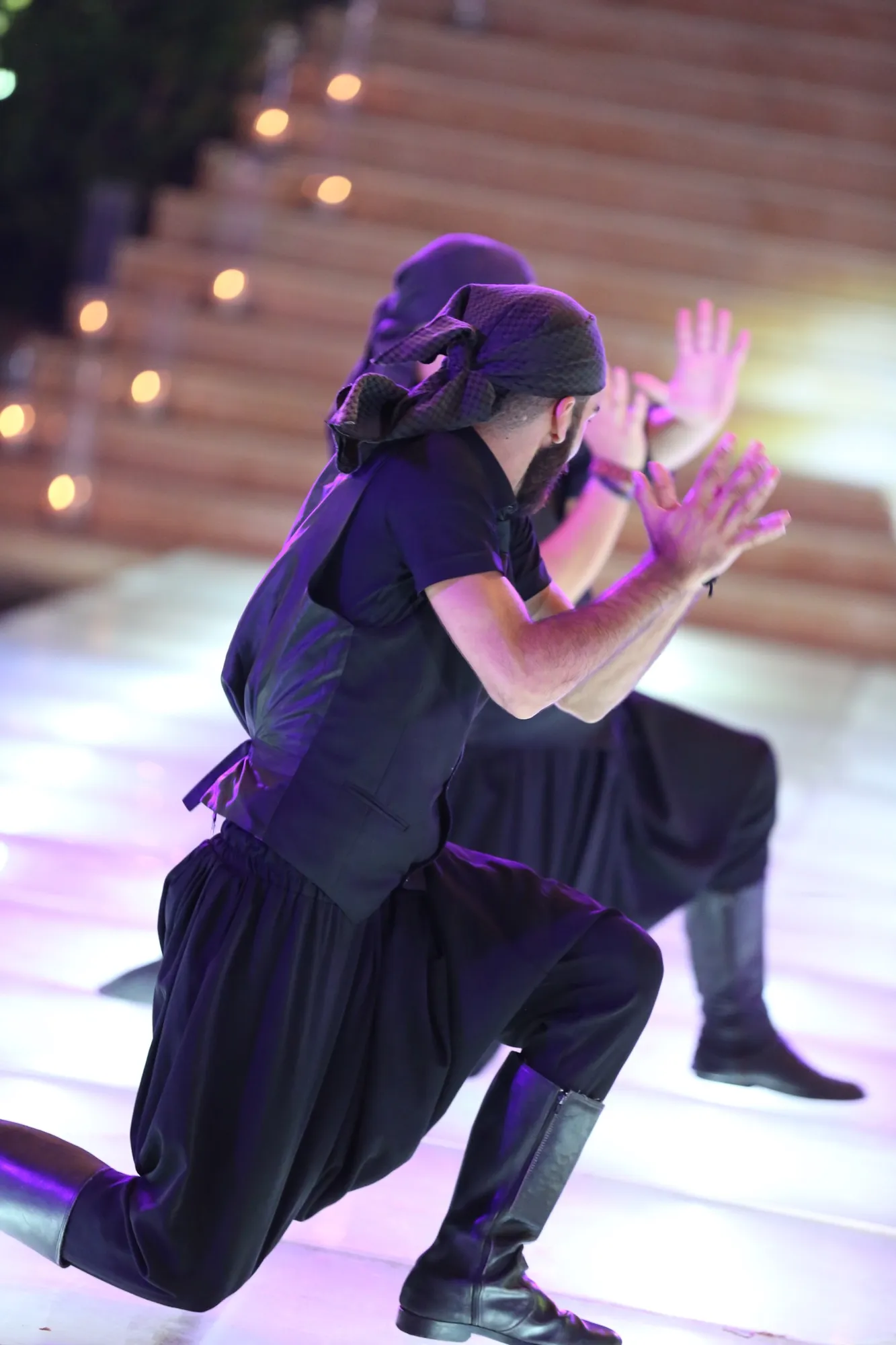
The Palestinian zaffeh is participatory. Where some entrances are performances that guests watch, the groom's zaffeh is carried by the people who know him best. Our drummers and dancers lead and protect the route, but the heart of the moment belongs to the family and friends who lift him.
This guide explains the parts of a Palestinian zaffa, the henna night that often comes before it and the songs families ask for. For the line dance that follows, see our guide to Palestinian dabka, and for the instruments, our guide to Palestinian wedding drummers.
The groom's zaffeh
The groom's zaffeh can happen in two places. In many families it starts at the groom's home or where he has prepared for the wedding, with relatives and friends singing as they bring him out. In others it is the opening of the reception, with the groom carried from the doors to the dance floor.
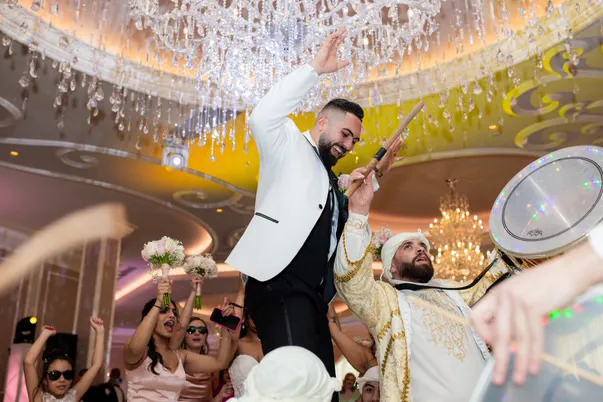
Lifting someone in a moving crowd needs a plan. We check the route for low chandeliers, door frames and steps, decide who will lift the groom and where, and ask the MC to cue the moment so guests make room. If relatives rather than performers lift the groom, we build the moment around them and keep the drummers close to hold the rhythm.
The songs of the groom's zaffeh praise him, his family and his bride. A lead singer, sometimes called the haddaya, calls verses that the crowd answers, and many families have chants they expect to hear. Send us recordings so the troupe can prepare the exact versions.
The bride's entrance
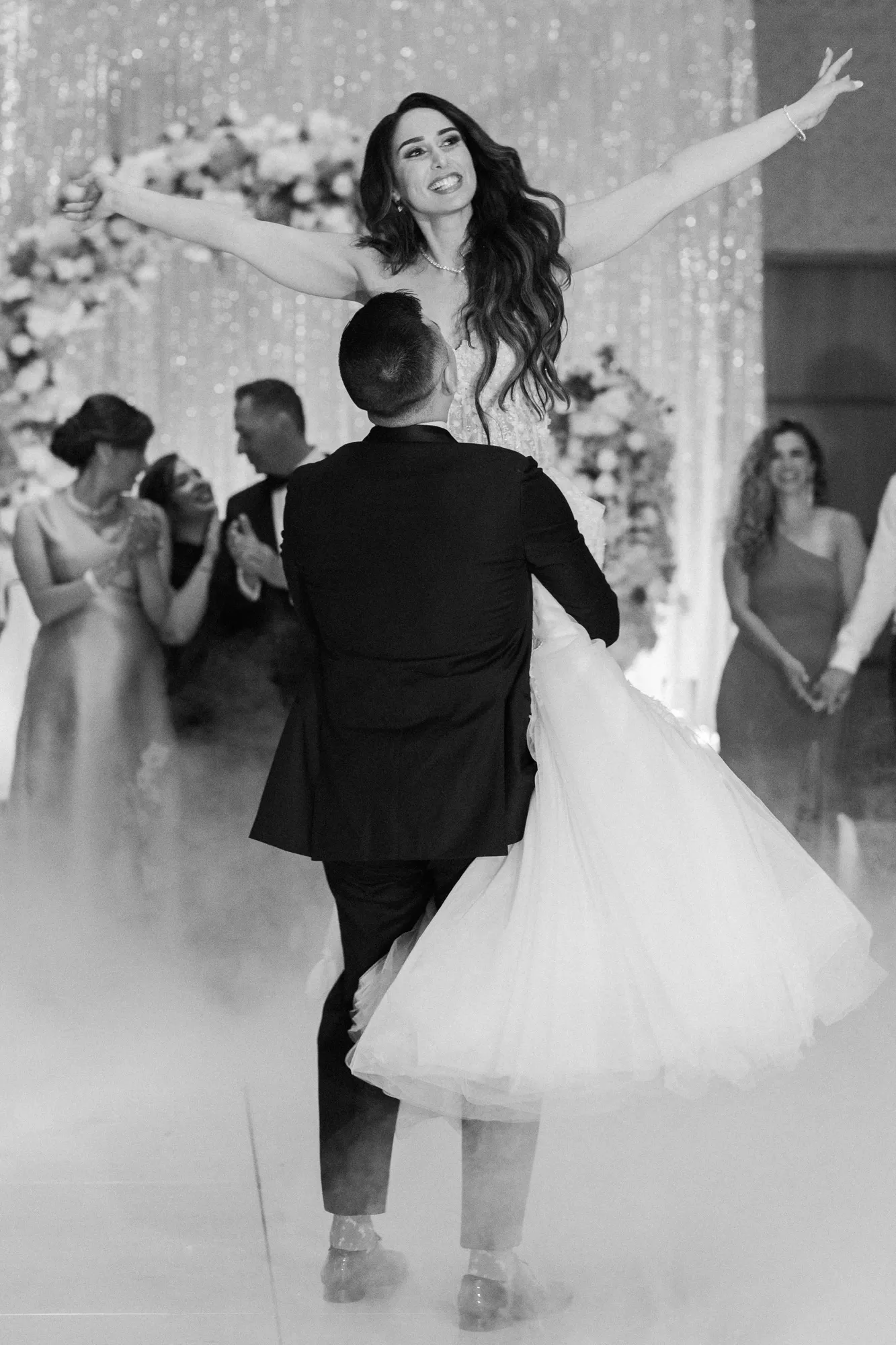
The bride's entrance at a Palestinian wedding can be a full drum zaffa, a gentler procession with singers and family, or a moment where the groom's zaffeh brings him to meet her. Many brides wear a white gown for the wedding and an embroidered thobe for the henna night, decorated with tatreez, the cross-stitch embroidery whose patterns differ from town to town.
We ask each family how they see the bride's entrance: which songs, which relatives walk with her and where she meets the groom. Some families ask for the parents of both sides to enter first, which is a natural way to include everyone and to welcome guests who are new to the tradition.
The henna night
Many Palestinian families hold a henna night before the wedding, when the bride's hands are decorated and the women of both families sing, dance and celebrate. The bride often wears an embroidered thobe, and the music draws on songs that women have sung at henna nights for generations.
The henna night has its own smaller zaffa and often its own dabka. A compact troupe of drummers and dancers suits a home, a hall or a hotel suite, and the volume can be kept appropriate for the space. Families often book us for both the henna night and the wedding, and we quote them together.
If the henna night is held at home, check homeowners association rules and tell neighbours in advance, especially for an evening with drums.
Songs Palestinian families ask for
Palestinian weddings share many songs with the rest of the Levant and keep some of their own. Ala Dal'ona and Ya Zarif al Tool are among the best known, and the improvised sung poetry known as ataba and zajal often opens a moment for the elders, with a singer calling verses and the crowd answering.
Every family and town has favourites, and many families have a particular recording that has played at every wedding they remember. Send us the songs and the versions you want, and any songs to avoid. The DJ prepares the evening around them, and the troupe rehearses the zaffeh songs so the procession moves at the right tempo.
They did the most amazing job at my daughter’s wedding. Their performance was perfect. They were punctual and were very welcoming to our guests. They made the wedding extra special. I highly recommend them
Timing, weather and venues in Florida
Most zaffas run around fifteen to twenty minutes, longer if the groom's zaffeh and the bride's entrance happen separately. The biggest timing risk is the couple's arrival after portraits, so we ask your coordinator for the realistic arrival time and set the cue from that.
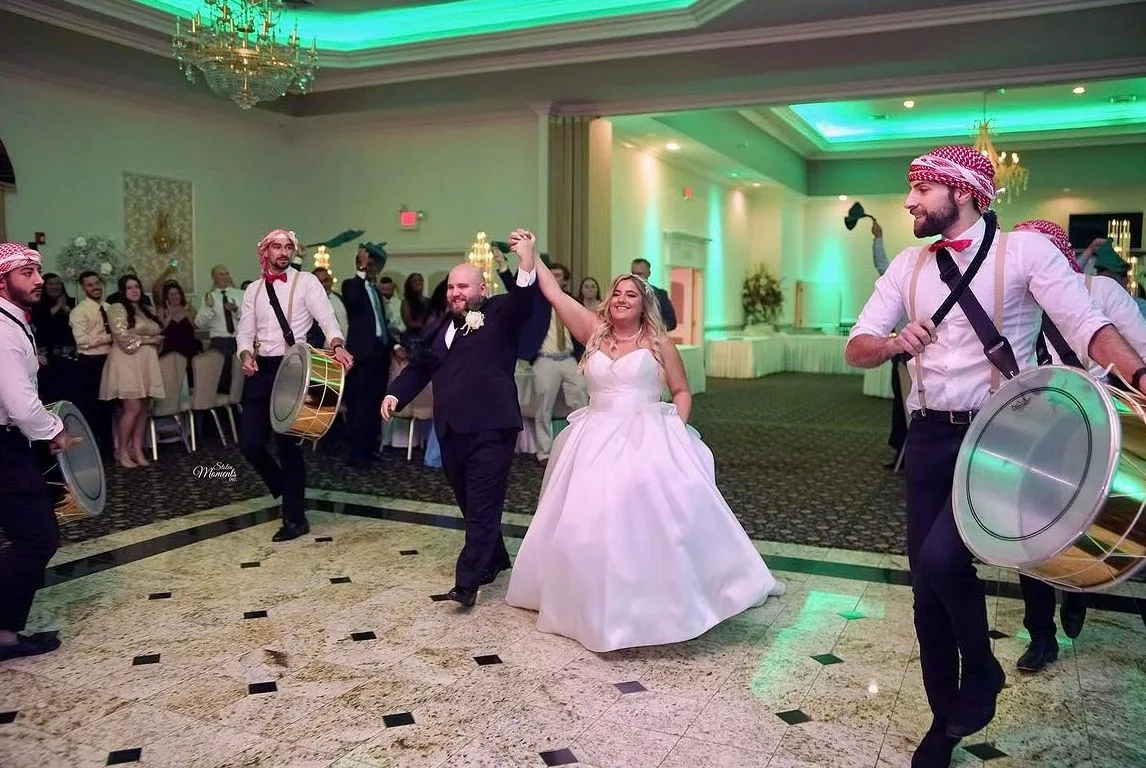
If the zaffeh starts outside, agree an indoor route with the venue. Afternoon storms are common from June to September, and hurricane season runs from June 1 to November 30. Sand does not suit a drum line or dancing, so beach weddings move the zaffeh to a deck, terrace or the reception room.
Hotel ballrooms in Miami, Fort Lauderdale and Tampa usually have long pre-function corridors that suit a groom's zaffeh. Banquet halls in the suburbs often have one large room with easy access, which suits a full entrance with many relatives.
Making space for the elders
Palestinian weddings honour the elders of both families, and the zaffa is a natural moment to do it. Many families ask for grandparents and parents to be greeted by the troupe as they take their seats, or for the procession to pause in front of them so the couple can receive their blessing before reaching the floor.
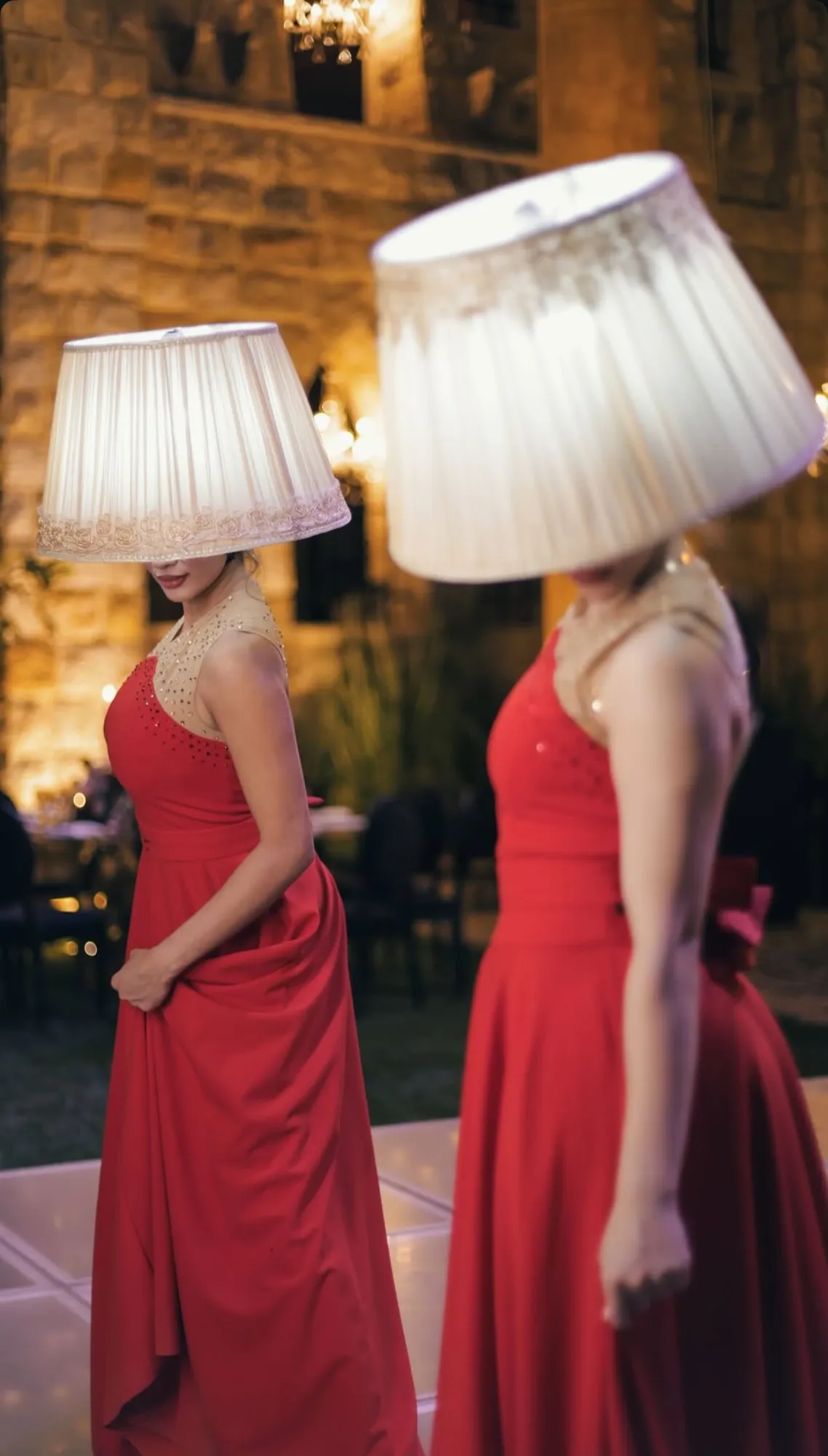
The sung poetry of ataba and zajal gives the elders a voice of their own. A singer, or sometimes a relative known for his voice, calls verses in praise of the families and the couple, and the room answers. Placing this moment early in the evening, while the older guests are fresh, often makes it one of the most moving parts of the night.
We ask each family who should be honoured and how, and we plan the order of the zaffa so these moments feel natural rather than squeezed in between other cues.
Palestinian zaffa at mixed weddings
Many Palestinian weddings in Florida join a Palestinian family with a Jordanian, Lebanese, Syrian, Latin or American one. The groom's zaffeh is easy for guests from any background to enjoy, especially with a short explanation from the MC in Arabic and English. If the other family has its own entrance tradition, we can include a song or moment from each side so both families recognise the evening as their own.
What to send us for a Palestinian zaffa quote
Send the date, the venue and room, the guest count and the moments you want: the groom's zaffeh, the bride's entrance, a henna night, the dabka and the DJ. Tell us who will lift the groom, which town or region your family comes from and send the songs you expect.
Pricing depends on guests, drummers, dancers, duration and travel, and starting ranges are available on request. Every proposal lists the confirmed performers and inclusions. Afrah Events performs Palestinian zaffas across Florida, from Miami and Fort Lauderdale to Orlando, Tampa and Jacksonville, travel is included in the quote and we reply within 24 hours by email.
Continue planning with wedding entertainment packages, Miami venue logistics and Orlando resort planning.